When the Church Says You Can’t Interpret Scripture—and the Holy Spirit Says You Can

In Whom Do You Put Your Trust? Part 4

When the Church Says You Can’t Interpret Scripture—and the Holy Spirit Says You Can

by Keith Abell, RPh MI
Ad Majorem Dei Gloriam

This is the fourth question in our series answering challenges posed by a fundamentalist who questioned my Catholic faith with the recurring question: “In whom do you put your trust?” Today’s question strikes at the very core of Catholic identity. It reminds us why the Church warns against private interpretation—because history shows what happens when everyone becomes their own authority. The Protestant Reformation opened the door to thousands of competing interpretations, each claiming to follow Scripture, yet leading to division instead of unity.

So, when the Church says you cannot interpret Scripture on your own and the Holy Spirit seems to whisper that you can, where do you place your trust? Let’s explore this together.

Christ’s Guarantee: The Church Will Not Fail

Before we talk about interpretation, we need to start with Jesus’ promise. In Matthew 16:18-19, Jesus says:

“You are Peter, and on this rock I will build my Church, and the gates of hell shall not prevail against it. I will give you the keys of the kingdom of heaven…”

This is not just poetic language. It’s a divine guarantee. The Church is not a human invention—it is Christ’s own institution, protected by His word. The “keys” symbolize authority to teach and govern. The assurance that “the gates of hell will not prevail” means the Church will never fall into error in matters of faith and morals.

So when the Church speaks on Scripture, it does so under Christ’s promise and the guidance of the Holy Spirit. That’s not something we can claim for ourselves individually.

What the Church Actually Teaches

Here’s the truth: the Church does not forbid you from reading or reflecting on Scripture. In fact, the Catechism encourages it:

“Ignorance of Scripture is ignorance of Christ.” (CCC 133)

What the Church cautions against is private interpretation that rejects the guidance of the Magisterium. Why? Because Scripture itself warns us:

“No prophecy of Scripture is a matter of one’s own interpretation.” (2 Peter 1:20)

From the earliest days, Christians relied on apostolic teaching—both written and oral. The Bible was never meant to be a self-interpreting manual. It was entrusted to the Church.

Scripture, Tradition, and the Magisterium: One Deposit of Faith

The Catholic Church teaches that Sacred Scripture and Sacred Tradition form one sacred deposit of the Word of God (CCC 80). This deposit is safeguarded by the Magisterium—the Pope and bishops in communion with him.

“The task of interpreting the Word of God authentically has been entrusted solely to the Magisterium of the Church.” (CCC 85)
“The task of authentically interpreting the Word of God, whether written or handed on, has been entrusted exclusively to the living teaching office of the Church.” (DV 10)

This is not about restricting access. It’s about preserving truth. Without this safeguard, history shows what happens: thousands of denominations, each claiming the Spirit told them something different.

The Witness of the Early Church Fathers

The earliest Christians understood this principle well.

“Where the Church is, there is the Spirit of God; and where the Spirit of God is, there is the Church and all grace.”
— St. Irenaeus
“I would not believe the Gospel if the authority of the Catholic Church did not move me.”
— St. Augustine

These voices remind us that the Church has always been the interpreter and guardian of Scripture. Private interpretation was never the norm—it was seen as dangerous.

So Where Does the Holy Spirit Fit?

The Spirit absolutely speaks to us through Scripture. But the Spirit never contradicts Himself. The same Spirit who inspired the Word also guides the Church. Personal prayer and reflection are essential, but they are meant to deepen our communion with the Church—not replace it.

In Whom Do You Put Your Trust?

When faced with this question, the Catholic answer is clear:

Trust the Church Christ established, because His promise secures its teaching authority.

The Holy Spirit works through the Magisterium to guide us safely in truth. This is not “either/or”—it’s “both/and.” The Spirit speaks to your heart, and He speaks through the Church. That’s how we remain united in the truth that sets us free.

Final Thought

Cradle Catholics, your love for Scripture is a gift. Read it. Pray with it. Let the Spirit speak. But never forget: Jesus gave us the Church as a safeguard, a teacher, and a mother. The gates of hell will not prevail against her—and that’s His guarantee.

Closing Prayer

Lord Jesus, thank You for giving us Your Word and Your Church. Help us to listen to the Holy Spirit and remain faithful to the teaching authority You established. May our love for Scripture draw us closer to You and unite us with Your Body, the Church. Amen.

Reflection Question

When you read Scripture, do you approach it with the heart of the Church and the guidance of the Holy Spirit—or do you rely only on your own understanding? How can you invite the Church’s wisdom into your prayer life this week?

Like, Share, and Subscribe
If this post helped you deepen your understanding of Catholic teaching, please like, share, and subscribe so others can join the conversation. Let’s spread the truth and beauty of our faith together!

When the Church tells you that there is a purgatory before heaven, and the Bible says nothing of the sort, in whom do you put your trust?

“But the Bible Doesn’t Mention Purgatory…” — A Catholic Response to a Common Challenge

This post is part of an 18-question series titled “In Whom Do You Put Your Trust?” — inspired by a conversation I had with a fundamentalist Christian back in 1998. These were tough questions that challenged me to think deeply about my Catholic faith.

The series began with a question about the Sacraments, and today we’re tackling the third question:

“When the Church tells you that there is a purgatory before heaven, and the Bible says nothing of the sort, in whom do you put your trust?”

As a cradle Catholic, I had grown up accepting the teachings of the Church — Mass on Sundays, the sacraments, the saints, and yes, the idea of Purgatory. But I had never been asked to defend that belief, especially from Scripture. That question stayed with me, and over time, it led me to dig deeper into what the Church teaches and why.

If you’ve ever been asked a similar question — or even asked it yourself — this post is for you.

What Is Purgatory, Really?

Let’s start with what the Church actually teaches. According to the Catechism of the Catholic Church:

“All who die in God’s grace and friendship, but still imperfectly purified, are indeed assured of their eternal salvation; but after death they undergo purification, so as to achieve the holiness necessary to enter the joy of heaven.” (CCC 1030)

Purgatory is not a second chance or a middle ground between heaven and hell. It’s a temporary state of purification for souls who are saved but still need to be cleansed of the lingering effects of sin before entering the full presence of God.

But Is It in the Bible?

The word “Purgatory” doesn’t appear in the Bible — just like the words “Trinity” or “Incarnation” don’t. But the concept is there, woven through Scripture and clarified by centuries of Church teaching and reflection.

Let’s look at four key passages that support the doctrine of Purgatory.

1. 2 Maccabees 12:45–46 — Prayers for the Dead

“But if he was looking to the splendid reward that is laid up for those who fall asleep in godliness, it was a holy and pious thought. Therefore he made atonement for the dead, so that they might be delivered from their sin.”

This passage describes Judas Maccabeus offering prayers and sacrifices for fallen soldiers who had died in battle. The implication is clear: prayers for the dead can help them — but only if they are not in hell (where prayer is of no use) or already in heaven (where they need no help). This suggests a third state — a place or process of purification.

But Wait — Isn’t Maccabees Not in the Protestant Bible?

Correct. 2 Maccabees is part of the Catholic Bible but not found in most Protestant Bibles. Here’s why:

  • The books of Maccabees are part of the Deuterocanonical books, which were included in the Septuagint — the Greek translation of the Hebrew Scriptures widely used in Jesus’ time.
  • The early Church accepted these books as Scripture. In fact, the Council of Rome (382 AD) and later the Council of Trent (1546) affirmed their canonical status.
  • During the Protestant Reformation, Martin Luther and other reformers removed these books, partly because they supported doctrines like Purgatory and prayers for the dead.

So while Protestants may not accept Maccabees, Catholics do — and have for centuries.

2. 1 Corinthians 3:15 — Saved, But Through Fire

“If anyone’s work is burned up, he will suffer loss, though he himself will be saved, but only as through fire.”

Here, St. Paul is talking about how our works will be tested by fire on the Day of Judgment. Some works will endure; others will be burned away. But notice: the person is still saved, even though they suffer loss and pass “through fire.”

This is not hell — because the person is saved. It’s not heaven — because there’s suffering and purification. Again, we see a third state that aligns with the Church’s teaching on Purgatory.

3. Matthew 12:32 — Forgiveness in the Age to Come

“Whoever speaks a word against the Son of Man will be forgiven, but whoever speaks against the Holy Spirit will not be forgiven, either in this age or in the age to come.”

This verse is often overlooked, but it’s incredibly important. Jesus is speaking about the unforgivable sin — blasphemy against the Holy Spirit — and He says it won’t be forgiven “in this age or in the age to come.”

Now, think about that. If some sins cannot be forgiven in the age to come, doesn’t that imply that some sins can?

This was exactly how many early Church Fathers understood the passage. St. Augustine, for example, wrote:

“It would not have been said, ‘neither in this world, nor in the world to come,’ unless there were some sins that will be forgiven in the world to come.”

This interpretation supports the idea that after death, there may still be a process of forgiveness and purification — not for mortal sins that separate us from God, but for lesser sins or the lingering effects of sin. That’s the heart of what Purgatory is: a merciful opportunity for the soul to be made fully clean before entering the presence of God.

4. Matthew 5:25–26 — Paying the Last Penny

“Settle matters quickly with your adversary who is taking you to court. Do it while you are still together on the way, or your adversary may hand you over to the judge, and the judge may hand you over to the officer, and you may be thrown into prison. Truly I tell you, you will not get out until you have paid the last penny.”

On the surface, this sounds like practical advice about resolving disputes. But the Church Fathers — including Origen, St. Cyprian, and St. Ambrose — saw a deeper, spiritual meaning.

In this interpretation:

  • The adversary is your conscience or the moral law.
  • The judge is God.
  • The prison is a metaphor for Purgatory.
  • And “paying the last penny” refers to the complete purification of the soul before entering heaven.

This aligns with the idea that God’s justice requires restitution, even after forgiveness. If we die in God’s grace but still owe a “debt” — the temporal consequences of sin — we must “pay the last penny” before entering eternal joy.

So, Who Do We Trust?

Let’s return to the original question:

“When the Church tells you that there is a purgatory before heaven, and the Bible says nothing of the sort, in whom do you put your trust?”

The answer is: we trust both.

As Catholics, we don’t believe in Sola Scriptura — the idea that the Bible alone is the sole authority. We believe in Sacred Scripture, Sacred Tradition, and the Magisterium (the Church’s teaching authority), all working together under the guidance of the Holy Spirit.

The Bible does support the concept of Purgatory — not with a single proof-text, but through a constellation of verses that, when interpreted through the lens of Tradition, paint a coherent picture of post-death purification.

Why This Matters for Cradle Catholics

If you were raised Catholic, you may have accepted the idea of Purgatory without ever questioning it. But when someone challenges you — especially with a “Bible-only” mindset — it can shake your confidence.

That’s why it’s so important to know not just what we believe, but why we believe it.

Purgatory isn’t a medieval invention. It’s a doctrine rooted in Scripture, affirmed by the early Church, and grounded in the logic of God’s mercy and justice. It’s not a punishment — it’s a gift. A final cleansing, a preparation for the Beatific Vision, where nothing unclean can enter (Revelation 21:27).

Purgatory reminds us that God is both just and merciful. He doesn’t abandon us at the moment of death. He continues to purify, heal, and prepare us for eternal life with Him.

So the next time someone asks you, “Where is Purgatory in the Bible?” — you’ll know where to look. And more importantly, you’ll know that your trust in the Church is not misplaced. It’s rooted in Scripture, history, and the enduring wisdom of the Body of Christ.

Join the Conversation!

If this post helped you understand Purgatory better, don’t keep it to yourself!

  • Like this post to show your support.
  • Share it with friends and family who might have the same questions.
  • Follow us here on our Facebook page for more Catholic insights, Scripture reflections, and answers to tough questions about the faith.

Let’s grow together in understanding and love for the truth!

#CatholicFaith #CatholicTeaching #CatholicTruth #BibleAndTradition #CatholicDoctrine #PurgatoryExplained #UnderstandingPurgatory #CatholicAnswers #FaithAndReason #CatholicApologetics #InWhomDoYouPutYourTrust #CatholicSeries #FaithJourney #CradleCatholic #KnowYourFaith #ScriptureReflection

When the Church tells you that you can't be sure that you are going to heaven when you die, and God tells you that you can be sure, in whom do you put your trust?

In Whom Do You Put Your Trust?

A Catholic Reflection on Assurance, Salvation, and Grace

This post is the second in a series of 18 questions posed to me by a fundamentalist preacher who challenged our Catholic faith, contrasting it with what he claims Scripture teaches. If you missed Question 1, you can read it here on Facebook.


Today’s question is:

“When the Church tells you that you can't be sure that you are going to heaven when you die, and God tells you that you can be sure, in whom do you put your trust?”

It’s a powerful question—one that touches the heart of Christian hope and the meaning of salvation. Let’s explore what Scripture really says, what the Catholic Church teaches, and how the Early Church Fathers defended these truths against early heresies.

What Do Protestants Believe About Assurance of Salvation?

Many Protestant traditions—especially Evangelical and Reformed—teach that believers can have absolute assurance of salvation. This is often rooted in the doctrine of “once saved, always saved”, which holds that once a person truly accepts Christ, their salvation is eternally secure.

They cite verses like:

  • 1 John 5:13 – “I write these things to you... so that you may know that you have eternal life.”
  • John 10:28 – “No one will snatch them out of my hand.”

These passages do affirm confidence in God’s promises—but do they mean salvation is guaranteed regardless of how we live afterward? Scripture gives a fuller picture.

What Does Scripture Say About Working Out Our Salvation?

Catholics often point to Philippians 2:12:

“Work out your salvation with fear and trembling.”

Paul wrote this to believers who had already accepted Christ. If salvation were guaranteed, why would he urge them to approach it with fear and trembling? Because salvation is not a one-time event—it’s a lifelong journey. It involves:

  • Ongoing conversion
  • Cooperation with grace
  • Perseverance in faith

Paul himself says in 1 Corinthians 9:27:

“I discipline my body and keep it under control, lest after preaching to others I myself should be disqualified.”

Even Paul didn’t presume his salvation. He lived with humble vigilance, trusting God’s mercy while striving to remain faithful.

The Catholic Understanding: Grace, Sacraments, and Hope

The Catholic Church teaches that while we cannot have absolute certainty of salvation (except by special revelation), we can have moral certainty and confident hope if we remain in a state of grace.

Salvation is a gift, but it requires our response. This response is nourished by the sacraments, which are channels of grace instituted by Christ:

  • Baptism – cleanses original sin and initiates us into the life of grace.
  • Confession – restores us when we fall.
  • Eucharist – strengthens and sustains us.
  • Confirmation, Marriage, Holy Orders, Anointing of the Sick – each offers grace for specific vocations and trials.

These sacraments are not “works” that earn salvation—they are God’s gifts that help us turn back to Him and remain in communion with Him.

Faith vs. Mere Belief: Even Satan Believes

It’s important to remember that intellectual belief is not the same as saving faith.

James 2:19 – “Even the demons believe—and shudder.”

Satan knows Scripture better than most humans. He believes in God’s existence, but he rebels against Him. Saving faith involves trust, obedience, and love—not just knowledge.

What Did the Early Church Fathers Say?

The Early Church Fathers consistently defended the idea that salvation is a process, not a guarantee. They warned against heresies that promoted presumption or faith without works.

St. Augustine (354–430 AD)

“He who created you without you, will not save you without you.”

Augustine emphasized grace first, but also our free will to cooperate with it.

St. Ignatius of Antioch (c. 35–107 AD)

“It is not enough to be called Christians; we must be Christians in reality.”

He stressed the importance of living the faith, not just professing it.

St. Clement of Rome (c. 96 AD)

“Let us strive to be found among the number of those who wait for Him in order that we may share in His promised gifts.”

Clement encouraged perseverance and hope, not presumption.

Conclusion: Trusting God, Living the Faith

So, when the Church says we cannot be absolutely sure of heaven, and Scripture says we can have confident hope—in whom do we put our trust?

We trust in God’s mercy, Christ’s promises, and the grace given through the Church He founded. We don’t presume, but we also don’t despair. We live in hope, nourished by the sacraments, strengthened by Scripture, and guided by the wisdom of the saints.

Salvation is not a moment—it’s a movement. A journey toward the heart of God.


If you found this helpful, please like, share, and subscribe to stay connected!

Stay tuned for Question 3 next week:

“When the Church tells you that there is a purgatory before heaven, and the Bible says nothing of the sort, in whom do you put your trust?”

So when the Church tells you that the Sacraments are necessary for salvation, and Jesus taught that only belief was necessary, in whom do you put your trust? Part 7: Anointing of the Sick

Faith and the Sacraments: Trusting What Jesus Actually Taught

by Keith Abell, RPh MI

Part 7: Anointing of the Sick – Grace in Suffering

“So when the Church tells you that the Sacraments are necessary for salvation, and Jesus taught that only belief was necessary, in whom do you put your trust?”

Welcome to Part 7 of our 7-part series exploring the Sacraments and answering one of the most important questions Catholics face today: If Jesus taught that belief alone is necessary for salvation, why does the Catholic Church teach that the Sacraments are necessary?

As we conclude this journey, we turn to a sacrament that many Catholics rarely think about until suffering enters their lives or the life of someone they love: Anointing of the Sick. I had always known it was part of the Church’s care for the dying, but I hadn’t realized how deeply biblical it is — how it was practiced in both the Old and New Testaments, and how Jesus Himself instituted it as a way to bring healing, peace, and grace to those in physical and spiritual need.

This sacrament reminds us that God does not abandon us in suffering. He meets us there — through the Church, through the priest, and through the sacred oil and prayer — to strengthen us, forgive us, and prepare us for healing or eternal life.

Faith Alone? Why Anointing Matters

Jesus didn’t just preach belief — He touched, healed, and anointed. He sent His apostles to do the same. The Sacrament of Anointing of the Sick is not a symbolic gesture — it is a real encounter with Christ, who brings grace in our most vulnerable moments.

James 5:14–15

“Is anyone among you sick? Let them call the elders of the church to pray over them and anoint them with oil in the name of the Lord. The prayer of faith will save the sick person, and the Lord will raise them up. If they have sinned, they will be forgiven.”

This is one of the clearest biblical foundations for any sacrament — and it shows that healing and forgiveness are deeply connected.

Biblical Foundations of Anointing of the Sick

Old Testament Foreshadowing

  • Isaiah 1:6 – Speaks of wounds not soothed with oil, implying the healing power of anointing.
  • Psalm 23:5 – “You anoint my head with oil; my cup overflows.”
  • Sirach 38:9–10 – Encourages prayer and turning to God in illness, while also honoring the role of physicians and healing remedies.

These passages show that healing, prayer, and anointing were already spiritually linked in Jewish tradition.

Jesus Heals with Touch and Compassion

  • Mark 6:13 – “They drove out many demons, and they anointed with oil many who were sick and cured them.”
  • Matthew 10:8 – Jesus commands the apostles: “Heal the sick, raise the dead, cleanse lepers, cast out demons.”
  • Luke 4:40 – “At sunset, all who had people sick with various diseases brought them to Him. He laid His hands on each of them and cured them.”

Jesus didn’t just heal — He empowered His Church to continue His healing ministry.

What the Early Church Believed About Anointing

  • St. Hippolytus (3rd century)
    “Let the bishop bless the oil for the sick… and let the priest anoint those who are ill, that they may be healed in body and spirit.”
  • St. John Chrysostom
    “The priest stands as a physician of souls… and the anointing is a medicine of grace.”
  • St. Gregory the Great
    “Let the sick be anointed with holy oil, that their sins may be forgiven and their bodies healed.”

The early Church saw this sacrament as a continuation of Christ’s healing work, not just for the body, but for the soul.

Conclusion: Grace in Suffering

Anointing of the Sick is a sacrament of hope, not despair. It is a reminder that suffering is not meaningless — it can be united to Christ’s Passion and transformed by His grace. Whether healing comes in this life or the next, the sacrament brings peace, strength, and forgiveness.

So when someone asks, “If Jesus taught that belief alone is necessary for salvation, why does the Catholic Church teach that the Sacraments are necessary?” — we can answer:

Because Jesus didn’t just say “believe.” He said, “Anoint the sick… and they will be healed.” He gave us this sacrament so that no one would suffer alone — and so that grace would meet us even in our final moments.

Thank You for Joining This Journey

This concludes our 7-part series on the Sacraments — a journey that began with a simple question and led to a deeper understanding of the faith we’ve lived, sometimes on autopilot, for years.

If this series has helped you rediscover the beauty and power of the Sacraments, I invite you to share it with others — especially fellow cradle Catholics who may be searching for deeper meaning in their faith.

Follow our page to stay connected, continue the conversation, and explore more reflections on living the Catholic faith with purpose and passion.

So when the Church tells you that the Sacraments are necessary for salvation, and Jesus taught that only belief was necessary, in whom do you put your trust? Part 6: Holy Orders

Faith and the Sacraments: Trusting What Jesus Actually Taught

Part 6: Holy Orders – Shepherds for the Flock

“So when the Church tells you that the Sacraments are necessary for salvation, and Jesus taught that only belief was necessary, in whom do you put your trust?”

Welcome to Part 6 of our 7-part series exploring the Sacraments and answering one of the most important questions Catholics face today: If Jesus taught that belief alone is necessary for salvation, why does the Catholic Church teach that the Sacraments are necessary?

When I first began responding to the challenges from a fundamentalist Christian back in 1998, I already knew that Holy Orders was a sacrament, instituted by Christ and essential to the life of the Church. I had a deep respect for priests and bishops and understood their role in leading and sanctifying the faithful. But what I hadn’t yet explored was where this sacrament comes from in Scripture, and how it connects the Old Testament priesthood with the New Covenant ministry of Christ and His apostles.

That same fundamentalist had asked me:

“If Jesus taught that belief alone is necessary for salvation, why does the Catholic Church teach that the Sacraments are necessary?”

And once again, the answer led me deeper — into the Old Testament, where God established a priesthood to serve His people, and into the New Testament, where Jesus fulfilled and transformed that priesthood, commissioning His apostles to continue His work through the Sacrament of Holy Orders.

In this post, we’ll explore:

  • The biblical foundations of Holy Orders,
  • Its continuity from the Old Testament priesthood,
  • How Jesus commissioned His apostles to carry on His mission, and
  • What the early Church Fathers and saints taught about the sacredness of ordination.

Faith Alone? Why Holy Orders Matter

Jesus didn’t just call people to believe — He called and commissioned specific men to teach, sanctify, and govern His Church. He gave them real authority, and through the Sacrament of Holy Orders, that authority has been passed down through apostolic succession for over 2,000 years.

2 Corinthians 5:20 – “We are ambassadors for Christ, as though God were making His appeal through us.”

The ordained priesthood is not a human invention — it is a divine calling, a continuation of Christ’s own priestly ministry.

Biblical Foundations of Holy Orders

Old Testament Priesthood

  • Exodus 28–29 – God commands Moses to consecrate Aaron and his sons as priests, with sacred garments and rituals.
  • Numbers 3:5–10 – The Levites are appointed to assist the priests and serve in the tabernacle.
  • Psalm 110:4 – “You are a priest forever, in the order of Melchizedek.”

These passages show that God established a ministerial priesthood distinct from the general priesthood of all believers — a pattern fulfilled and transformed in Christ.

Jesus Establishes the New Priesthood

  • Luke 22:19 – At the Last Supper, Jesus says: “Do this in memory of me.” This is a command to offer the Eucharist, a priestly act.
  • John 20:21–23 – Jesus breathes on the apostles and gives them authority to forgive sins — a priestly function.
  • Matthew 28:19–20 – Jesus commissions the apostles to teach, baptize, and lead — the core duties of ordained ministry.

These weren’t symbolic gestures. Jesus was establishing a sacramental priesthood, rooted in His own authority.

Apostolic Succession and Ordination

The apostles understood that their ministry was not temporary — it was to be handed on:

  • Acts 6:5–6 – The apostles lay hands on the first deacons.
  • Acts 13:2–3 – Paul and Barnabas are commissioned through prayer and laying on of hands.
  • 1 Timothy 4:14 – “Do not neglect the gift you have, which was given you… when the council of elders laid their hands on you.”
  • 2 Timothy 1:6 – “Fan into flame the gift of God, which is in you through the laying on of my hands.”

This laying on of hands is the essential act of ordination, still used today in every Holy Orders ceremony.

What the Early Church Believed About Holy Orders

St. Clement of Rome (1st century)

“The apostles appointed bishops and deacons… and gave instructions that when these should fall asleep, other approved men should succeed them.”

St. Ignatius of Antioch (c. 110 A.D.)

“Let everyone respect the bishop as they would the Lord Himself.”

St. John Chrysostom

“The priesthood is the most sublime of all orders… it is exercised on earth, but ranks among heavenly things.”

St. Thomas Aquinas

“Holy Orders is the sacrament through which the spiritual power is conferred for the sanctification of souls.”

The early Church saw Holy Orders as a divine institution, not a human hierarchy. It was the means by which Christ continued to shepherd His people.

Conclusion: Shepherds for the Flock

Holy Orders is not about status — it’s about service. It’s not about authority for its own sake — it’s about sacrificial leadership, modeled after Christ the Good Shepherd.

So when someone asks, “If Jesus taught that belief alone is necessary for salvation, why does the Catholic Church teach that the Sacraments are necessary?” — we can answer:

Because Jesus didn’t just say “believe.” He said, “Feed my sheep.” He gave us the priesthood to continue His ministry of teaching, healing, and sanctifying.

Stay Tuned for Part 7: Anointing of the Sick – Grace in Suffering

In the final post of this series, we’ll explore the Sacrament of Anointing of the Sick, a powerful gift of healing, peace, and grace for those who are suffering. We’ll look at its biblical roots, its presence in both Old and New Testaments, and how the Church continues Christ’s healing ministry today.

Follow our Facebook page to stay updated and join the conversation as we conclude this journey through the Sacraments — one post at a time.

So when the Church tells you that the Sacraments are necessary for salvation, and Jesus taught that only belief was necessary, in whom do you put your trust? Part 5: Matrimony

Faith and the Sacraments: Trusting What Jesus Actually Taught

by Keith Abell RPh MI

Part 5: Matrimony – A Covenant of Grace

“So when the Church tells you that the Sacraments are necessary for salvation, and Jesus taught that only belief was necessary, in whom do you put your trust?”

Welcome to Part 5 of our 7-part series exploring the Sacraments and answering one of the most important questions Catholics face today: If Jesus taught that belief alone is necessary for salvation, why does the Catholic Church teach that the Sacraments are necessary?

When I first began responding to the challenges from a fundamentalist Christian back in 1998, I was already married. I knew that Matrimony was a sacrament, a covenant, and a sacred bond where two become one — not just emotionally or legally, but spiritually. But what I hadn’t fully explored was how deeply rooted this sacrament is in Scripture, how it was instituted by God from the beginning, and how Christ elevated it to be a channel of grace.

In this post, we’ll explore:

  • The biblical foundations of Matrimony,
  • Its origin in creation and fulfillment in Christ,
  • How marriage reflects the love between Christ and His Church, and
  • What the early Church Fathers and saints taught about the sacredness of this vocation.

Faith Alone? Why Marriage Is a Sacrament

As we’ve seen throughout this series, Jesus didn’t teach salvation by faith alone. He taught a faith that is lived, embodied, and expressed — especially through the Sacraments. Matrimony is one of the most tangible ways that faith becomes flesh: in the daily, sacrificial love between spouses.

Ephesians 5:31–32 – “For this reason a man shall leave his father and mother and be joined to his wife, and the two shall become one flesh. This is a great mystery, and I mean in reference to Christ and the Church.”

Marriage is not just a human institution — it is a living icon of divine love.

Marriage as a reflection of Christ and the Church

Biblical Foundations of Matrimony

Instituted by God in Creation

  • Genesis 2:24 – “Therefore a man shall leave his father and mother and be joined to his wife, and they shall become one flesh.”
  • Genesis 1:27–28 – “Male and female He created them… Be fruitful and multiply.”

Marriage is the first covenant God establishes with humanity — a union that reflects His creative love and life-giving power.

Elevated by Christ

  • Matthew 19:4–6 – Jesus reaffirms the sanctity of marriage: “What God has joined together, let no one separate.”
  • John 2:1–11 – Jesus performs His first public miracle at a wedding, blessing the couple and their union — a powerful sign that He affirms and sanctifies marriage.
  • Ephesians 5:25 – “Husbands, love your wives, as Christ loved the Church and gave Himself up for her.”

Christ doesn’t just bless marriage — He makes it a sacrament, a means of grace and a reflection of His covenant with the Church.

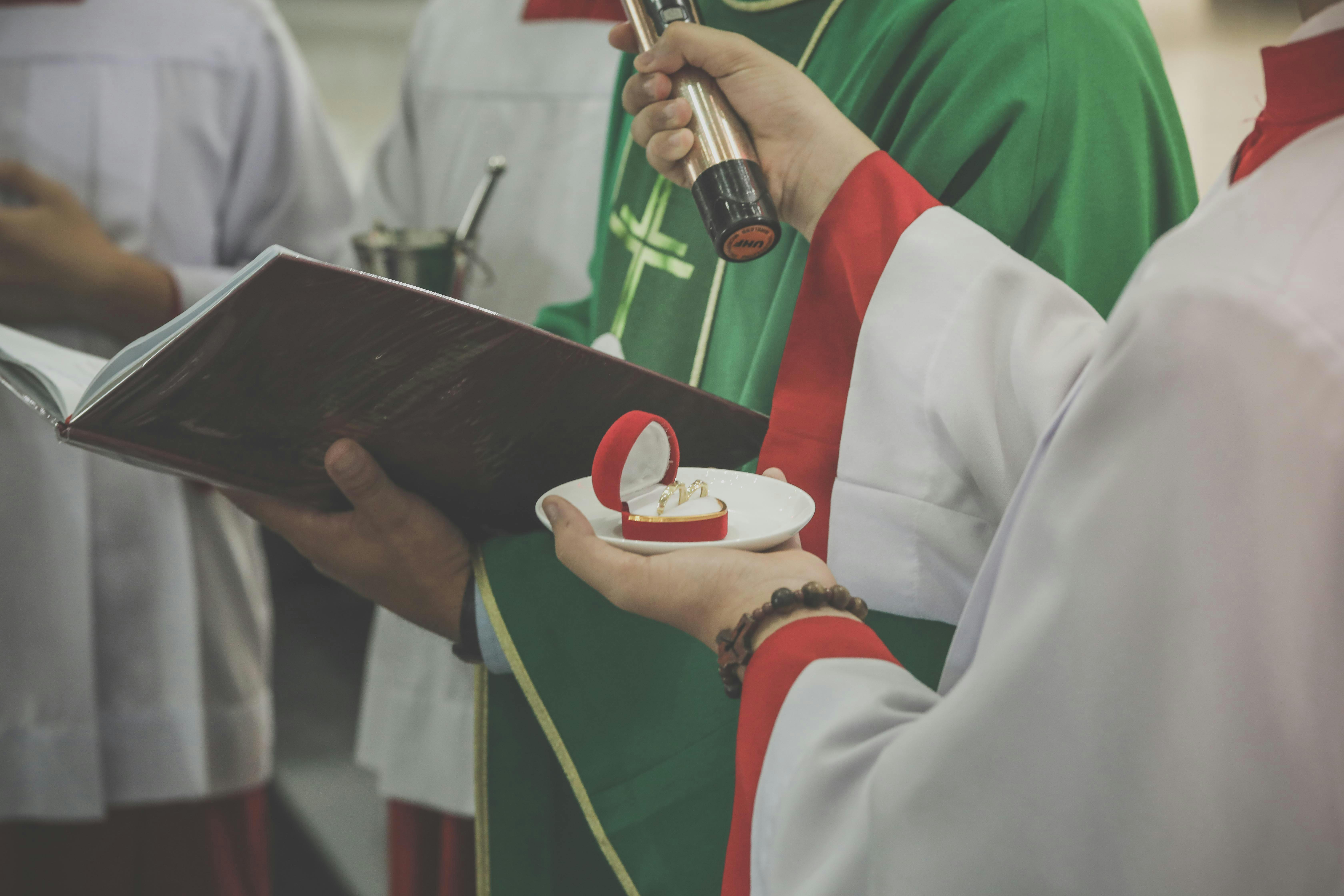
Jesus at the Wedding at Cana - His first miracle Catholic wedding rings during church ceremony

What the Early Church Believed About Matrimony

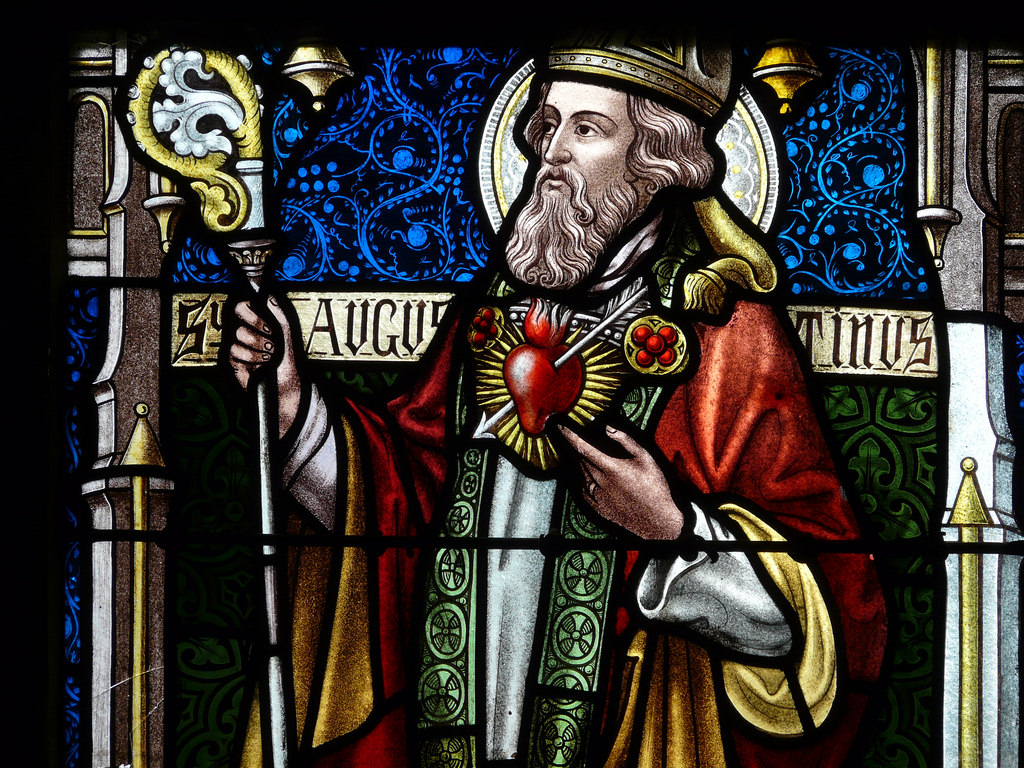
St. Augustine of Hippo

“Marriage is a sacrament of the Church… a bond that is not broken by human will but preserved by divine grace.”
St. Augustine of Hippo

St. John Chrysostom

“Marriage is a mystery of love, a reflection of the union between Christ and His Church.”

St. Ignatius of Antioch

“It is fitting for men and women who marry to unite with the blessing of the bishop, that their union may be in the Lord.”

St. Thomas Aquinas

“The sacrament of Matrimony signifies the union of Christ with the Church… and confers grace for the mutual sanctification of the spouses.”

The early Church saw marriage not just as a social contract, but as a holy vocation, a path to sanctity, and a sacramental sign of divine love.

Most Popular Posts