Showing posts with label Apostolic Succession. Show all posts

When the Church tells you that a priest can forgive you of your sins, and Jesus tells you that God is the only one, in whom do you put your trust?

The Fundamentalist Challenge: “In Whom Do You Put Your Trust?”

A reflection on confession, trust, and the mercy of Christ through His Church
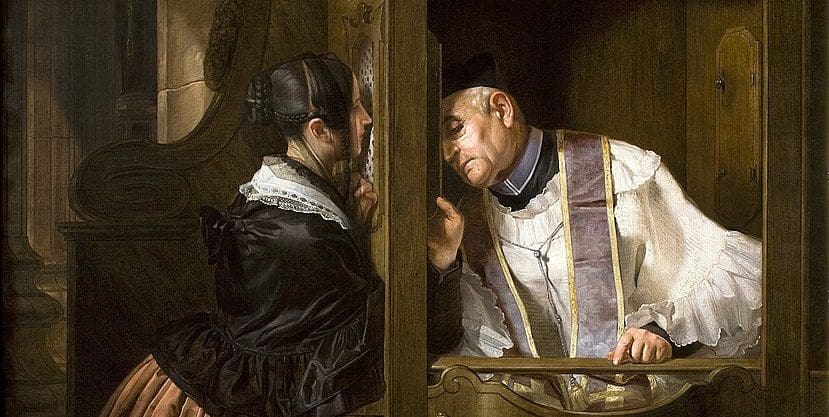
Classic painting of a woman confessing to a priest
The Sacrament of Reconciliation – a moment of divine mercy through the priest

I want to start this post where this whole series really began for me.
It wasn’t in a book. It wasn’t in RCIA. It wasn’t even in prayer.
It was in a conversation.

A well-meaning fundamentalist Christian once asked me a question that sounded simple, biblical, and honestly… a little unsettling:

“When the Church tells you that a priest can forgive you of your sins, and Jesus tells you that God is the only one who can forgive sins, in whom do you put your trust?”

He wasn’t angry. He wasn’t mocking. He was confident.
And that’s what made the question land so heavily.

How Cradle Catholics Drift—Quietly

Most of us didn’t walk away from the Church. We didn’t reject confession outright. We didn’t stop believing that God forgives sins.

But statements like that—repeated often enough—can plant a seed.
We start to think: “Well, I’ll still go to confession… but I don’t really need it.”
“God knows my heart.” “I can confess directly to Jesus.”

And suddenly confession becomes optional. Inconvenient. Something we avoid unless things get really bad.

This isn’t rebellion. It’s confusion mixed with sincerity.
And it’s exactly where Dr. Scott Hahn once found himself.
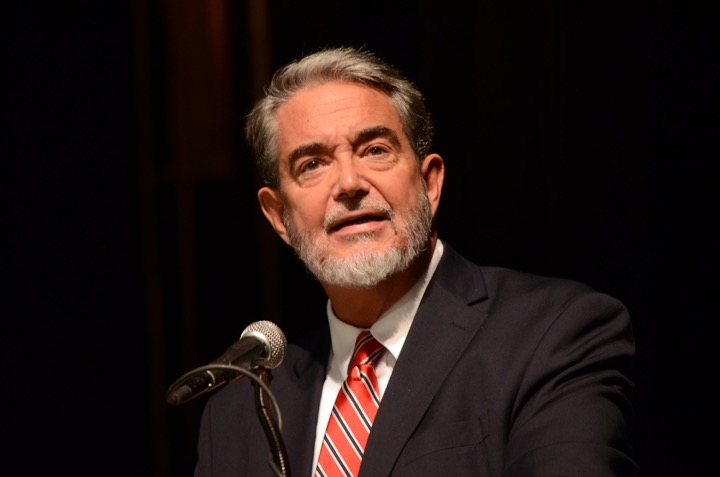
Dr. Scott Hahn speaking
Dr. Scott Hahn – from Protestant pastor to Catholic apologist

What a Convert Like Scott Hahn Discovered

Scott Hahn didn’t grow up Catholic. As a Protestant pastor and Scripture scholar, he genuinely believed confession to a priest took something away from God.

So when Hahn began wrestling with this issue, he asked a better question:
“What has God always done?”

And that question took him all the way back—to the Old Testament.

What the Old Testament Jews Were Actually Taught

For God’s people, forgiveness was never vague or invisible.
When someone sinned, God commanded something very specific:
Sin had to be acknowledged, confessed out loud, brought to the priest, atoned for through God’s appointed means.

Not because priests replaced God—but because God chose to work through them.

How Jesus Perfected Atonement, Not Abolished It
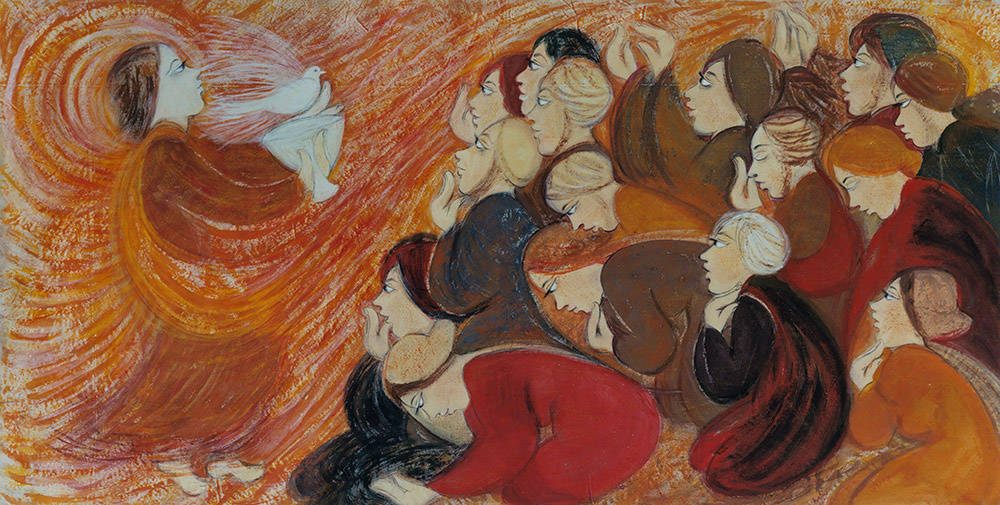
Art of Jesus breathing the Holy Spirit on the apostles
Jesus breathes the Holy Spirit and grants authority to forgive sins (John 20:22–23)

Jesus fulfills the Old Testament—not by discarding it, but by completing it.

After the Resurrection, He breathes on the apostles and says:
“Whose sins you forgive are forgiven. Whose sins you retain are retained.”

That’s responsibility. You can’t retain sins unless you know them. You can’t forgive sacramentally without authority.

What the Early Church Fathers Believed

The early Christians confessed sins openly. They reconciled through bishops and priests. There is no early Christian evidence of forgiveness floating free from the Church.

What the Catholic Saints and the Council of Trent Affirmed
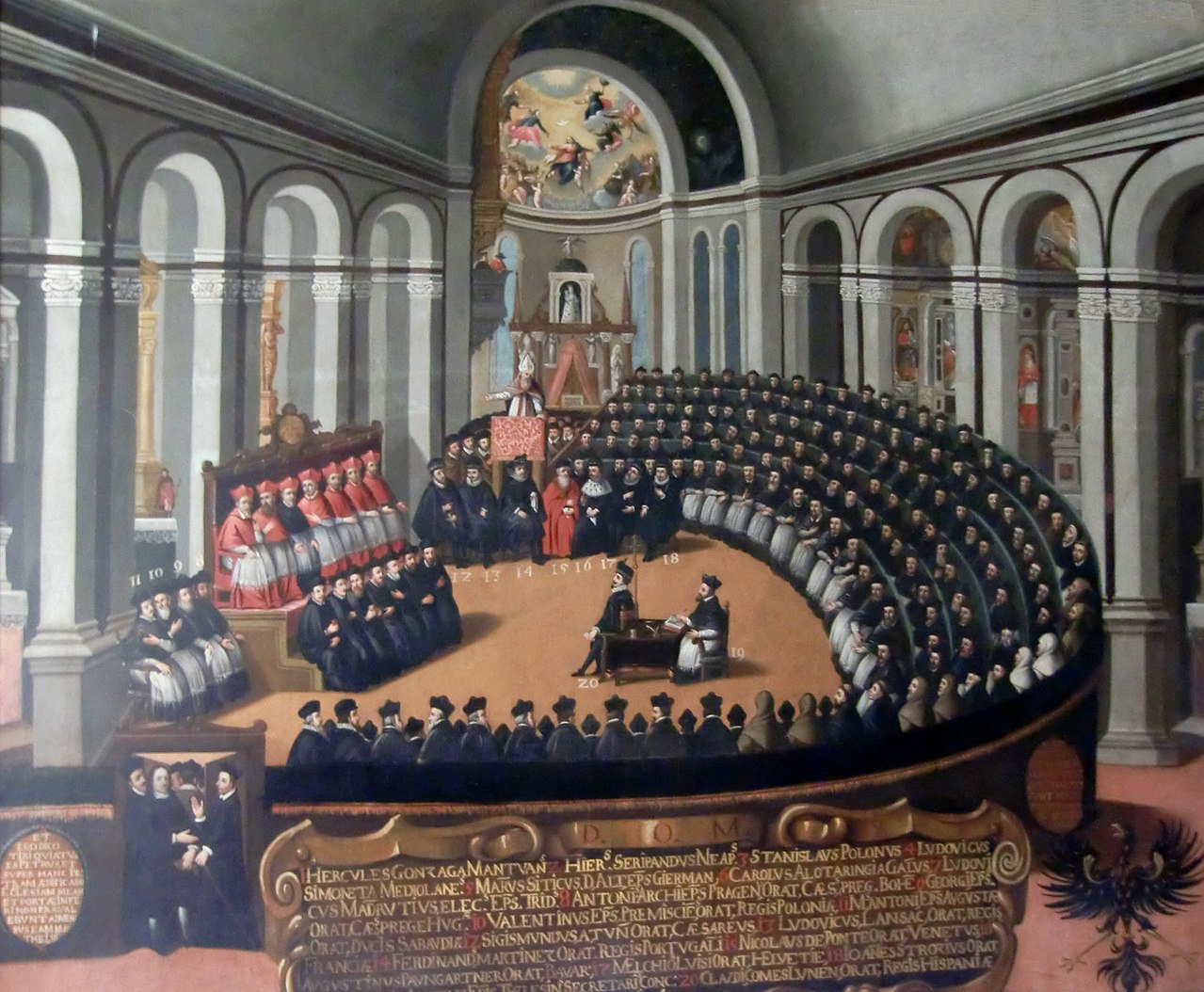
Historical painting of the Council of Trent
The Council of Trent – affirming the divine institution of confession

At the Council of Trent, the Church clarified what she had always believed: confession is divinely instituted, priests act in judgment and healing, Christ Himself established this authority.

So… In Whom Do You Put Your Trust?

The Catholic answer isn’t: “The priest.”
It’s: God—who chooses to forgive through the means He established.

Confession isn’t trusting men over God. It’s trusting God enough to accept His way.

Closing Prayer

Heavenly Father,
You are rich in mercy and slow to anger,
abounding in steadfast love and faithfulness.
Before You, no sin is hidden,
no wound unknown,
no heart beyond Your reach.

We thank You for not leaving us alone in our guilt,
for not asking us to save ourselves,
but for sending Your Son,
the Lamb who takes away the sins of the world.

Lord Jesus Christ,
You bore our sins in Your body upon the Cross.
You breathed Your Spirit upon the apostles
and entrusted to Your Church
the ministry of reconciliation.
Give us the humility to trust not in ourselves,
but in the mercy You offer through the means You established.

Holy Spirit,
light of truth and fire of love,
search our hearts,
uncover what we fear to name,
and give us the courage to step into the light.
Where sin has wounded us, bring healing.
Where shame has bound us, bring freedom.
Where pride resists grace, bring repentance.

Teach us, Lord,
to confess with honest hearts,
to receive forgiveness with childlike trust,
and to walk in newness of life.
May we never doubt that when Your Church speaks forgiveness,
it is Your own voice of mercy we hear.

We place our trust in You, O God—
not in our feelings,
not in our excuses,
not in our own righteousness—
but in Your promise,
Your authority,
and Your unfailing love.

We ask this through Christ our Lord,
who lives and reigns with You
in the unity of the Holy Spirit,
God forever and ever.

Amen.

Before You Go

If this reflection felt familiar—or healing—
❤️ Like this post so others can find it
🔔 Subscribe to stay connected
🔁 Share it with someone who’s heard this question before

And I invite you to read the earlier posts in the “In Whom Do You Put Your Trust?” series.
You’re not alone in these questions. And mercy is closer than you think.

Published February 14, 2026

When the Church tells you that priests are another Christ, and the Bible teaches that there is one Christ, in whom do you put your trust?

One Christ, One Truth: Clearing the Confusion About Priesthood
In Whom Do You Put Your Trust? – Post 10

The question—“When the Church tells you that priests are another Christ, and the Bible teaches that there is one Christ, in whom do you put your trust?”—has echoed through centuries of Christian debate.

In 1998, I faced this challenge from a fundamentalist who posed 18 questions challenging my faith in the Catholic Church, and my response remains relevant today. Let’s explore why the Catholic understanding of priesthood does not contradict Scripture but rather flows from it.

The concern arises from misunderstanding the phrase “in persona Christi”—Latin for “in the person of Christ.” The Church teaches that priests act in this capacity when administering the Sacraments. This does not mean priests are Christ Himself or that there are “many Christs.” Instead, it means Christ works through His ministers, making His grace present in tangible ways.

Scriptural Foundation

  • John 20:21-23 – “As the Father has sent me, so I send you… Receive the Holy Spirit. Whose sins you forgive are forgiven them.”
    Christ delegates His authority to the Apostles, who in turn pass it on through ordination.
  • 2 Corinthians 5:20 – “We are ambassadors for Christ, God making his appeal through us.”
    An ambassador represents but does not replace the one who sends them.
  • Luke 22:19 – “Do this in memory of me.”
    The Eucharistic command entrusts priests with making Christ sacramentally present.

Catechism of the Catholic Church

  • CCC 1548 – “In the ecclesial service of the ordained minister, it is Christ himself who is present to his Church as Head of his Body, Shepherd of his flock, High Priest of the redemptive sacrifice.”
    The priest acts in persona Christi Capitis—in the person of Christ the Head.
  • CCC 1550 – “This presence of Christ in the minister is not to be understood as if the latter were preserved from all human weaknesses.”
    Our trust is in Christ, not in the perfection of His ministers.

Early Church Fathers – Historical Context

The early centuries of Christianity were marked by persecution, doctrinal development, and the need for clear leadership. Bishops and priests were seen as essential for maintaining unity and transmitting apostolic teaching.

  • St. Ignatius of Antioch (c. 107 AD)
    “Let everyone respect the deacons as Jesus Christ, and the bishop as the image of the Father.” (Letter to the Trallians)
    Ignatius emphasized the bishop’s role as a safeguard against division, not as a rival to Christ.
  • St. John Chrysostom (4th century)
    “The priest stands there, not in his own name, but in Christ’s.” (On the Priesthood)
    Chrysostom saw priests as instruments of divine grace during a time of doctrinal clarity.
  • St. Augustine (354–430)
    “When Peter baptizes, it is Christ who baptizes.” (On Baptism, Against the Donatists)
    Augustine affirmed that sacraments derive their power from Christ, not the minister—a truth that remains central today.

The Protestant Reformation – Historical Context

The 16th century brought seismic shifts in Christian thought. Reformers challenged abuses and questioned sacramental theology, but even they recognized the need for pastoral leadership.

  • Martin Luther (1483–1546)
    “We are all priests before God, but not all have the same office.”
  • John Calvin (1509–1564)
    Calvin described pastors as “ambassadors of Christ,” echoing 2 Corinthians 5:20.

Catholic Saints During the Reformation

  • St. Teresa of Ávila (1515–1582)
    “We must always keep in mind that the Lord Himself has given great power to priests… even if they are not holy, the Lord will still fulfill His word through them.”
  • St. John of the Cross (1542–1591)
    “Through the ministry of priests, God communicates His grace and forgiveness.”
  • St. Francis de Sales (1567–1622)
    “The priest is not another Christ in essence, but he bears Christ’s authority in the sacraments.”
  • St. Robert Bellarmine (1542–1621)
    “Christ instituted the priesthood so that His work might continue visibly in the Church.”

The priesthood is a sacramental sign—a visible instrument through which Christ acts. Just as water in Baptism conveys grace, so the priest’s words and actions in the Eucharist and Reconciliation make Christ’s saving work present. There is one Christ, but His ministry continues through His Body, the Church.

So, in whom do we put our trust? Not in human frailty, but in Christ who works through His Church. The priest is not “another Christ” but a living sign pointing us to the One Savior. Our faith rests in Jesus Christ, who promised, “I am with you always, to the end of the age” (Matthew 28:20).

A Prayer for Priests

Lord Jesus Christ, Eternal High Priest,
Bless Your priests with holiness and strength.

May they always act in Your name and bring Your grace to the world.

Protect them from discouragement and renew their hearts with zeal for souls.

Through their ministry, may Your love shine forth and lead many to salvation.

Amen.

If this post helped deepen your understanding, please like, share, and subscribe to support this series.

Read the other posts in the “In Whom Do You Put Your Trust?” series for more insights into faith, Scripture, and Catholic teaching.

So when the Church tells you that the Sacraments are necessary for salvation, and Jesus taught that only belief was necessary, in whom do you put your trust? Part 6: Holy Orders

Faith and the Sacraments: Trusting What Jesus Actually Taught

Part 6: Holy Orders – Shepherds for the Flock

“So when the Church tells you that the Sacraments are necessary for salvation, and Jesus taught that only belief was necessary, in whom do you put your trust?”

Welcome to Part 6 of our 7-part series exploring the Sacraments and answering one of the most important questions Catholics face today: If Jesus taught that belief alone is necessary for salvation, why does the Catholic Church teach that the Sacraments are necessary?

When I first began responding to the challenges from a fundamentalist Christian back in 1998, I already knew that Holy Orders was a sacrament, instituted by Christ and essential to the life of the Church. I had a deep respect for priests and bishops and understood their role in leading and sanctifying the faithful. But what I hadn’t yet explored was where this sacrament comes from in Scripture, and how it connects the Old Testament priesthood with the New Covenant ministry of Christ and His apostles.

That same fundamentalist had asked me:

“If Jesus taught that belief alone is necessary for salvation, why does the Catholic Church teach that the Sacraments are necessary?”

And once again, the answer led me deeper — into the Old Testament, where God established a priesthood to serve His people, and into the New Testament, where Jesus fulfilled and transformed that priesthood, commissioning His apostles to continue His work through the Sacrament of Holy Orders.

In this post, we’ll explore:

  • The biblical foundations of Holy Orders,
  • Its continuity from the Old Testament priesthood,
  • How Jesus commissioned His apostles to carry on His mission, and
  • What the early Church Fathers and saints taught about the sacredness of ordination.

Faith Alone? Why Holy Orders Matter

Jesus didn’t just call people to believe — He called and commissioned specific men to teach, sanctify, and govern His Church. He gave them real authority, and through the Sacrament of Holy Orders, that authority has been passed down through apostolic succession for over 2,000 years.

2 Corinthians 5:20 – “We are ambassadors for Christ, as though God were making His appeal through us.”

The ordained priesthood is not a human invention — it is a divine calling, a continuation of Christ’s own priestly ministry.

Biblical Foundations of Holy Orders

Old Testament Priesthood

  • Exodus 28–29 – God commands Moses to consecrate Aaron and his sons as priests, with sacred garments and rituals.
  • Numbers 3:5–10 – The Levites are appointed to assist the priests and serve in the tabernacle.
  • Psalm 110:4 – “You are a priest forever, in the order of Melchizedek.”

These passages show that God established a ministerial priesthood distinct from the general priesthood of all believers — a pattern fulfilled and transformed in Christ.

Jesus Establishes the New Priesthood

  • Luke 22:19 – At the Last Supper, Jesus says: “Do this in memory of me.” This is a command to offer the Eucharist, a priestly act.
  • John 20:21–23 – Jesus breathes on the apostles and gives them authority to forgive sins — a priestly function.
  • Matthew 28:19–20 – Jesus commissions the apostles to teach, baptize, and lead — the core duties of ordained ministry.

These weren’t symbolic gestures. Jesus was establishing a sacramental priesthood, rooted in His own authority.

Apostolic Succession and Ordination

The apostles understood that their ministry was not temporary — it was to be handed on:

  • Acts 6:5–6 – The apostles lay hands on the first deacons.
  • Acts 13:2–3 – Paul and Barnabas are commissioned through prayer and laying on of hands.
  • 1 Timothy 4:14 – “Do not neglect the gift you have, which was given you… when the council of elders laid their hands on you.”
  • 2 Timothy 1:6 – “Fan into flame the gift of God, which is in you through the laying on of my hands.”

This laying on of hands is the essential act of ordination, still used today in every Holy Orders ceremony.

What the Early Church Believed About Holy Orders

St. Clement of Rome (1st century)

“The apostles appointed bishops and deacons… and gave instructions that when these should fall asleep, other approved men should succeed them.”

St. Ignatius of Antioch (c. 110 A.D.)

“Let everyone respect the bishop as they would the Lord Himself.”

St. John Chrysostom

“The priesthood is the most sublime of all orders… it is exercised on earth, but ranks among heavenly things.”

St. Thomas Aquinas

“Holy Orders is the sacrament through which the spiritual power is conferred for the sanctification of souls.”

The early Church saw Holy Orders as a divine institution, not a human hierarchy. It was the means by which Christ continued to shepherd His people.

Conclusion: Shepherds for the Flock

Holy Orders is not about status — it’s about service. It’s not about authority for its own sake — it’s about sacrificial leadership, modeled after Christ the Good Shepherd.

So when someone asks, “If Jesus taught that belief alone is necessary for salvation, why does the Catholic Church teach that the Sacraments are necessary?” — we can answer:

Because Jesus didn’t just say “believe.” He said, “Feed my sheep.” He gave us the priesthood to continue His ministry of teaching, healing, and sanctifying.

Stay Tuned for Part 7: Anointing of the Sick – Grace in Suffering

In the final post of this series, we’ll explore the Sacrament of Anointing of the Sick, a powerful gift of healing, peace, and grace for those who are suffering. We’ll look at its biblical roots, its presence in both Old and New Testaments, and how the Church continues Christ’s healing ministry today.

Follow our Facebook page to stay updated and join the conversation as we conclude this journey through the Sacraments — one post at a time.

Most Popular Posts