Showing posts with label Catholic. Show all posts

Mary’s Role in Salvation History—A Cradle Catholic Conversation

Mary as the New Eve - undoing the knot of disobedience

Mary and Eve: Her obedience unties the knot of disobedience

Your Protestant Friend Asked About Mary? Send Them This.

Mary’s Role in Salvation History—A Cradle Catholic Conversation

by Keith Abell, RPh MI
Ad Majorem Dei Gloriam

If you’ve been following along with this series, “In Whom Do You Put Your Trust?”, you know that I’ve been responding to a list of questions a well-meaning fundamentalist once sent me—questions meant to shake my Catholic faith. Each post in this series has taken one of those questions and held it up to the light of Scripture, history, and the teaching authority of the Church.

For many cradle Catholics like us, these questions can feel odd at first. Most of us grew up with Holy Water fonts by the door, Mary statues in the garden, and a rosary tangled somewhere in the car. We didn’t question it. It was just part of the air we breathed.

But as adults, especially in conversations with non-Catholic Christians, we discover quickly that what feels natural to us is confusing—or even threatening—to others. And so these questions matter. They force us to articulate what we’ve always known in our bones: that everything the Church teaches, and everything we practice, always leads us closer to Christ.

Which brings us to today’s question:

“When the Church tells you that Mary was the co-redeemer of mankind, and the Bible tells you that you are lessening the work that Christ did on the cross, in whom do you put your trust?”

Let’s talk about it—not in a defensive way, not academically, but heart-to-heart, as Catholics who love Christ and His Mother and who want to understand our faith more deeply.

What the Early Church Fathers Actually Said About Mary

Before there were denominations, before the New Testament canon was finalized, before anyone debated Marian doctrines in the modern sense, the earliest Christian leaders were already talking about Mary’s role in salvation history.

One of the strongest voices is St. Irenaeus of Lyons, writing in the late 2nd century. He famously called Mary the “cause of salvation” for humanity—not because she redeemed us, but because her obedience undid Eve’s disobedience.

“The knot of Eve’s disobedience was untied by Mary’s obedience.”
“What the virgin Eve bound by her unbelief, the Virgin Mary loosened by her faith.”

This isn’t Catholic imagination. This is Christianity before any schisms.

Another early witness, St. Jerome, summed it up with striking simplicity:

“Death came through Eve, but life came through Mary.”

And St. Ambrose of Milan spoke of Mary as the one “through whom the salvation of all was being readied.”

Notice something here: The early Church Fathers speak boldly about Mary’s role, but always in relation to Christ. Mary is never portrayed as equal to Him. Her role is always derivative, always subordinate, always a cooperation with His work.

They saw her not as a rival redeemer, but as the New Eve standing beside the New Adam.
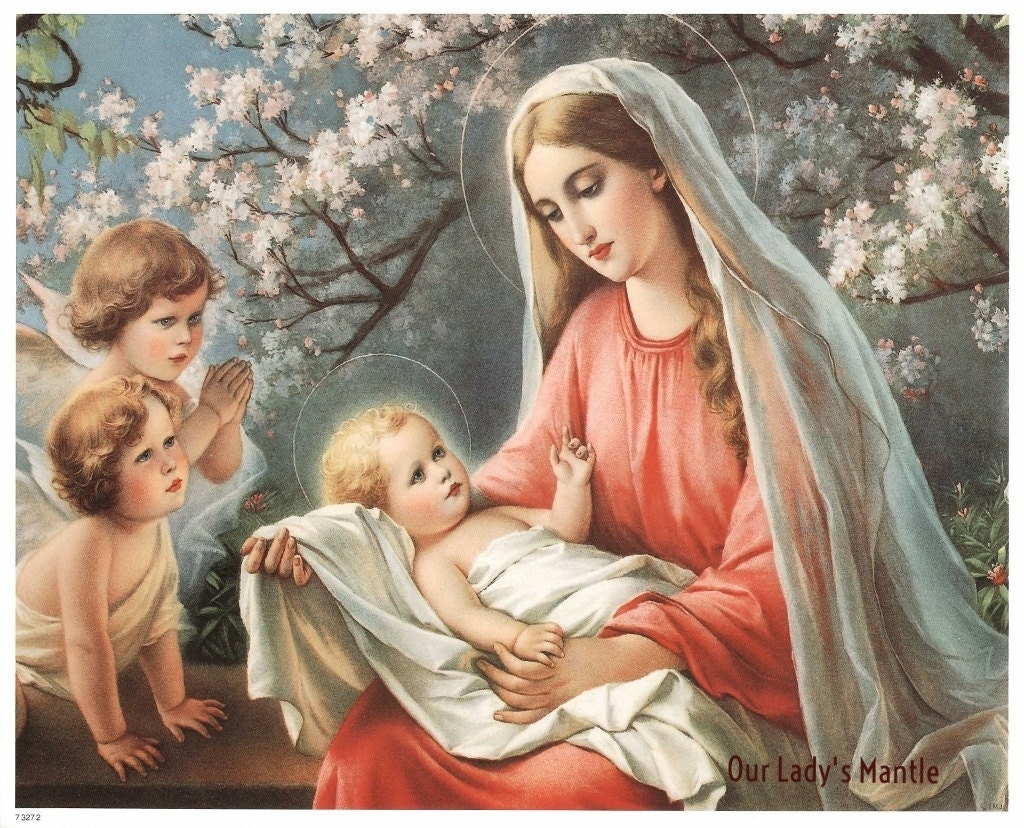
Virgin Mary with Infant Jesus and Angels - classic Catholic art

What the Saints of the Reformation Era Said

During the Protestant Reformation, Marian doctrines came under intense attack. Some Reformers still held Mary in high esteem—Luther and Zwingli among them—but many of their followers did not. So Catholic saints and scholars stood up to defend Mary’s place in Christian faith.

St. Robert Bellarmine, a Doctor of the Church, insisted that devotion to Mary doesn’t detract from Christ’s glory:

“We do not adore Mary; we adore the God whom Mary bore.”

He showed that Marian doctrine protects the truth about the Incarnation: if Mary is not truly Mother of God, then Christ is not truly God-with-us.

St. Lawrence of Brindisi and Francisco Suárez built powerful theological arguments showing that Mary’s cooperation is entirely dependent on Christ’s grace—much like ours, but in a more perfect and intimate way.

And later, the French School—think Pierre de Bérulle, Jean-Jacques Olier, St. John Eudes—emphasized Mary’s profound union with Christ’s mission. They spoke of her heart beating in harmony with His, her will wholly surrendered to His.

These saints did not invent new doctrines. They simply articulated, more clearly than ever, that Mary’s role magnifies Christ. Her greatness points to His greater greatness.

The Council of Trent: The Church Draws a Line in the Sand

The Council of Trent (1545–1563) didn’t produce a long Marian treatise, but what it did say has shaped Marian teaching ever since.

Trent reaffirmed that honoring the saints—and especially Mary—is deeply biblical and profoundly Christian. It defended the veneration of images, insisting that honor given to Mary passes directly to Christ.

When defining Original Sin, Trent explicitly stated that its decrees were not to be applied to “the Blessed and Immaculate Virgin Mary.” This left theological room for the later definition of the Immaculate Conception.

And Trent’s teaching on grace—especially the cooperation of the human will—explained how Mary could freely say “yes” to God without ever undermining Christ’s unique mediatorship.

For Catholics, Trent was like a lighthouse in the storm: steady, clear, unwavering.

What the Modern Church Teaches—With Beautiful Clarity

Fast forward to the 20th and 21st centuries, and the Church continues to speak with great tenderness and precision about Mary.

The Second Vatican Council devoted an entire chapter of Lumen Gentium to Mary. In it, the bishops wrote words that every Catholic should know by heart:

“No creature could ever be counted along with the Incarnate Word and Redeemer.”
“Mary’s role flows entirely from the superabundance of Christ’s merits.”

That settles the “co-redeemer” misunderstanding once and for all. Mary cooperates, but Christ redeems.

St. John Paul II emphasized Mary as the first and greatest disciple—the model for the whole Church.

Pope Benedict XVI reminded us that Marian devotion is always Christocentric, saying:

“Devotion to Mary... is an intrinsic part of Christian worship.”

And Pope Francis, while deeply Marian, has warned against confusing titles, saying Mary is not a “fourth person of the Trinity” and insisting we speak of her in ways that clarify—not obscure—Christ’s primacy.

The Church could not be more clear: Everything Mary does is by Christ’s grace, for Christ’s mission, and ordered to Christ’s glory.

So, in Whom Do We Put Our Trust?

Christ. Always Christ.

And because we trust Christ, we trust the Church He established. And because we trust the Church, we trust the Mother He gave us from the Cross.

Seeing Mary rightly never distracts from Jesus—it deepens our understanding of Him. Rejecting Mary doesn’t protect Christ’s glory—it diminishes our grasp of the Incarnation.

If Jesus chose to come into the world through Mary, then we can safely choose to come to Him the same way.
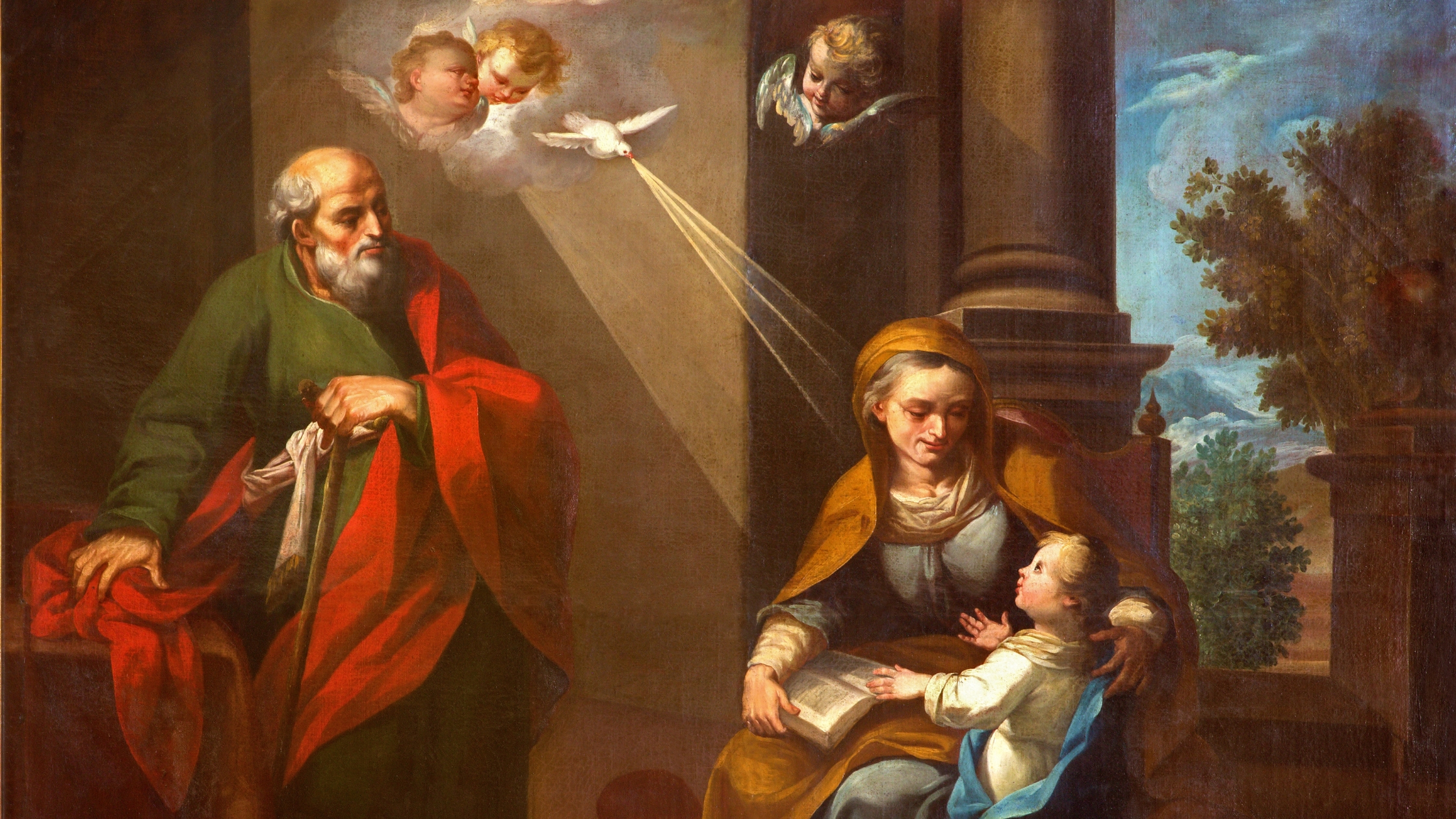
Birth of the Blessed Virgin Mary - Catholic Marian devotion

A Closing Prayer

Mary, Mother of God and Mother of the Church,
teach us to say “yes” as you did—freely, humbly, and with total trust.
Lead us ever closer to your Son,
that we may love Him with your heart and serve Him with your faith.
Help us understand your role in His saving work,
and draw us deeper into the mystery of His mercy.
Amen.


**If this post strengthened your faith, please—
Like, Subscribe, and Share.**
It helps more cradle Catholics rediscover the beauty of their own tradition.
To show that our trust in Christ is never threatened by honoring His Mother—it’s strengthened by it.

When the Beatitudes Feel Like They’re Talking Straight to Us

A Sunday Morning Reflection on Today’s Mass Readings

by Keith Abell, RPh MI Ad Majoram Dei Gloriam

Your long paragraph of text goes here. The text will automatically wrap around the image. Add enough text to flow past the bottom of the image for the best effect. You can add more paragraphs as needed.

If you’re reading this on a Sunday morning before or after Mass, you’ve probably just heard (or are about to hear) one of the most famous passages in the entire Gospel: the Beatitudes from Matthew 5. They’re beautiful, poetic, familiar — maybe too familiar. For lifelong cradle Catholics, they can almost slip by like religious background music.

But today’s entire set of readings invites us to hear them differently. Not as a checklist. Not as a spiritual performance review. But as God’s own encouragement spoken to people who are just trying to get through life with faith intact.

And that means you. It means me. It means the tired, the overwhelmed, the humble remnant who still show up on Sunday because we know we need God.

1. Zephaniah Reminds Us: God Sees the Strugglers

In the first reading, God says He will leave behind “a people humble and lowly.” Not the successful. Not the flawless. Not the ones with perfect spiritual résumés.

Just the ones who still seek Him in their struggle.

For many cradle Catholics, that hits home. We grew up in the faith. We know the prayers. But we also know what it feels like to show up at Mass with a heavy heart, a tired mind, or a life that feels like it’s unraveling at the edges.

Zephaniah says God sees all of that and calls us His remnant. His faithful ones. His beloved.

2. The Psalm Shows God’s Heart for the Overlooked

Psalm 146 describes the Lord as the One who “keeps faith forever,” who lifts up the bowed down, feeds the hungry, protects the stranger, and cares for the widow and orphan.

In other words, God leans toward those who feel like they’re carrying more than they can handle.

If you’ve walked into Mass today feeling stretched thin — emotionally, financially, spiritually — the Psalm is God’s gentle way of saying: “I’m here. I’m with you. I will carry you.”

3. St. Paul Reminds Us That God Chooses the Weak

Paul doesn’t sugarcoat it. He flat-out says most of the early Christians weren’t powerful, impressive, or influential. They weren’t the ones the world admired.

And then he says something astonishing: “God chose the foolish… God chose the weak… God chose the lowly…”

Not accidentally. Intentionally.

Paul’s point is simple: God works through ordinary people. People who feel their limits. People who are painfully aware of their imperfections. People who don’t feel “holy enough.”

If that’s you this morning, Paul is saying: “You’re exactly the one God loves to use.”

4. Now the Gospel Comes Alive: Jesus Is Talking To You

And then we reach the Gospel — the Beatitudes. For years, maybe decades, many of us have heard them as moral ideals: Be merciful. Be meek. Be pure. Be a peacemaker.

But look at who Jesus is blessing. Look at how He starts: “Blessed are the poor in spirit.” “Blessed are those who mourn.” “Blessed are the meek.”

These aren’t the spiritually impressive. They’re the spiritually exhausted. The emotionally drained. The quietly faithful. The ones who don’t have it all together.

Sound familiar?

Jesus isn’t giving commands. He’s giving comfort.

He’s looking out at regular people — people like us — and saying: “I see you. I know what life feels like for you. And right there, in that very place, you are blessed.”

5. The Early Church Fathers Saw It This Way Too

The early Christians weren’t living easy lives. Many were struggling, persecuted, grieving, or barely hanging on. So when the early Church Fathers wrote about the Beatitudes, they understood them as tender words of hope.

St. Augustine said the Beatitudes are like a “ladder of healing,” where God lifts up the wounded step by step.

St. John Chrysostom noted that Jesus begins His preaching with blessings for the humble and hurting so that the discouraged would know they have a place in God’s Kingdom.

Origen spoke of the Beatitudes as “medicine for the soul,” applied to people suffering inside and out.

And Gregory of Nyssa believed the Beatitudes weren’t burdens but promises—prophecies of who God is shaping us to become.

For them, the Beatitudes weren’t demands. They were declarations of God’s love for the lowly.

6. What This Means for Us This Sunday

If you walked into church today worried, lonely, stressed, or feeling spiritually “blah”… If you came in wondering where you fit in the Church or in life… If you showed up out of habit, out of hope, or out of sheer spiritual muscle memory…

Jesus has a message for you in the Gospel: “Blessed are you.”

Not “blessed will you be once you fix things.” Not “blessed are the people who have it all together.” Not “blessed are the people who pray better, try harder, or shine brighter.”

Just: “Blessed are you.” Right now. As you are.

The readings today are God’s love letter to tired Catholics who keep showing up.

A Prayer for This Sunday

Lord Jesus,

You speak blessing over the humble, the hurting, and the overwhelmed. You see what no one else sees — the quiet efforts, the hidden struggles, the longing for peace, healing, and hope. Bless me today with the comfort You promised. Give rest to my spirit, strength to my heart, and the courage to trust that Your Kingdom really is for people like me. Amen.

If this reflection spoke to your heart… Please take a moment to like, subscribe, and share this post with another cradle Catholic who might need to hear that today’s Mass readings were written for them too.

And if you ever want help crafting more reflections, I’m here for you.

When Jesus said to test the spirits, for there are many false prophets in the world, and the Church tells you they can't be talking about us, in whom do you put your trust?

When Fundamentalist Questions Shake Your Faith: A Personal Reflection

by Keith Abell, RPh MI
Ad Majorem Dei Gloriam

This isn’t just theory for me—it’s personal. Back in 1998, a fundamentalist handed me a list of eighteen questions designed to shake my Catholic faith. One of them still echoes in my mind:

“When Jesus said to test the spirits, for there are many false prophets in the world, and the Church tells you they can't be talking about us, in whom do you put your trust?”

At first glance, that question sounds reasonable—even biblical. But underneath it lies a challenge: do you trust your own interpretation of Scripture, or the authority of the Church Christ founded?

The temptation to say, “Just me and my Bible” is strong. It sounds noble: I’ll read the Bible and let the Holy Spirit guide me. But here’s the problem—there are thousands of denominations, all claiming the same Spirit, yet teaching contradictory doctrines. Scripture itself warns against division and distortion. And let’s not forget, even Satan quoted Scripture to tempt Jesus in the wilderness. Knowing verses isn’t enough; interpretation matters.

So how do we know our interpretation isn’t guided by pride—or worse, by the enemy—rather than the Holy Spirit? The truth is, God never intended faith to be a solo project. The Bible gives us clues. Paul tells the Thessalonians to hold fast to the traditions they were taught, whether by word or letter. He calls the Church the pillar and foundation of truth. And when disputes arose in the early Church, the apostles didn’t say, “Figure it out yourself.” They gathered in council. From the beginning, faith was communal, safeguarded by apostolic teaching and the Holy Spirit. That’s why the Catholic Church insists on Scripture and Tradition, interpreted by the Magisterium.

This is why I trust the Catholic Church. Christ gave His guarantee when He told Peter, “You are Peter, and on this rock I will build my Church, and the gates of hell shall not prevail against it.” That’s not just poetry—that’s a divine promise. For two thousand years, through councils and crises, the Church has preserved the core truths of the faith. And when I look back at history, I see consistency. The early Church Fathers—St. Irenaeus, St. Augustine, St. Vincent of Lérins—warned against private interpretation and upheld apostolic tradition. Augustine even said, “I would not believe the Gospel unless the authority of the Catholic Church moved me.”

For me, this isn’t just history—it’s family. Blessed Thomas Abell, a distant relative of mine, gave his life defending these truths during Henry VIII’s break from Rome. In his treatise Invicta Veritas, Abell argued that marriage is a sacrament governed by divine law, not royal convenience. He insisted that Scripture must be read within the Church’s tradition, not twisted for personal gain. When Henry declared himself head of the Church, Abell refused to bow. For that, he was executed in 1540. His martyrdom reminds me that truth isn’t determined by power or popularity—it’s safeguarded by the Church Christ promised would never fall.

History warns us what happens when private interpretation becomes the rule. During the Protestant Reformation, saints like Robert Bellarmine and Francis de Sales pleaded for unity, warning that rejecting the Church’s authority would lead to chaos. Today, we see the fruit: thousands of denominations, each claiming to be “Bible-based,” yet divided on core doctrines. Contrast that with the Catholic Church: one faith, one baptism, one Eucharist—unchanged in essence for two millennia.

So, in whom do I put my trust? Not in my own cleverness. Not in a preacher’s opinion. I trust Christ’s promise to Peter. I trust the Holy Spirit’s guidance of the Magisterium. I trust the witness of saints and martyrs, like my own ancestor, Blessed Thomas Abell. Because faith isn’t a solo project. It’s a gift, lived in communion with the Church Christ founded.

If you’re a cradle Catholic and someone tries to shake your faith with clever questions, remember this: the early Church Fathers stood where you stand. The saints defended what you believe. And Christ Himself guaranteed that the gates of hell will never prevail against His Church.

Concluding Prayer

Lord Jesus Christ,
You promised that the gates of hell would never prevail against Your Church. We thank You for the gift of faith, handed down through the apostles and safeguarded by the Magisterium. We honor the witness of saints and martyrs—like Blessed Thomas Abell—who stood firm in truth even unto death. Strengthen us to hold fast to Scripture and Tradition, to remain faithful in times of doubt, and to trust in Your promise that You are with us always, even to the end of the age. May the Holy Spirit guide us into all truth and keep us united in Your one, holy, catholic, and apostolic Church.
Amen.

If this reflection spoke to your heart, please like, share, and follow so others can be encouraged in their faith.

And stay tuned for the next post in this series:
#13 – When Revelation 17 talks about the Great Whore: What does it really mean?

Let’s keep the conversation going and stand firm together in the truth Christ entrusted to His Church!

When the Church tells you that Jesus comes down to the altar, to be sacrificed, and Jesus said ‘It is finished’, in whom do you put your trust

If Jesus Said “It Is Finished,” Why Do Catholics Believe He Comes to the Altar?

by Keith Abell RPh MI
Ad Majorem Dei Gloriam
(Question 5 of the “In Whom Do You Put Your Trust?” Series)


This is question 5 in my 18-part series responding to questions raised by a fundamentalist who challenged my Catholic faith years ago. These questions aren’t easy—they’re designed to shake confidence in what we believe. And if you’re a cradle Catholic who has “just gone with it” all your life, this series is for you. Because understanding your faith isn’t optional. It’s essential.

Today’s question is one that has confused many Catholics and divided Christians for centuries:

“When the Church tells you that Jesus comes down to the altar, at the beck and call of a priest to be sacrificed, and Jesus said ‘It is finished’ and that by one offering man can have salvation, in whom do you put your trust?”

At first glance, this sounds convincing. After all, Jesus did say “It is finished” on the Cross (John 19:30). So why do Catholics believe the Eucharist is truly Christ—Body, Blood, Soul, and Divinity—made present at every Mass? Why do we believe the sacrifice of Calvary is present on the altar? And in whom do we put our trust—Christ alone, or Christ and the Church He founded?

Let’s dig deep, because this question strikes at the heart of the Catholic faith.

The Misunderstanding

The accusation that Jesus comes down “at the beck and call of a priest” misrepresents Catholic teaching. The Church does not teach that priests summon Christ or sacrifice Him again. The Mass is not a new sacrifice. It is the one sacrifice of Calvary made present sacramentally.

At every Mass, we obey Jesus’ command, “Do this in memory of me” (Luke 22:19).

This is not human power at work. It is God’s action through Christ and the Holy Spirit. The priest acts in persona Christi—in the person of Christ—praying to the Father through the Son, while the Holy Spirit transforms bread and wine into the Body, Blood, Soul, and Divinity of Jesus. This is why the Catechism calls the Eucharist “the source and summit of the Christian life.”

What Did Jesus Mean by “It Is Finished”?

When Jesus said “It is finished” (John 19:30), He was declaring the completion of His Paschal sacrifice—the fulfillment of the Old Covenant Passover.

At the Last Supper, Jesus began the Passover meal but did not drink the final cup. He said, “I shall not drink again of the fruit of the vine until the kingdom of God comes” (Luke 22:18).

On the Cross, He drinks from the sponge on the hyssop stick (John 19:29), completing the Passover. His blood and water flow from His side, making Him the true Paschal Lamb. The old Passover is finished because Jesus Himself becomes the Passover. The Eucharist is now the New Passover, and when we celebrate it, we are mystically present at Calvary, united to that one eternal sacrifice.

One Sacrifice, Once for All

Hebrews 10:10 says Christ’s offering is “once for all.” The Mass does not repeat that sacrifice—it applies its grace to us here and now. The Eucharist is not a symbol. It is Christ Himself, the same Jesus who died and rose for us. At every Mass, heaven touches earth, and we receive the living Christ who said:

“I am the living bread that came down from heaven; whoever eats this bread will live forever” (John 6:51).

And again:

“Unless you eat the flesh of the Son of Man and drink his blood, you do not have life within you” (John 6:53).

This is why Catholics respond as Peter did:

“Lord, to whom shall we go? You have the words of eternal life” (John 6:68).

Why We Trust Jesus—and His Church

Here’s the heart of the matter: we trust Jesus, and we trust the Church He founded. Jesus promised:

“You are Peter, and upon this rock I will build my Church, and the gates of hell shall not prevail against it” (Matthew 16:18).

After the Reformation, thousands of interpretations of Scripture emerged. But Christ gave us the Church as the pillar and foundation of truth (1 Timothy 3:15). He guaranteed that the gates of hell would not prevail against it. That means the Church, guided by the Holy Spirit, safeguards the truth of the Eucharist.

The Witness of the Early Church Fathers

From the very beginning, Christians believed the Eucharist is truly Christ:

  • St. Ignatius of Antioch (c. 107 AD) wrote, “They abstain from the Eucharist because they do not confess that the Eucharist is the flesh of our Savior Jesus Christ.”
  • St. Justin Martyr (c. 155 AD) said, “We do not receive these as common bread and drink; but as Jesus Christ our Savior being incarnate… so we have been taught that the food blessed by the prayer of His word is the flesh and blood of that Jesus.”
  • St. Irenaeus (c. 180 AD) affirmed, “The bread which is produced from the earth, when it receives the invocation of God, is no longer common bread, but the Eucharist consisting of two realities, earthly and heavenly.”

This is not a medieval invention. It is the faith of the early Church—the same faith we profess today.

Conclusion

The Eucharist is not a symbol. It is Christ Himself, the same Jesus who said “It is finished” and offered His life for us. At every Mass, we are united to His one sacrifice—the Paschal Mystery—made present by His power.

So, in whom do we put our trust? In Jesus Christ, who gives Himself to us as spiritual food for eternal life. And in the Church He founded, which has faithfully taught this truth for 2,000 years. Jesus Himself guaranteed this when He said:

“And I tell you, you are Peter, and on this rock I will build my church, and the gates of hell shall not prevail against it.” (Matthew 16:18)

This promise matters. It means the Church will never be overcome by error or destruction. It means the truth of the Eucharist is safeguarded by Christ Himself.

Next time you go to Mass, pause and remember: you are not just attending a ritual—you are standing at Calvary. You are at the foot of the Cross, united to the one eternal sacrifice of Jesus Christ. Let that reality transform the way you worship.

If this post helped you understand the Paschal Mystery more deeply, share it with someone who needs to know the truth about the Eucharist. And don’t forget to subscribe or follow this series so you won’t miss Part 6, where we’ll tackle another challenge to our Catholic faith.


Prayer for Understanding the Paschal Mystery

Lord Jesus Christ, open our hearts and minds to the mystery of Your love. Help us to see the Eucharist as Your true Body and Blood, given for our salvation. Deepen our faith so that we may never take this gift for granted. Unite us to Your sacrifice and make us living witnesses of Your presence in the world. Amen.

So when the Church tells you that the Sacraments are necessary for salvation, and Jesus taught that only belief was necessary, in whom do you put your trust? Part 6: Holy Orders

Faith and the Sacraments: Trusting What Jesus Actually Taught

Part 6: Holy Orders – Shepherds for the Flock

“So when the Church tells you that the Sacraments are necessary for salvation, and Jesus taught that only belief was necessary, in whom do you put your trust?”

Welcome to Part 6 of our 7-part series exploring the Sacraments and answering one of the most important questions Catholics face today: If Jesus taught that belief alone is necessary for salvation, why does the Catholic Church teach that the Sacraments are necessary?

When I first began responding to the challenges from a fundamentalist Christian back in 1998, I already knew that Holy Orders was a sacrament, instituted by Christ and essential to the life of the Church. I had a deep respect for priests and bishops and understood their role in leading and sanctifying the faithful. But what I hadn’t yet explored was where this sacrament comes from in Scripture, and how it connects the Old Testament priesthood with the New Covenant ministry of Christ and His apostles.

That same fundamentalist had asked me:

“If Jesus taught that belief alone is necessary for salvation, why does the Catholic Church teach that the Sacraments are necessary?”

And once again, the answer led me deeper — into the Old Testament, where God established a priesthood to serve His people, and into the New Testament, where Jesus fulfilled and transformed that priesthood, commissioning His apostles to continue His work through the Sacrament of Holy Orders.

In this post, we’ll explore:

  • The biblical foundations of Holy Orders,
  • Its continuity from the Old Testament priesthood,
  • How Jesus commissioned His apostles to carry on His mission, and
  • What the early Church Fathers and saints taught about the sacredness of ordination.

Faith Alone? Why Holy Orders Matter

Jesus didn’t just call people to believe — He called and commissioned specific men to teach, sanctify, and govern His Church. He gave them real authority, and through the Sacrament of Holy Orders, that authority has been passed down through apostolic succession for over 2,000 years.

2 Corinthians 5:20 – “We are ambassadors for Christ, as though God were making His appeal through us.”

The ordained priesthood is not a human invention — it is a divine calling, a continuation of Christ’s own priestly ministry.

Biblical Foundations of Holy Orders

Old Testament Priesthood

  • Exodus 28–29 – God commands Moses to consecrate Aaron and his sons as priests, with sacred garments and rituals.
  • Numbers 3:5–10 – The Levites are appointed to assist the priests and serve in the tabernacle.
  • Psalm 110:4 – “You are a priest forever, in the order of Melchizedek.”

These passages show that God established a ministerial priesthood distinct from the general priesthood of all believers — a pattern fulfilled and transformed in Christ.

Jesus Establishes the New Priesthood

  • Luke 22:19 – At the Last Supper, Jesus says: “Do this in memory of me.” This is a command to offer the Eucharist, a priestly act.
  • John 20:21–23 – Jesus breathes on the apostles and gives them authority to forgive sins — a priestly function.
  • Matthew 28:19–20 – Jesus commissions the apostles to teach, baptize, and lead — the core duties of ordained ministry.

These weren’t symbolic gestures. Jesus was establishing a sacramental priesthood, rooted in His own authority.

Apostolic Succession and Ordination

The apostles understood that their ministry was not temporary — it was to be handed on:

  • Acts 6:5–6 – The apostles lay hands on the first deacons.
  • Acts 13:2–3 – Paul and Barnabas are commissioned through prayer and laying on of hands.
  • 1 Timothy 4:14 – “Do not neglect the gift you have, which was given you… when the council of elders laid their hands on you.”
  • 2 Timothy 1:6 – “Fan into flame the gift of God, which is in you through the laying on of my hands.”

This laying on of hands is the essential act of ordination, still used today in every Holy Orders ceremony.

What the Early Church Believed About Holy Orders

St. Clement of Rome (1st century)

“The apostles appointed bishops and deacons… and gave instructions that when these should fall asleep, other approved men should succeed them.”

St. Ignatius of Antioch (c. 110 A.D.)

“Let everyone respect the bishop as they would the Lord Himself.”

St. John Chrysostom

“The priesthood is the most sublime of all orders… it is exercised on earth, but ranks among heavenly things.”

St. Thomas Aquinas

“Holy Orders is the sacrament through which the spiritual power is conferred for the sanctification of souls.”

The early Church saw Holy Orders as a divine institution, not a human hierarchy. It was the means by which Christ continued to shepherd His people.

Conclusion: Shepherds for the Flock

Holy Orders is not about status — it’s about service. It’s not about authority for its own sake — it’s about sacrificial leadership, modeled after Christ the Good Shepherd.

So when someone asks, “If Jesus taught that belief alone is necessary for salvation, why does the Catholic Church teach that the Sacraments are necessary?” — we can answer:

Because Jesus didn’t just say “believe.” He said, “Feed my sheep.” He gave us the priesthood to continue His ministry of teaching, healing, and sanctifying.

Stay Tuned for Part 7: Anointing of the Sick – Grace in Suffering

In the final post of this series, we’ll explore the Sacrament of Anointing of the Sick, a powerful gift of healing, peace, and grace for those who are suffering. We’ll look at its biblical roots, its presence in both Old and New Testaments, and how the Church continues Christ’s healing ministry today.

Follow our Facebook page to stay updated and join the conversation as we conclude this journey through the Sacraments — one post at a time.

So when the Church tells you that the Sacraments are necessary for salvation, and Jesus taught that only belief was necessary, in whom do you put your trust? Part 3 Confession

Faith and the Sacraments: Trusting What Jesus Actually Taught

by Keith Abell RPh MI

Part 3: Confession – Mercy Through the Church

“So when the Church tells you that the Sacraments are necessary for salvation, and Jesus taught that only belief was necessary, in whom do you put your trust?”

Before We Begin Part 3: Finding Mercy in the Mess

When I first began exploring my Catholic faith more seriously — prompted by a series of challenging emails from a fundamentalist Christian back in 1998 — I realized how much I had taken for granted. As a cradle Catholic, I had received the Sacraments, including Confession, but I hadn’t truly understood their purpose.

I knew I was supposed to go to Confession before receiving Communion, but I didn’t understand why. I didn’t know where it came from in Scripture, or how Jesus Himself instituted it. I didn’t realize that Confession wasn’t just a spiritual routine — it was a direct encounter with the mercy of Christ.

That email exchange — which began with the question, “If Jesus taught that belief alone is necessary for salvation, why does the Catholic Church teach that the Sacraments are necessary?” — led me on a journey that changed my life.

In this third post of our 7-part series, I want to share what I discovered about the Sacrament of Confession — how it’s rooted in Scripture, how Jesus gave His apostles the authority to forgive sins, and how the early Church embraced this sacrament as a vital part of Christian life.

The Biblical Roots of Confession


1. Old Testament Foundations: Confession and Atonement

Long before the time of Christ, the Jewish people understood that sin required confession, repentance, and atonement — and that God worked through priests to mediate forgiveness.

  • Leviticus 5:5–6 – “When someone is guilty… they must confess in what way they have sinned. As a penalty… they must bring to the Lord a guilt offering… and the priest shall make atonement for them.”
  • Numbers 5:6–7 – “When a man or woman wrongs another… they must confess the sin they have committed. They must make full restitution…”
  • Psalm 32:5 – “I acknowledged my sin to you, and I did not cover my iniquity; I said, ‘I will confess my transgressions to the Lord,’ and you forgave the guilt of my sin.”

These passages show that confession was not just private — it involved acknowledging sin aloud and seeking reconciliation through the ministry of the priesthood.

2. Jesus Fulfills and Transforms the Practice

Jesus didn’t abolish this practice — He fulfilled it by giving His apostles the divine authority to forgive sins in His name.

John 20:21–23 – After the Resurrection, Jesus appears to the apostles and says: “Peace be with you. As the Father has sent me, so I send you.” And when He had said this, He breathed on them and said to them, “Receive the Holy Spirit. Whose sins you forgive are forgiven them, and whose sins you retain are retained.”

This is the clearest scriptural moment where Jesus institutes the Sacrament of Confession. He gives His apostles the power to forgive sins — something only God can do — and entrusts them with the responsibility to discern and absolve.

If Jesus intended for forgiveness to be a private matter between the individual and God alone, He would not have given this authority to His apostles.

3. Confession in the Early Church

The New Testament shows that the early Christian community practiced confession and understood it as a communal and sacramental act:

  • James 5:16 – “Therefore, confess your sins to one another and pray for one another, that you may be healed.”
  • 2 Corinthians 5:18 – “All this is from God, who reconciled us to Himself through Christ and gave us the ministry of reconciliation.”
  • Acts 19:18 – “Many of those who believed now came and openly confessed what they had done.”

These passages show that confession was public, personal, and priestly — not just a private prayer, but a real act of reconciliation within the Church.

What the Early Church Fathers Believed About Confession

The early Church Fathers consistently taught that Confession (or Penance/Reconciliation) was a sacrament instituted by Christ, involving confession to a priest for absolution.

St. Cyprian of Carthage (c. 250 A.D.)
“Let each confess his sin while he is still in this world… let him make satisfaction through the priest. Let him not wait until he is beyond forgiveness.” (The Lapsed, Ch. 28)

Origen (c. 240 A.D.)
“There is also a seventh mode of remission of sins through penance… when the sinner does not shrink from declaring his sin to a priest of the Lord.” (Homilies on Leviticus, 2:4)

St. Basil the Great (c. 370 A.D.)
“It is necessary to confess our sins to those to whom the dispensation of God’s mysteries is entrusted.” (Rules Briefly Treated, 288)

St. Ambrose of Milan (c. 385 A.D.)
“The Lord Jesus Himself declared… ‘Whose sins you forgive are forgiven them.’ Why should we not believe that this power was given to priests?” (On the Holy Spirit, Book III, Ch. 10)

St. Augustine of Hippo (354–430 A.D.)
“Let no one say, ‘I do penance in secret before God.’ Penance is done before the Church.” (Sermon 392)

These Fathers — writing in different regions and centuries — all affirm the same truth: Confession is a sacrament, instituted by Christ, practiced by the apostles, and handed down through the Church. It is the ordinary means by which sins are forgiven and grace is restored.

Mercy That Meets Us Where We Are

Confession is not about shame — it’s about freedom. It’s not about guilt — it’s about grace. Jesus didn’t leave us to struggle alone with sin. He gave us a sacrament where we can hear the words, “I absolve you,” and know that we are truly forgiven.

So when someone asks, “If Jesus taught that belief alone is necessary for salvation, why does the Catholic Church teach that the Sacraments are necessary?” — we can answer:

Because Jesus didn’t just say “believe.” He said, “Whose sins you forgive are forgiven.” He gave us Confession so we could experience His mercy in a personal, powerful way.

Stay Tuned for Part 4: Confirmation – Sealed for Mission

In the next post, we’ll explore the Sacrament of Confirmation, where the Holy Spirit strengthens us to live boldly as disciples of Christ. We’ll look at its biblical roots, its connection to Jesus’ own coming of age, and how the early Church understood this sacrament as a commissioning for mission.

Follow our Facebook page to stay updated and join the conversation as we continue rediscovering the beauty and power of the Sacraments — one post at a time.


So when the Church tells you that the Sacraments are necessary for salvation, and Jesus taught that only belief was necessary, in whom do you put your trust? Part 2 Eucharist

Faith and the Sacraments: Trusting What Jesus Actually Taught

by Keith Abell MI

Part 2: The Eucharist – The Body and Blood of Christ

Before We Begin Part 2: A Deeper Hunger

When I first began exploring my Catholic faith more seriously — prompted by a series of challenging emails from a fundamentalist Christian back in 1998 — I realized how much I had taken for granted. As a cradle Catholic, I had received the Eucharist countless times, but I hadn’t truly understood what I was receiving.

I believed in the Real Presence, because that’s what I was taught. But I hadn’t asked why it mattered. I hadn’t asked where it came from in Scripture. I hadn’t asked how the early Church understood it. I hadn’t asked why Jesus would say something so radical in John 6 that many of His followers walked away.

That months-long email exchange in 1998 — sparked by my fundamentalist friend’s first pointed challenge — became the catalyst that transformed my spiritual life from autopilot to intentional discipleship.

The question he kept returning to was this:

“So when the Church tells you that the Sacraments are necessary for salvation, and Jesus taught that only belief was necessary, in whom do you put your trust?”

As we continue answering this single, profound question across seven posts—one Sacrament at a time—this second installment turns to the Eucharist, which the Church calls “the source and summit of the Christian life” (Catechism of the Catholic Church, 1324). Here we discover that Jesus didn’t merely call for intellectual belief; He instituted a profound, ongoing communion with Himself through His Real Body and Blood—a gift of sacrifice, presence, and grace that nourishes eternal life.

In this post, I share what I uncovered about the Eucharist: its deep roots in Scripture (especially John 6 and the Last Supper), its fulfillment of Jewish Passover hopes, the unwavering witness of the early Church Fathers, and why it stands as the heart of Catholic worship and salvation. Far from being an optional “extra,” the Eucharist is how Christ remains truly with us, feeding our faith so we can persevere.

This is Part 2 of our 7-part exploration of the first question in the larger 18-question series—designed not just to defend the faith, but to help cradle Catholics like us rediscover its breathtaking beauty and necessity.

Let’s dive in: The Eucharist – The Body and Blood of Christ.

If Jesus taught that belief alone is necessary for salvation, why does the Catholic Church teach that the Sacraments are necessary?

For many cradle Catholics, the Eucharist is something we’ve received countless times — often without fully grasping its significance. We may know it’s “important,” but do we truly understand why the Church calls it the source and summit of the Christian life?

In this post, we’ll explore the biblical foundations of the Eucharist, its roots in Jewish tradition, and how the early Church Fathers and saints understood it — not as a symbol, but as the real presence of Jesus Christ, given to us as the Bread of Life.

Faith Alone? Why the Eucharist Matters


As we saw in Part 1, the idea of “faith alone” is not biblical. The only time the phrase appears in Scripture is in James 2:24:

“You see that a person is justified by works and not by faith alone.”

“Unless you eat the flesh of the Son of Man and drink His blood…” – A Radical Teaching

In John 6, Jesus delivers what is known as the Bread of Life discourse. After miraculously feeding the 5,000, He begins teaching that He is the true bread come down from heaven — and then He says:

John 6:53 – “Unless you eat the flesh of the Son of Man and drink His blood, you have no life in you.”

After Jesus said this his listeners were deeply disturbed. Many of them were devout Jews who knew the Law of Moses forbade the consumption of blood (Leviticus 17:10–12). To them, this teaching sounded repulsive, even blasphemous.

John 6:60 – “When many of His disciples heard it, they said, ‘This is a hard saying; who can listen to it?’”

Instead of clarifying or softening His words, Jesus reaffirmed them. He didn’t say, “Wait, I meant that symbolically.” He didn’t explain it away. In fact, He let them walk away.

John 6:66 – “After this, many of His disciples turned back and no longer walked with Him.”

This is one of the only times in the Gospels where disciples leave Jesus — and He does not chase after them. Why? Because He was speaking literally, and He knew that this teaching would divide those who truly believed from those who could not accept it.

Then Jesus turns to the Twelve Apostles and asks:

John 6:67 – “Do you also want to leave?”

This moment is crucial. If Jesus were speaking metaphorically, this would have been the perfect time to clarify. But He doesn’t. Instead, He gives them the freedom to walk away — because He knows that true discipleship requires faith in His words, even when they are hard to understand.

Peter’s Response:

John 6:68–69 – “Lord, to whom shall we go? You have the words of eternal life. We have come to believe and to know that You are the Holy One of God.”

Peter doesn’t say, “We understand.” He says, “We believe.” That’s the essence of Eucharistic faith — trusting Jesus even when His words challenge us.

The Turning Point Toward the Passion

This moment in John 6 marks a turning point in Jesus’ public ministry. After this, the opposition intensifies. The Jewish leaders begin plotting against Him more seriously.

Why?

Because Jesus wasn’t just claiming to be a teacher or prophet — He was claiming to be the living bread, the source of eternal life, and He was demanding that His followers consume His flesh and blood.

This moment was a turning point. Jesus had made a promise — that He would give His flesh and blood for the life of the world. But how would He do it?

The answer comes at the Last Supper.

The Last Supper: Promise Fulfilled, Sacrament Instituted

On the night before His Passion, Jesus gathered with His apostles in the Upper Room. There, He fulfilled the promise He made in John 6 — not by offering symbolic bread, but by transforming bread and wine into His very Body and Blood.

“This is my body, which is given for you… This cup is the new covenant in my blood, which is poured out for you.” (Luke 22:19–20)

This wasn’t metaphorical language. Jesus was instituting the Eucharist, the New Passover, where He would be the Lamb whose Body and Blood would save His people.

Just as the Jews ate the Passover lamb to participate in God’s deliverance from Egypt, Jesus now gives Himself as the Lamb of God — and commands His followers to eat and drink to receive eternal life.

The Eucharist and the Cross: One Sacrifice, One Gift

The Last Supper and the Crucifixion are one unified act. At the Last Supper, Jesus offers Himself sacramentally; on the Cross, He offers Himself physically. The Eucharist is not a separate sacrifice — it is the same sacrifice, made present to us in every Mass.

“Do this in memory of me.” (Luke 22:19)

This command wasn’t just to remember — it was to make present. The Greek word used for “memory” (anamnesis) means a living participation in a past event. In the Eucharist, we don’t just recall the Cross — we enter into it.

What Did the Early Church Believe About the Eucharist?

The radical teaching of Jesus in John 6 — that we must eat His flesh and drink His blood to have eternal life — was not abandoned or reinterpreted by the early Christians. In fact, it became central to their worship and identity.

The apostles, who heard Jesus speak these words and witnessed the Last Supper, passed on this teaching without dilution. And the generations that followed — the Church Fathers and early saints — affirmed the Eucharist as the true Body and Blood of Christ, not a symbol, not a metaphor, but a real and living sacrament.

What the Early Church Believed About the Eucharist

From the very beginning, Christians believed that the Eucharist was not a symbol, but the true Body and Blood of Jesus Christ. This belief wasn’t invented centuries later — it was taught and defended by the earliest saints and Church Fathers.

St. Ignatius of Antioch (c. 110 A.D.)
“Take note of those who hold heterodox opinions… they abstain from the Eucharist and from prayer, because they do not confess that the Eucharist is the flesh of our Savior Jesus Christ.”
(Letter to the Smyrneans, Ch. 7)

St. Justin Martyr (c. 155 A.D.)
“This food we call the Eucharist… is not as common bread and common drink; but… the flesh and blood of that Jesus who was made flesh.”
(First Apology, Ch. 66)

St. Irenaeus of Lyons (c. 180 A.D.)
“The bread, which is from the earth, receiving the invocation of God, is no longer common bread but the Eucharist — consisting of two realities, earthly and heavenly.”
(Against Heresies, Book IV, Ch. 18)

St. Cyril of Jerusalem (c. 350 A.D.)
“Do not regard the bread and wine as simply that… they are, according to the Lord’s declaration, the Body and Blood of Christ.”
(Catechetical Lectures, 22:6)

St. Augustine of Hippo (354–430 A.D.)
“That which you see is bread and a chalice… but what your faith demands is that you believe that the bread is the Body of Christ and the chalice is His Blood.”
(Sermon 272)

These testimonies show that the Real Presence of Christ in the Eucharist was universally believed and taught from the earliest days of Christianity. The Eucharist was not a mere memorial — it was a living encounter with the crucified and risen Lord.

The Eucharist reveals the depth of Jesus’ love — a love so real that He gives us His very Body and Blood. But what happens when we fall short of that love? What happens when sin separates us from the grace we receive in the Eucharist?

Stay Tuned for Part 3: Confession – The Sacrament of Mercy

In Part 3, we’ll explore the Sacrament of Confession, where Jesus continues His ministry of healing and forgiveness through the Church. We’ll look at how He gave His apostles the authority to forgive sins, and how this sacrament remains a powerful encounter with divine mercy today.

Follow our Facebook page to stay updated and join the conversation as we rediscover the beauty and power of the Sacraments — one post at a time.


Labels (copy-paste into Blogger's Labels field):
Catholic Faith, Sacraments, Eucharist, Real Presence, John 6, Bread of Life, Last Supper, Transubstantiation, Early Church Fathers, Ignatius of Antioch, Justin Martyr, Irenaeus, Cyril of Jerusalem, Augustine, Catholic Apologetics, Cradle Catholic, Faith Alone, Salvation, Grace, Source and Summit, Mass, Eucharistic Adoration, Rediscovering Catholicism, 20 Questions Series, Sacraments Series

So when the Church tells you that the Sacraments are necessary for salvation, and Jesus taught that only belief was necessary, in whom do you put your trust? Part 1 Baptism

Faith and the Sacraments: Trusting What Jesus Actually Taught

by Keith Abell RPh MI

Before We Begin: A Personal Journey from Autopilot to Understanding

In April of 1998, I received an email from a fundamentalist Christian challenging my Catholic faith. He asked pointed questions — not just about doctrine, but about the very heart of what we believe. Each message ended with the same haunting question:

“In whom do you put your trust?”

At the time, I was a cradle Catholic. I had grown up in the Church, received the Sacraments, and believed in my heart that Catholicism was the one true faith. But I’ll be honest — I had never really explored why. I was on spiritual autopilot.

That email exchange turned into months of dialogue. His challenges forced me to dig deeper, to study Scripture, Church teaching, and the writings of the early Church Fathers. And through that process, something incredible happened:

I didn’t just defend my faith — I discovered it.

Now, decades later, I realize I’ve never shared that journey publicly. Facebook didn’t exist back then, but today it does — and I want to share what I learned in hopes that it might help you, too, grow closer to Christ through His one, holy, Catholic, and apostolic Church.

So I’m launching this series to answer the 18 challenging questions my fundamentalist friend asked me back in 1998—questions designed to shake a cradle Catholic’s faith. The very first question he posed (and the one that hit hardest) was this:

“So when the Church tells you that the Sacraments are necessary for salvation, and Jesus taught that only belief was necessary, in whom do you put your trust?”

Because this single question touches the heart of Catholic teaching on grace and salvation, its full answer requires more depth than one post can hold. I’ve decided to devote seven posts to it—one for each of the seven Sacraments—exploring how they are not optional add-ons, but divinely instituted means through which Christ pours out His saving grace.

Each post will dive into one Sacrament, drawing from Scripture (both Old and New Testaments), Jewish roots and foreshadowing, the practice of the early Church, and the wisdom of the saints—not merely to “defend” the Catholic position, but to help us rediscover the profound beauty, power, and necessity of these encounters with Christ in our everyday lives as believers.

This series is for cradle Catholics like me—who grew up with the Sacraments but may never have stopped to ask why they matter so deeply. Let’s walk through these questions together, trusting not in human traditions alone, but in what Jesus actually taught and entrusted to His Church.

So Lets get started.

When someone asks, “If Jesus taught that belief alone is necessary for salvation, why does the Catholic Church teach that the Sacraments are necessary?” — the answer lies in understanding what Jesus actually taught and how the early Church lived out His commands.

Faith Alone? Scripture Says Otherwise


The idea that we are saved by “faith alone” is a misinterpretation of Scripture. In fact, the only time the phrase “faith alone” appears in the Bible is in James 2:24:

“You see that a person is justified by works and not by faith alone.”

This doesn’t mean we earn salvation by our own efforts. It means that authentic faith is never alone — it is always accompanied by obedience, love, and action. Jesus Himself taught this:

  • John 14:15 – “If you love me, keep my commandments.”
  • Matthew 7:21 – “Not everyone who says to me, ‘Lord, Lord,’ will enter the kingdom of heaven, but only the one who does the will of my Father.”
  • Matthew 25:31–46 – Jesus judges based on works of mercy, not just belief.

For many cradle Catholics, the Sacraments are familiar milestones — Baptism, First Communion, Confirmation — celebrated with family and parish, but often not deeply understood. This series is an invitation to rediscover the richness of the Sacraments, not as rituals we “check off,” but as divine encounters with Christ that are essential to our salvation and spiritual growth.

Each post will focus on one of the seven Sacraments, showing how they are:

  • Rooted in Scripture (Old and New Testaments),
  • Practiced by the early Church, and
  • Affirmed by saints and Church Fathers throughout history.

Faith is the beginning of salvation, but it must be lived out — and the Sacraments are how we live out our faith and receive the grace to persevere.


We begin with Baptism, the gateway to the Christian life — the moment we are born

Part 1: Baptism – Born Again in Christ; The Gateway to Grace

Old Testament Foreshadowing

God has always used water as a symbol of cleansing, rebirth, and covenant:

  • Genesis 1:2 – The Spirit of God hovers over the waters at creation.
  • Genesis 6–9 – The flood washes away sin and begins a new creation through Noah.
  • Exodus 14 – The Israelites pass through the Red Sea, leaving slavery behind — a type of baptismal liberation.
  • Leviticus 16 – Ritual washings were required for purification before entering sacred spaces.
  • Ezekiel 36:25–27 – “I will sprinkle clean water upon you… I will give you a new heart and put a new spirit within you.”

These moments prefigure the cleansing and transformative power of Baptism, which brings about a new creation in Christ.


Jesus Institutes Baptism as Necessary for Salvation

Jesus didn’t just suggest Baptism — He commanded it:

  • John 3:5 – “Unless one is born of water and the Spirit, he cannot enter the kingdom of God.”
  • Matthew 28:19 – “Go, therefore, and make disciples of all nations, baptizing them in the name of the Father, and of the...

What the Early Church Believed About Baptism

The early Christians didn’t see Baptism as a symbolic gesture — they saw it as essential, life-giving, and salvific. Here’s what some of the earliest saints and Church Fathers had to say:

St. Justin Martyr (c. 155 A.D.)
“As many as are persuaded and believe that what we teach and say is true… are brought by us where there is water, and are regenerated in the same manner in which we were ourselves regenerated.”
(First Apology, Ch. 61)

St. Irenaeus of Lyons (c. 180 A.D.)
“We are made clean, by means of the sacred water and the invocation of the Lord, from our old transgressions, being spiritually regenerated as newborn babes.”
(Against Heresies, Book I, Ch. 21)

Tertullian (c. 200 A.D.)
“Without baptism, salvation is attainable by no one.”
(On Baptism, Ch. 12)

St. Cyril of Jerusalem (c. 350 A.D.)
“Great indeed is the Baptism which is offered you. It is a ransom to captives; the remission of offenses; the death of sin; the regeneration of the soul; the garment of light; the holy seal indissoluble; the chariot to heaven; the delight of paradise.”
(Catechetical Lectures, 3:10)

St. Augustine of Hippo (354–430 A.D.)
“Baptism is the visible word of God… He who created you without you, will not justify you without you.”
(Sermon 169)

These saints weren’t inventing new theology — they were handing on what they had received from the apostles. Baptism was never seen as optional. It was — and still is — the doorway to salvation, the washing away of sin, and the beginning of new life in Christ.


Conclusion: Trusting What Jesus Actually Taught

Jesus didn’t say, “Just believe and you’re good.” He said, “Go, baptize.” He said, “Unless one is born of water and the Spirit, he cannot enter the kingdom of God.” The early Church took Him at His word — and so should we.

Baptism is not a nice tradition. It is the first step in the Christian life, the foundation of all the other Sacraments, and the moment when we are born again into the family of God.

So when someone asks, “If Jesus taught that belief alone is necessary for salvation, why does the Catholic Church teach that the Sacraments are necessary?” — we can confidently answer:

Because Jesus didn’t teach faith alone. He taught faith lived out in obedience, and He gave us the Sacraments as the very means of receiving His grace.

Stay Tuned for Part 2: The Eucharist – The Bread of Life

This is just the beginning of our 7-part journey exploring the Sacraments and how they reveal the fullness of what Jesus actually taught — not just belief, but a life transformed by grace.

In Part 2, we’ll dive into the mystery of the Eucharist, the true Body and Blood of Christ, and explore its deep biblical roots and central place in the life of the Church.

Be sure to also Follow our Facebook page to stay updated and join the conversation with fellow Catholics rediscovering the richness of their faith.

Let’s walk this journey together — from autopilot to intentional discipleship.

Most Popular Posts