Showing posts with label Confession. Show all posts

When the Church tells you that a priest can forgive you of your sins, and Jesus tells you that God is the only one, in whom do you put your trust?

The Fundamentalist Challenge: “In Whom Do You Put Your Trust?”

A reflection on confession, trust, and the mercy of Christ through His Church
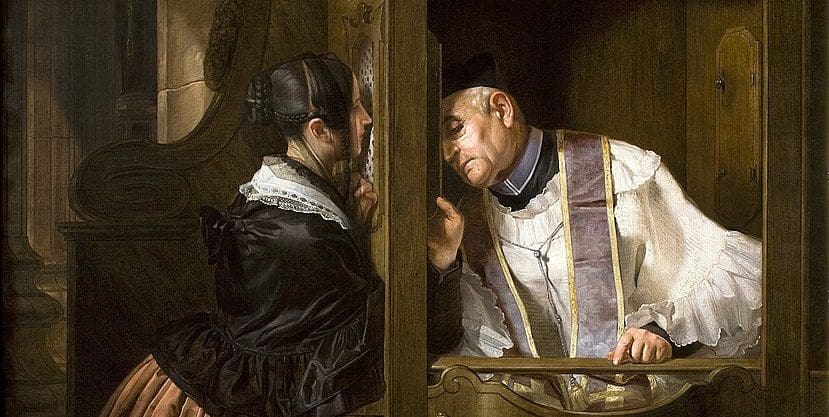
Classic painting of a woman confessing to a priest
The Sacrament of Reconciliation – a moment of divine mercy through the priest

I want to start this post where this whole series really began for me.
It wasn’t in a book. It wasn’t in RCIA. It wasn’t even in prayer.
It was in a conversation.

A well-meaning fundamentalist Christian once asked me a question that sounded simple, biblical, and honestly… a little unsettling:

“When the Church tells you that a priest can forgive you of your sins, and Jesus tells you that God is the only one who can forgive sins, in whom do you put your trust?”

He wasn’t angry. He wasn’t mocking. He was confident.
And that’s what made the question land so heavily.

How Cradle Catholics Drift—Quietly

Most of us didn’t walk away from the Church. We didn’t reject confession outright. We didn’t stop believing that God forgives sins.

But statements like that—repeated often enough—can plant a seed.
We start to think: “Well, I’ll still go to confession… but I don’t really need it.”
“God knows my heart.” “I can confess directly to Jesus.”

And suddenly confession becomes optional. Inconvenient. Something we avoid unless things get really bad.

This isn’t rebellion. It’s confusion mixed with sincerity.
And it’s exactly where Dr. Scott Hahn once found himself.

Dr. Scott Hahn speaking
Dr. Scott Hahn – from Protestant pastor to Catholic apologist

What a Convert Like Scott Hahn Discovered

Scott Hahn didn’t grow up Catholic. As a Protestant pastor and Scripture scholar, he genuinely believed confession to a priest took something away from God.

So when Hahn began wrestling with this issue, he asked a better question:
“What has God always done?”

And that question took him all the way back—to the Old Testament.

What the Old Testament Jews Were Actually Taught

For God’s people, forgiveness was never vague or invisible.
When someone sinned, God commanded something very specific:
Sin had to be acknowledged, confessed out loud, brought to the priest, atoned for through God’s appointed means.

Not because priests replaced God—but because God chose to work through them.

How Jesus Perfected Atonement, Not Abolished It
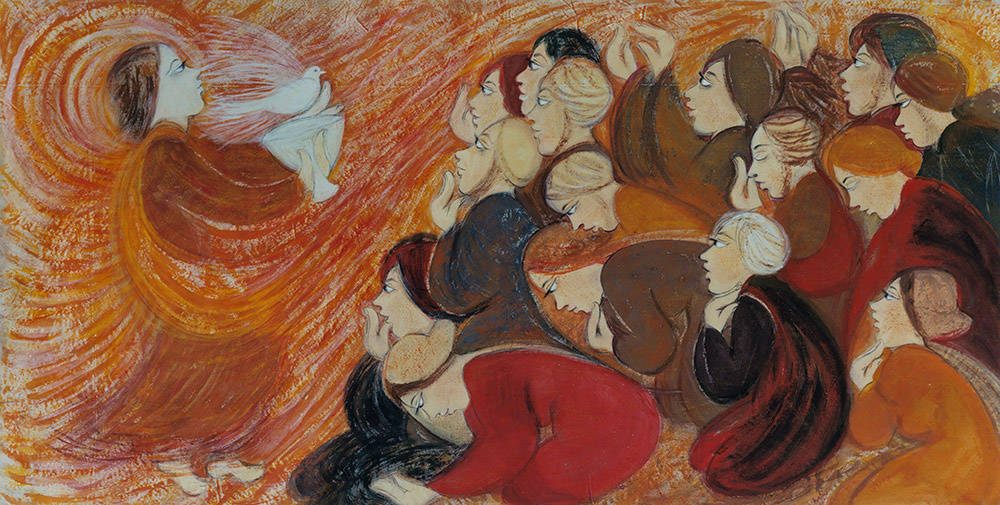
Art of Jesus breathing the Holy Spirit on the apostles
Jesus breathes the Holy Spirit and grants authority to forgive sins (John 20:22–23)

Jesus fulfills the Old Testament—not by discarding it, but by completing it.

After the Resurrection, He breathes on the apostles and says:
“Whose sins you forgive are forgiven. Whose sins you retain are retained.”

That’s responsibility. You can’t retain sins unless you know them. You can’t forgive sacramentally without authority.

What the Early Church Fathers Believed

The early Christians confessed sins openly. They reconciled through bishops and priests. There is no early Christian evidence of forgiveness floating free from the Church.

What the Catholic Saints and the Council of Trent Affirmed
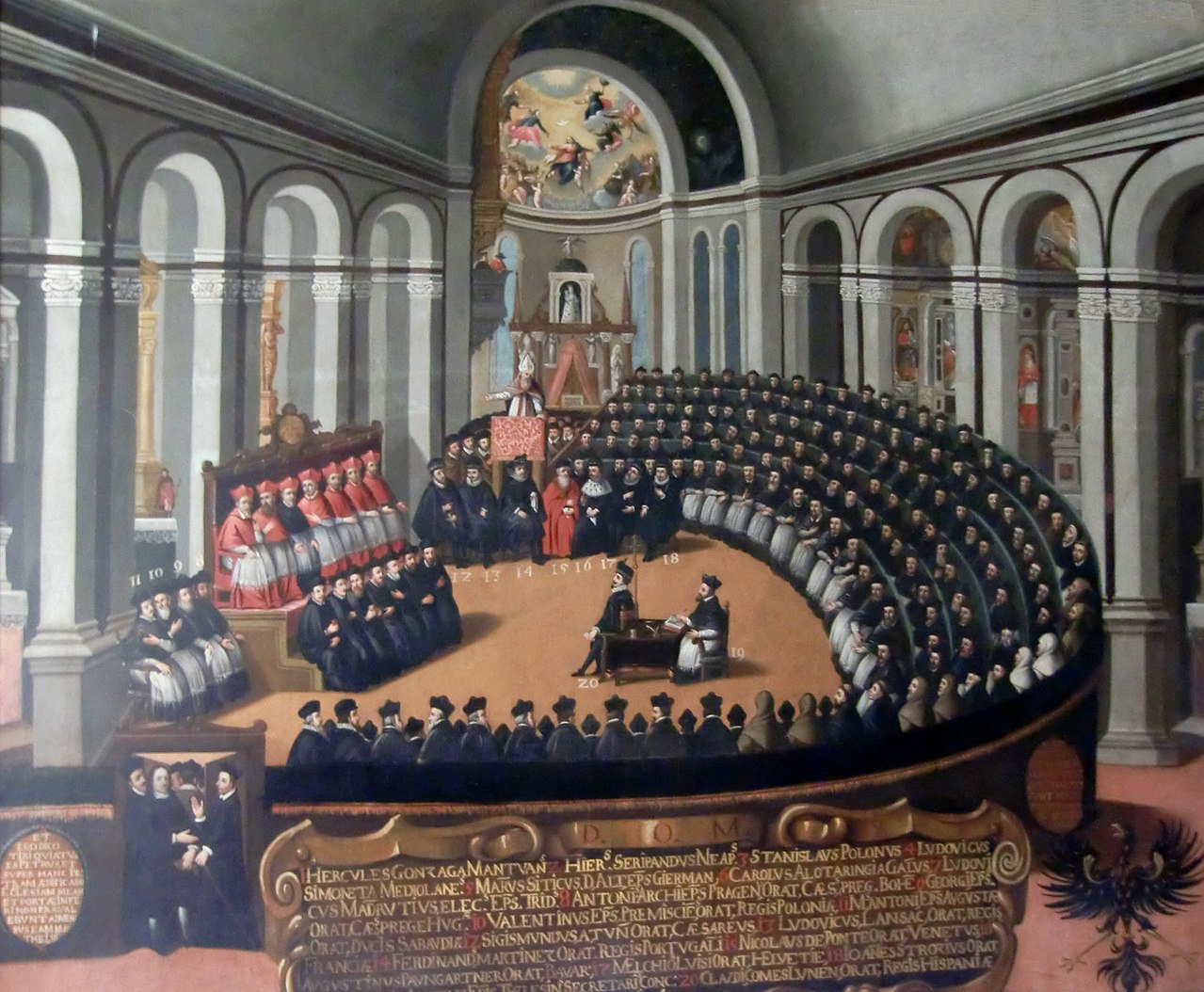
Historical painting of the Council of Trent
The Council of Trent – affirming the divine institution of confession

At the Council of Trent, the Church clarified what she had always believed: confession is divinely instituted, priests act in judgment and healing, Christ Himself established this authority.

So… In Whom Do You Put Your Trust?

The Catholic answer isn’t: “The priest.”
It’s: God—who chooses to forgive through the means He established.

Confession isn’t trusting men over God. It’s trusting God enough to accept His way.

Closing Prayer

Heavenly Father,
You are rich in mercy and slow to anger,
abounding in steadfast love and faithfulness.
Before You, no sin is hidden,
no wound unknown,
no heart beyond Your reach.

We thank You for not leaving us alone in our guilt,
for not asking us to save ourselves,
but for sending Your Son,
the Lamb who takes away the sins of the world.

Lord Jesus Christ,
You bore our sins in Your body upon the Cross.
You breathed Your Spirit upon the apostles
and entrusted to Your Church
the ministry of reconciliation.
Give us the humility to trust not in ourselves,
but in the mercy You offer through the means You established.

Holy Spirit,
light of truth and fire of love,
search our hearts,
uncover what we fear to name,
and give us the courage to step into the light.
Where sin has wounded us, bring healing.
Where shame has bound us, bring freedom.
Where pride resists grace, bring repentance.

Teach us, Lord,
to confess with honest hearts,
to receive forgiveness with childlike trust,
and to walk in newness of life.
May we never doubt that when Your Church speaks forgiveness,
it is Your own voice of mercy we hear.

We place our trust in You, O God—
not in our feelings,
not in our excuses,
not in our own righteousness—
but in Your promise,
Your authority,
and Your unfailing love.

We ask this through Christ our Lord,
who lives and reigns with You
in the unity of the Holy Spirit,
God forever and ever.

Amen.

Before You Go

If this reflection felt familiar—or healing—
❤️ Like this post so others can find it
🔔 Subscribe to stay connected
🔁 Share it with someone who’s heard this question before

And I invite you to read the earlier posts in the “In Whom Do You Put Your Trust?” series.
You’re not alone in these questions. And mercy is closer than you think.

Published February 14, 2026

So when the Church tells you that the Sacraments are necessary for salvation, and Jesus taught that only belief was necessary, in whom do you put your trust? Part 3 Confession

Faith and the Sacraments: Trusting What Jesus Actually Taught

by Keith Abell RPh MI

Part 3: Confession – Mercy Through the Church

“So when the Church tells you that the Sacraments are necessary for salvation, and Jesus taught that only belief was necessary, in whom do you put your trust?”

Before We Begin Part 3: Finding Mercy in the Mess

When I first began exploring my Catholic faith more seriously — prompted by a series of challenging emails from a fundamentalist Christian back in 1998 — I realized how much I had taken for granted. As a cradle Catholic, I had received the Sacraments, including Confession, but I hadn’t truly understood their purpose.

I knew I was supposed to go to Confession before receiving Communion, but I didn’t understand why. I didn’t know where it came from in Scripture, or how Jesus Himself instituted it. I didn’t realize that Confession wasn’t just a spiritual routine — it was a direct encounter with the mercy of Christ.

That email exchange — which began with the question, “If Jesus taught that belief alone is necessary for salvation, why does the Catholic Church teach that the Sacraments are necessary?” — led me on a journey that changed my life.

In this third post of our 7-part series, I want to share what I discovered about the Sacrament of Confession — how it’s rooted in Scripture, how Jesus gave His apostles the authority to forgive sins, and how the early Church embraced this sacrament as a vital part of Christian life.

The Biblical Roots of Confession


1. Old Testament Foundations: Confession and Atonement

Long before the time of Christ, the Jewish people understood that sin required confession, repentance, and atonement — and that God worked through priests to mediate forgiveness.

  • Leviticus 5:5–6 – “When someone is guilty… they must confess in what way they have sinned. As a penalty… they must bring to the Lord a guilt offering… and the priest shall make atonement for them.”
  • Numbers 5:6–7 – “When a man or woman wrongs another… they must confess the sin they have committed. They must make full restitution…”
  • Psalm 32:5 – “I acknowledged my sin to you, and I did not cover my iniquity; I said, ‘I will confess my transgressions to the Lord,’ and you forgave the guilt of my sin.”

These passages show that confession was not just private — it involved acknowledging sin aloud and seeking reconciliation through the ministry of the priesthood.

2. Jesus Fulfills and Transforms the Practice

Jesus didn’t abolish this practice — He fulfilled it by giving His apostles the divine authority to forgive sins in His name.

John 20:21–23 – After the Resurrection, Jesus appears to the apostles and says: “Peace be with you. As the Father has sent me, so I send you.” And when He had said this, He breathed on them and said to them, “Receive the Holy Spirit. Whose sins you forgive are forgiven them, and whose sins you retain are retained.”

This is the clearest scriptural moment where Jesus institutes the Sacrament of Confession. He gives His apostles the power to forgive sins — something only God can do — and entrusts them with the responsibility to discern and absolve.

If Jesus intended for forgiveness to be a private matter between the individual and God alone, He would not have given this authority to His apostles.

3. Confession in the Early Church

The New Testament shows that the early Christian community practiced confession and understood it as a communal and sacramental act:

  • James 5:16 – “Therefore, confess your sins to one another and pray for one another, that you may be healed.”
  • 2 Corinthians 5:18 – “All this is from God, who reconciled us to Himself through Christ and gave us the ministry of reconciliation.”
  • Acts 19:18 – “Many of those who believed now came and openly confessed what they had done.”

These passages show that confession was public, personal, and priestly — not just a private prayer, but a real act of reconciliation within the Church.

What the Early Church Fathers Believed About Confession

The early Church Fathers consistently taught that Confession (or Penance/Reconciliation) was a sacrament instituted by Christ, involving confession to a priest for absolution.

St. Cyprian of Carthage (c. 250 A.D.)
“Let each confess his sin while he is still in this world… let him make satisfaction through the priest. Let him not wait until he is beyond forgiveness.” (The Lapsed, Ch. 28)

Origen (c. 240 A.D.)
“There is also a seventh mode of remission of sins through penance… when the sinner does not shrink from declaring his sin to a priest of the Lord.” (Homilies on Leviticus, 2:4)

St. Basil the Great (c. 370 A.D.)
“It is necessary to confess our sins to those to whom the dispensation of God’s mysteries is entrusted.” (Rules Briefly Treated, 288)

St. Ambrose of Milan (c. 385 A.D.)
“The Lord Jesus Himself declared… ‘Whose sins you forgive are forgiven them.’ Why should we not believe that this power was given to priests?” (On the Holy Spirit, Book III, Ch. 10)

St. Augustine of Hippo (354–430 A.D.)
“Let no one say, ‘I do penance in secret before God.’ Penance is done before the Church.” (Sermon 392)

These Fathers — writing in different regions and centuries — all affirm the same truth: Confession is a sacrament, instituted by Christ, practiced by the apostles, and handed down through the Church. It is the ordinary means by which sins are forgiven and grace is restored.

Mercy That Meets Us Where We Are

Confession is not about shame — it’s about freedom. It’s not about guilt — it’s about grace. Jesus didn’t leave us to struggle alone with sin. He gave us a sacrament where we can hear the words, “I absolve you,” and know that we are truly forgiven.

So when someone asks, “If Jesus taught that belief alone is necessary for salvation, why does the Catholic Church teach that the Sacraments are necessary?” — we can answer:

Because Jesus didn’t just say “believe.” He said, “Whose sins you forgive are forgiven.” He gave us Confession so we could experience His mercy in a personal, powerful way.

Stay Tuned for Part 4: Confirmation – Sealed for Mission

In the next post, we’ll explore the Sacrament of Confirmation, where the Holy Spirit strengthens us to live boldly as disciples of Christ. We’ll look at its biblical roots, its connection to Jesus’ own coming of age, and how the early Church understood this sacrament as a commissioning for mission.

Follow our Facebook page to stay updated and join the conversation as we continue rediscovering the beauty and power of the Sacraments — one post at a time.


Most Popular Posts