Showing posts with label Catholic Faith. Show all posts

The Trinity Is Not a Sunday Thing — Trinity Sunday Reflection

The Trinity Is Not a Sunday Thing — Trinity Sunday Reflection

Born Catholic | Sunday Scripture Reflection | Most Holy Trinity, Year A


Let's be honest with each other for a minute.

If you grew up Catholic, Trinity Sunday probably landed somewhere between "the feast where Father gives the theology lecture" and "the Sunday nobody really knows what to do with." You sat in the pew, heard the word consubstantial in the Creed like you do every Sunday, maybe zoned out somewhere between the second reading and the homily, and then went home and made lunch.

And here's the thing — that's not your fault. Not entirely.

For decades, catechesis in the post-Vatican II Church has been thin. Not malicious. Not heretical in most cases. Just thin. The words were there. The doctrine was technically present. But the architecture — the framework that makes the words make sense — was often missing. So a generation of Catholics grew up knowing that the Trinity exists without really knowing what that means for a Tuesday afternoon.

That's what this reflection is about. Because today's readings — Exodus, Daniel, 2 Corinthians, and John — don't just teach doctrine. They land in the middle of an ordinary, chaotic week and say something specific to every cradle Catholic who has ever wondered whether any of this actually matters outside of Sunday Mass.

So grab your coffee. Let's go.

The First Thing You Need to Hear

The Trinity is not a Sunday-only mystery. It is the structure of reality itself. Every moment of every day is held in existence by the Father, redeemed by the Son, and animated by the Holy Spirit. The chaos of a cradle Catholic's Monday morning is not outside that — it is inside it, whether you feel it or not.

St. Augustine understood this at a level that still cuts through centuries. In The City of God, he described the Trinity as "one Being, supreme above all, and common to all who enjoy Him." Not common in the sense of ordinary. Common in the sense of universally present — available to every soul, in every moment, not just in the sanctuary on Sunday morning.

The Trinity is the air you breathe as a Catholic. You just haven't always been told that.

Reading One — Exodus 34: God Reveals His Name in the Mess

Here is the scene. Moses is back on Mount Sinai. He's carrying two fresh stone tablets because the first ones — the ones God wrote with His own finger — were smashed on the ground after Israel built a golden calf. The people had just committed catastrophic spiritual infidelity. They had, in the words of Moses himself, proven themselves to be a stiff-necked people.

And it is precisely in that moment — not in a peaceful garden, not in a moment of spiritual triumph, but in the immediate aftermath of stunning failure — that God reveals the deepest meaning of His own name.

"The LORD, the LORD, a merciful and gracious God, slow to anger and rich in kindness and fidelity."

This is not a throwaway description. In Judaism, God's personal name — sometimes rendered YHWH or Yahweh — is considered so sacred it is never spoken aloud. The name itself makes the Person present. So when God reveals not just the name but its meaning, it is the most intimate act of divine self-disclosure in the entire Old Testament.

And He chose to do it when His people were at their worst.

St. Ignatius of Antioch, writing to the Philippians in the early second century, already understood the unity of this divine character across the whole story of salvation — "one preaching, and one faith, and one baptism" — one God whose identity is mercy, whose nature does not change based on human performance.

Here is where this lands in your week:

The cradle Catholic who woke up Monday already behind. The mother who lost her patience with her kids before 8am. The man who fell back into the same sin he confessed last month. The teenager who walked away from Mass feeling nothing.

God does not reveal His name in your best moments. He reveals it in the wreckage. Merciful. Gracious. Slow to anger. Rich in kindness. That is who He is. That is His name. And it was spoken first over a stiff-necked people who had just built an idol — which means it was spoken over you too, this week, exactly as you are.

The Psalm — Praise from Inside the Furnace

Here is something most Catholics don't know: the responsorial psalm today comes from what Catholics call the deuterocanonical books — specifically the Song of the Three Young Men from Daniel 3, a passage preserved in Catholic Bibles through the ancient Greek Septuagint canon but removed from Protestant Bibles during the Reformation.

Worth knowing because it matters: the Catholic canon is not the Protestant canon with extras added. It is the original. The books removed in the 16th century were removed for doctrinal reasons, not historical ones. The Church that defined the Trinity is the same Church that preserved this psalm. The two facts are not unrelated.

Now — to the psalm itself.

The three young men are not singing after the furnace. They are singing inside it. The fire is still burning. The problem has not been solved. And the refrain rises anyway:

"Glory and praise for ever!"

Blessed in Your name. Blessed on Your throne. Blessed as You look into the depths.

This is the most counter-cultural spiritual posture available to a Catholic in the current moment. Modern life trains you to feel good first, then express gratitude. Feel healthy, then thank God for health. Feel the marriage improving, then thank Him for the marriage. Feel the faith return, then praise Him for it.

The psalm demolishes that logic entirely.

The application is not complicated. Before the phone. Before the news. Before the emails and the notifications and the noise. Five verses of Daniel 3 or just the refrain — "Glory and praise for ever" — said deliberately, said from inside whatever furnace the day contains. This is not toxic positivity. It is the theological conviction that God's worthiness does not depend on your comfort.

Second Reading — Paul and the Verse That Gets Weaponized

Now we need to have a real conversation.

Paul closes his second letter to the Corinthians with this: "Rejoice. Mend your ways, encourage one another, agree with one another, live in peace, and the God of love and peace will be with you." And then he gives the great Trinitarian blessing — grace from the Son, love from the Father, fellowship from the Spirit.

Here is what happens to that passage in the current cultural moment.

Screwtape gets hold of it.

C.S. Lewis, in The Screwtape Letters, described the enemy's fundamental strategy as working through "a chain of gradual steps, half truths and choices that are made in seemingly innocent daily circumstances." Not outright lies. Half-truths. And one of the most effective half-truths currently deployed against Catholics is this one:

"The Bible says to agree with one another. So if you hold to traditional teaching on marriage, gender, life, or faith — you're the problem. Get along. Stop being divisive. Agree."

Here's what Screwtape does to Paul's words. Three steps:

  1. Strip the audience. Paul is writing to a community of believers about their internal life together. The instruction is about the Church — not about Catholics capitulating to secular culture. Screwtape erases that boundary.
  2. Redefine the terms. "Agree" becomes "accommodate." "Live in peace" becomes "never make anyone uncomfortable." The actual Greek word — koinonia, deep communion in shared truth — gets flattened into social niceness.
  3. Produce either compromise or discouragement. The Catholic who reads the passage through Screwtape's lens faces an impossible choice: abandon convictions to get along, or feel perpetually guilty for not getting along. Both outcomes serve the enemy equally.

Lewis vividly illustrates that while the devil's intention is to subtly employ half-truths and twist our understanding of God's biblical revelation, God actually loves us and treats us as His dearly beloved children.

This pattern is ancient. The Fathers of the Church recognized it clearly. Vincent of Lerins remarked that "the first thing the heretic says to affirm his position is 'It is written...'" Screwtape did not invent this tactic. He inherited it from the serpent in the garden and refined it across millennia.

As Athanasius understood, Scripture is sufficient to defend the truth, but the reader rightly necessitates instruction on interpretation — and isolating a quote is exactly the sort of cheap trick that approach warns against.

Which is precisely why these Sunday posts exist. Not to add more content. To provide the key that makes the content make sense.

So what does "agree with one another" actually mean when you're living in a culture that is openly hostile to everything you believe?

It means Catholics staying unified with each other in the truth. It means not fracturing the Body of Christ over personalities, politics, or preferences. It means holding together in doctrine, in charity, and in mission — while disagreeing clearly and without apology with a culture that has abandoned the good, the true, and the beautiful.

Paul is not commanding Catholics to agree with the world. He is commanding Catholics to be so unified with each other that the world cannot miss the contrast.

As Lewis put it through Screwtape's pen: "A moderated religion is as good for us as no religion at all." Screwtape is perfectly content with a Church that tones itself down to fit in. What he cannot tolerate is a Church that is deeply unified in truth and radiantly charitable toward the people trapped in error.

The Gospel — John 3:16 as If You've Never Heard It

There is a particular spiritual hazard that belongs almost exclusively to cradle Catholics: familiarity.

John 3:16 has been on bumper stickers, end zone signs, and motivational posters for so long that it has nearly lost its weight. So read it again. Slowly. As if for the first time.

"God so loved the world that He gave His only Son, so that everyone who believes in Him might not perish but might have eternal life."

The word "world" in John's Gospel — the Greek kosmos — almost always refers to the realm of sin, darkness, and rebellion against God. John uses it as a negative term throughout his Gospel. And yet — it is precisely this world, broken and hostile, that the Father loved enough to give the most costly gift imaginable.

This is not abstract theology. The Father did not love a sanitized concept of humanity. He loved this — the mess, the stiff-necked people, the three young men in the furnace, the Corinthians fighting with each other, and yes — you, this week, exactly as things actually are.

Now notice what the passage does not say. It does not say God sent His Son to condemn. It says explicitly: "God did not send His Son into the world to condemn the world, but that the world might be saved through Him."

Condemnation in this passage is not something God imposes on unbelievers as external punishment. It is the natural consequence of rejecting the only source of life that exists — like a plant pulled from soil. The consequence is not imposed. It is inherent.

And here — quietly, without being named — the Holy Spirit appears in this passage. Not as an actor listed in the text, but as the very substance of what is being described. St. Augustine, reflecting on this in On the Holy Trinity, understood that the Trinity is one inseparable reality — "the true objects of enjoyment are the Father and the Son and the Holy Spirit, who are at the same time the Trinity, one Being, supreme above all."

The love that moved the Father to give the Son — that is the Spirit. The love that moved the Son to obey — that is the Spirit. The Spirit is the love itself. He is present in John 3:16 not as a named character but as the energy animating the entire act.

Screwtape articulated the opposition to all of this with remarkable precision: "We want cattle who can finally become food; He wants servants who can finally become sons. We want to suck in; He wants to give out. We are empty and would be filled; He is full and flows over."

That is the entire war in four sentences. The Trinity gives. The enemy takes. And the Catholic who understands John 3:16 — not as a bumper sticker but as the hinge of all history — is someone the enemy cannot easily move.

The Thread Across All Four Readings

Look at what the Church has assembled for this Sunday:

  • Exodus — God reveals His name as mercy, in the middle of catastrophic failure.
  • Daniel — Three men praise that same God from inside a furnace that has not yet gone out.
  • 2 Corinthians — That God is Father, Son, and Spirit — and His inner life of grace, love, and fellowship is the pattern the Church is called to live outward.
  • John 3:16–18 — The Father gives the Son. The Son comes not to condemn but to save. The Spirit is the love animating the entire act. And the whole of it is directed at a broken, stiff-necked, furnace-surrounded, culturally pressured people who simply need to hear it again.

The movement across the entire liturgy is not accidental. The Church did not randomly assemble these readings. They form a single sustained argument:

Revelation → Adoration → Participation → Mission.

God reveals who He is in the mess. The only fitting response is praise from inside the furnace. That God is Three Persons whose inner life we are invited to share. And the entire reason — the whole point — is that the world might be saved through Him.

Not condemned. Saved.

That is the Trinity. Not a doctrine to file away on Sunday and retrieve the following year. The structure of everything. The reason anything exists at all.

What Screwtape Actually Fears

Here is the summary of the enemy's strategy across all four of these readings — because naming it clearly is part of how it loses its power.

Screwtape does not fear the Catholic who gets angry at the culture and builds a metaphorical compound. He is perfectly comfortable there. An isolated Catholic stops evangelizing, starts cultivating grievance instead of holiness, and slowly substitutes cultural frustration for genuine interior conversion. That is a fine outcome from the enemy's perspective.

Screwtape does not fear the Catholic who quietly accommodates — who softens the edges of the faith to get along, who reads "agree with one another" as permission to stop holding the line. That Catholic is even more useful, because they provide cover for the erosion of truth while wearing the label of Christian charity.

What Screwtape fears is the Catholic who does what Moses did — stays with the stiff-necked people and intercedes for them. Who does what the three young men did — praises God from inside the furnace without waiting for rescue. Who does what Paul commanded — stays so unified with fellow believers in truth and charity that the Body of Christ becomes undeniable. Who does what John 3:16 describes — receives the gift of the Son and then gives that gift away without apology, without shame, and without watering it down.

That Catholic is a problem for the enemy.

That is the Catholic these readings are calling you to be this week.

Bringing It Home — One Thing for Each Day

Because doctrine that cannot be lived will not be believed for long, here is what this Sunday's readings actually look like from Monday through Saturday:

Monday — Remember God's Name.
When the week starts badly — and it will — say it deliberately: "Lord, you are merciful and gracious, slow to anger, rich in kindness." That is not a platitude. That is the name God gave Moses over a people who had just failed catastrophically. It applies to your Monday morning.

Tuesday — Praise Before the Problem Is Solved.
Whatever furnace you are currently in — the difficult marriage, the struggling child, the health issue, the financial pressure — say the refrain before it resolves: "Glory and praise for ever." Not because you feel it. Because He is worthy of it regardless of whether you feel it.

Wednesday — Check Your Inner Circle.
Paul's "agree with one another" is directed inward — at the community of believers. Is there a fracture in your Catholic relationships that needs mending? A fellow Catholic you have written off? A parish community you have disengaged from? Wednesday is the day to make one move toward interior unity within the Body of Christ.

Thursday — Identify the Half-Truth.
Where is Screwtape currently working in your life through a decontextualized Scripture verse, a cultural pressure dressed in religious language, or a half-truth that has made you either compromise or disengage? Name it. Naming it is the beginning of defeating it.

Friday — Return to John 3:16.
On the day the Church traditionally remembers the Passion — the day the Son was actually given — read John 3:16 as if for the first time. Slowly. Let it land not as a familiar verse but as the hinge of all history directed personally at you. The Father gave His only Son. For you. This Friday. In whatever condition you are actually in.

Saturday — Prepare to Receive.
Sunday Mass is not the beginning of your week with God. It is the culmination of a week you have already been living inside the Trinity. Come to Mass on Sunday not as someone arriving for a theology lecture but as someone returning to the source of everything that sustained the previous six days.

A Final Word to the Cradle Catholic

You did not choose to be born into this faith. It was given to you — at the baptismal font, before you could ask for it or understand it — by parents who may have been saints or sinners or somewhere in between, by a Church that has been faithfully and sometimes messily transmitting this deposit for two thousand years.

That gift was real. The water was real. The name spoken over you — Father, Son, and Holy Spirit — was real. And the God whose name Moses heard on the mountain, whose praises rang out from inside a furnace, whose grace and love and fellowship Paul invoked over a broken community, whose love was so total that He gave His only Son for a stiff-necked world —

That God has never stopped being present to you. Not on your best Sunday. Not on your worst Monday. Not in the chaos, the routine, the distraction, or the drift.

The Trinity is not a Sunday-only mystery.

It is the structure of reality itself.

And you are living inside it right now — whether you feel it or not.

Glory and praise for ever.

Share this with a cradle Catholic who needs to hear it. Forward it to the friend who has drifted. Print it out for the family member who thinks the faith is just a Sunday obligation. The best apologetics is not an argument — it is a Catholic who actually understands what they believe and why it matters on a Tuesday.

Born Catholic | Most Holy Trinity, Solemnity | Year A | Sunday Scripture Reflection

If the Trinity — Father, Son, and Holy Spirit — is not a Sunday doctrine but the living structure of every moment of your day, what would change about how you move through this coming week if you actually lived like that were true?


Pentecost Sunday 2026: Why This Ancient Gift Actually Changes Your Tuesday

Pentecost Sunday 2026: Why This Ancient Gift Actually Changes Your Tuesday

A Meditation for Cradle Catholics Living in a Messy World

Listen. If you've been Catholic your whole life, you've heard the Pentecost story a hundred times. Wind, fire, apostles speaking in languages they never learned. Beautiful stuff. Inspiring. And then you close the missalette, go home, and Monday hits. Back to the job that's asking you to compromise. Back to the culture that mocks what you believe. Back to the exhaustion of trying to raise Catholic kids in a world that's actively working against it.


So let's talk about what Pentecost actually is, because I think we've been getting it wrong — or at least, we've been understanding it in a way that doesn't help us survive Tuesday.

The Problem: You've Been Trying to Do This Alone

Here's what I mean. If you're a cradle Catholic living right now, you've inherited something strange: you grew up in a Church that was stable, that had cultural authority, that existed in a kind of Christian bubble. Even if you didn't realize it at the time, you absorbed the assumption that being Catholic just worked. You went to Mass. You followed the rules. The culture supported it, more or less.

And then at some point — maybe gradually, maybe suddenly — that world evaporated. The culture turned hostile. The Church revealed itself to be broken in ways you didn't expect. The institutions you thought you could rely on became unreliable. And you realized: I'm going to have to do this on my own.

So you've been trying. You drag yourself to Mass on Sunday. You go to Confession (mostly). You try to teach your kids the faith. You navigate your workplace without compromising your conscience too badly. You resist the ideology that's everywhere. And you're exhausted.

The reason you're exhausted is because you're trying to be Catholic using only human effort. And human effort, by itself, is not enough. It never was.

That's what the apostles learned in that locked room on Easter night.

What Actually Happened at Pentecost

The Sunday readings this week tell us the story. Let me walk through it.

Acts 2 opens with the apostles gathered in Jerusalem. They've seen the Risen Jesus. They know He's the Messiah. They have His commission: "Go into all the world and preach the Gospel."

But they're terrified and hiding. They've locked the doors because they're afraid of the Jews who killed Jesus. Peter has already denied knowing Jesus three times. Thomas has doubted. The others are confused. They have the knowledge they need. They have the mission. And they're paralyzed.

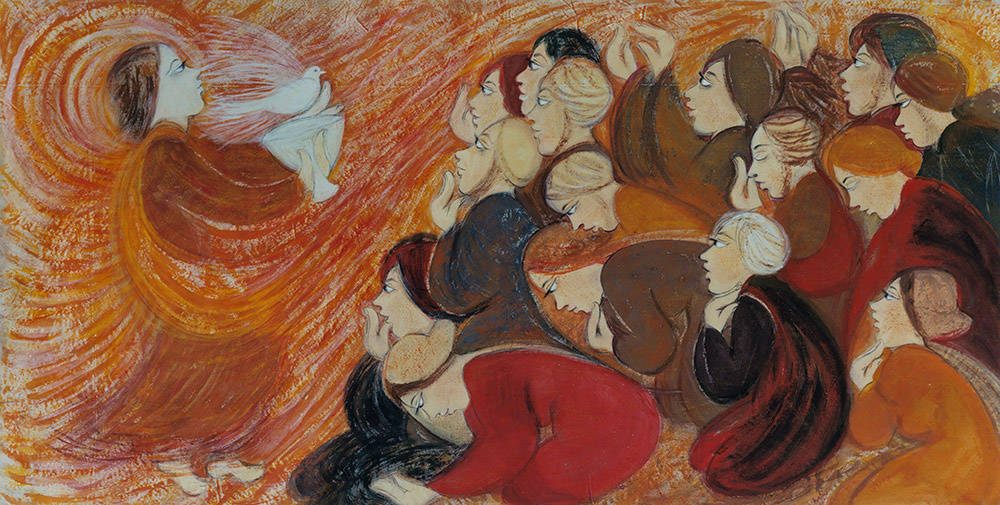
Then something happens. There's a sound like a rushing, violent wind. Tongues like fire appear and settle on each of them. And they're filled with the Holy Spirit.

And immediately — immediately — they become different people. Peter, who denied Jesus three times, stands up in front of the very people who killed Jesus and tells them, openly and fearlessly, "You crucified Jesus. He is risen. Repent."

He knew these things before Pentecost. But he couldn't do them. He wasn't brave enough. He didn't have the power. Not on his own.

That's the whole point of Pentecost: The apostles weren't brave men who suddenly got empowered. They were cowards who were transformed by the presence of the Holy Spirit.

Why This Matters to You Right Now

This is where I need to be direct with you. If you're reading this, you're probably in a situation remarkably similar to the apostles — just in a different context.

You know the Catholic faith is true. You've had it your whole life. You understand the Gospels. You know what the Church teaches about marriage, about the dignity of the body, about justice, about mercy. You know these things are good and true.

But you're afraid. You're afraid of losing your job if you don't go along with ideology that contradicts reality. You're afraid of your family's disapproval if you live too strictly. You're afraid of your kids being isolated if they stand out as Catholic. You're afraid of being seen as a bigot if you speak what you actually believe. You're afraid of the future.

And that fear is paralyzing you. Not in the dramatic way — you're not hiding behind locked doors. But you're compromising. You're staying silent when you should speak. You're going along when you should object. You're not teaching your kids strongly enough about the faith because you don't want them to face what you're facing. You're trying to make Catholicism small and private and non-threatening, so the world will leave you alone.

This doesn't work. It just leaves you constantly anxious, constantly guilty, constantly aware that you're not living up to what you actually believe.

And the reason it doesn't work is because you're trying to do this on your own.

The Early Church Fathers Got This

The Church Fathers lived in a world that was actively hostile to Christianity. They faced actual persecution. Actual martyrdom. And they understood something crucial about Pentecost that we've largely forgotten.

St. John Chrysostom, preaching in the 4th century, kept coming back to the same point over and over: The apostles weren't different people after Pentecost because they became braver. They were different because they no longer cared about safety.

Listen to how he put it to his congregation, most of whom were trying to be Christian while maintaining their social status in a pagan empire:

Before Pentecost, Peter denied knowing Jesus because he was afraid. After Pentecost, the same Peter stands before the Sanhedrin — the very court that killed Jesus — and says, 'You crucified the Lord. Repent.' What changed? Not his circumstances. His circumstances got worse. What changed was that he had tasted something better than safety. He had experienced the presence of God.

Chrysostom was essentially saying to his people: Your fear of losing status, of being mocked, of losing your job, of your family's disapproval — that's what's holding you back. And it's because you haven't really understood Pentecost. You haven't experienced the Spirit in a way that makes those things seem small.

St. Augustine, living a couple generations later, diagnosed the problem even more deeply. He said that people know what's right but can't want it strongly enough to do it. "A man can know lust is sinful and still be enslaved to it. A Christian can know the Gospel is true and still choose the comfortable lie. Why? Because knowing is not enough. The will is bound."

Augustine taught that the Holy Spirit's job is to remake your loves. Not just to tell you what's true, but to make you love the truth more than you love comfort, approval, and safety.

That's what he taught about Pentecost: The Spirit doesn't just give you information. He gives you a completely reordered set of desires. He makes you love God more than you love the things the world offers.

What Modern Saints Say About This

Fast forward to the 20th century, and we have saints who lived through some of the darkest periods in modern history — and they all teach the same basic lesson about Pentecost.

St. John Paul II

St. John Paul II became Pope in 1978, when the Soviet Union seemed permanent, when secularization seemed inevitable, when the Church seemed to be in terminal decline. His first homily contained three words that defined his entire papacy:

Be not afraid.

He wasn't denying reality. The Communist bloc was real. The cultural collapse was real. But he was saying: Fear is a lie. The Holy Spirit has already won. Your job is to witness to that reality, regardless of whether the world receives it.

He kept returning to this throughout his papacy. He said things like: "Do not ask whether the culture permits you to live your faith. Ask whether the Spirit calls you to. Live chastity not because the world approves, but because the Spirit shows you the dignity of the body. Speak truth not because you'll win, but because the Spirit has given you words to speak."

Notice what he's not saying. He's not promising you'll win. He's not saying the culture will change. He's saying the Spirit will empower you to be faithful, regardless of the outcome.

St. Oscar Romero

St. Oscar Romero, a bishop in El Salvador, learned this lesson in a different context. He started as a quiet, traditionalist bishop. But he was converted by the Spirit to speak for the voiceless — to denounce injustice even though it would cost him everything. He knew his words would get him killed. And he spoke anyway.

One of his most famous lines: "A Christian community that does not disturb the peace is not a Christian community."

He wasn't calling for violence. He was saying: If you are perfectly comfortable in your faith, if you face no pressure, if you speak no truth that costs you anything, then you have not understood Pentecost.

St. Thérèse of Lisieux

St. Thérèse of Lisieux taught something different but complementary. She lived in a convent. She never traveled. She never did anything publicly important. And yet she understood something the modern world desperately needs to hear:

The Spirit does not require public victory. He requires fidelity in small things.

She wrote: "I understood that love alone could make the Church's members act. I finally found my calling: My vocation is love! In the heart of the Church, my Mother, I shall be love."

In other words: You don't have to change the world. You have to do small things with great love. The Spirit sanctifies the hidden act, the faithful marriage, the honest word spoken to one person, the prayer no one knows about.

St. Padre Pio

St. Padre Pio spent 16 hours a day in the confessional. Why? Because he understood that the real battle for souls happens in the forgiveness of sins. The Spirit doesn't primarily work through public movements or institutional power. He works through reconciliation.

He also taught about intercessory prayer — that when you pray for someone, you're participating in Christ's redemptive work. Your hidden prayers are more powerful than you know.

St. Faustina

St. Faustina lived in Poland in the 1930s, watching the rise of totalitarianism and the hardening of hearts. The Spirit gave her a vision of Divine Mercy as the answer to a merciless age.

Her teaching: In an age of judgment and condemnation, the greatest apostolate is to be merciful. To forgive when you've been wronged. To see the humanity in those you disagree with. To offer grace to those who deserve judgment.

What This Means for Your Tuesday

So let's bring this home. You're reading this on a Saturday night, or maybe Sunday morning, and you're bracing yourself for the week. What does Pentecost actually do for you?

Here's what the Church Fathers and modern saints all teach:

  1. The Spirit Frees You From the Tyranny of Other People's Approval
    You've been spending your emotional energy trying to manage how people perceive you. Will they think I'm a bigot if I say this? Will my kids be isolated if they don't go along? Will I lose my job if I refuse to affirm something I don't believe?
    The Spirit's gift is something much simpler and more radical: He makes you indifferent to those fears. Not reckless. Not aggressive. But indifferent to whether people approve.
    John Paul II kept saying: Stop waiting for permission from the culture. The Spirit has already given you what you need.
    This doesn't mean you act without wisdom. It doesn't mean you martyr yourself over every small thing. But it means you stop making decisions based on fear of what others will think. You make them based on what's true and what the Spirit is calling you to do.
  2. The Spirit Reorders Your Desires
    Augustine's insight: You know what's right, but you don't love it enough to do it.
    The job asks you to use pronouns that contradict biological reality. You know it's wrong. But you also know that objecting will create conflict, and you hate conflict. So you go along.
    The Spirit's work is to make you love the truth more than you love comfort. This doesn't happen overnight. But it happens through prayer, through the sacraments, through spending time with Jesus.
    Go to Confession. Not as a rule you have to follow, but as a person desperate to be freed. Ask the priest to pray with you: "Help me to love what's true more than I love approval. Help me to desire holiness more than comfort."
    It works. Not magically. But the Spirit genuinely changes what you want.
  3. The Spirit Gives You Clarity About What's Actually True
    You're surrounded by lies. Your workplace is built on lies — about gender, about human dignity, about what makes people flourish. Your kids' school is teaching lies. The culture is drowning in lies. And you're constantly second-guessing yourself: Am I the crazy one? Is it really that bad?
    The Spirit's gift is clarity. Not a mystical voice necessarily. But through Scripture, through the Church's teaching, through prayer, through the witness of saints and faithful Catholics — the Spirit shows you what's true.
    And once you know what's true, you can't unknow it. You can still choose to compromise. But you'll know you're compromising. And that awareness is the beginning of freedom.
  4. The Spirit Creates Community
    One of the biggest lies modern Catholics believe is that they have to do this alone. You're the only one at your job who believes this way. Your parish is full of people who don't care about the faith. You're isolated.
    But the Spirit's primary work is creating communion — joining you to other Catholics, across space and time. The apostles didn't go out as individuals. They went as a community. They supported each other. They strengthened each other.
    You need to find your people. Your parish, even if it's weak, has other faithful Catholics. Your diocese probably has apostolates and groups you don't know about. Online, there are communities of cradle Catholics navigating exactly what you're navigating.
    Find them. Tell them your struggles. Let them know your commitments. The Spirit works through community, not isolation.
    And remember: you're also part of a communion that includes everyone who has ever believed — the Church Fathers, the saints, the ordinary faithful of past centuries. When you go to Mass, you're standing with all of them. The Spirit connects you to that great cloud of witnesses.
  5. The Spirit Empowers Sacrifice, Not Comfort
    None of the saints promised you an easier life. John Paul II said "Be not afraid" to people facing real persecution. Romero knew his words would get him killed. Thérèse lived in poverty and illness. Kolbe volunteered to die for another man's life.
    But they all taught that sacrifice in union with Christ, empowered by the Spirit, is redemptive. It means something. It transforms.
    This is crucial: You cannot avoid suffering in this world. The only question is whether your suffering will be redemptive or just painful.
    If you compromise constantly, staying silent, going along, denying what you believe — that suffering is just pain. It leaves you empty and guilty.
    But if you speak the truth, live the faith, refuse to go along with lies — and you accept the consequences with grace — your suffering becomes redemptive. It becomes a participation in Christ's suffering. It becomes an offering for the conversion of sinners. It becomes powerful in ways you cannot see.
    Padre Pio understood this. He taught that your suffering, offered to Christ, is more powerful than any action you could take. Your faithfulness, your sacrifice, your love — these change the world in ways you will never see.

A Practical Path Forward

This Week: Go to Confession

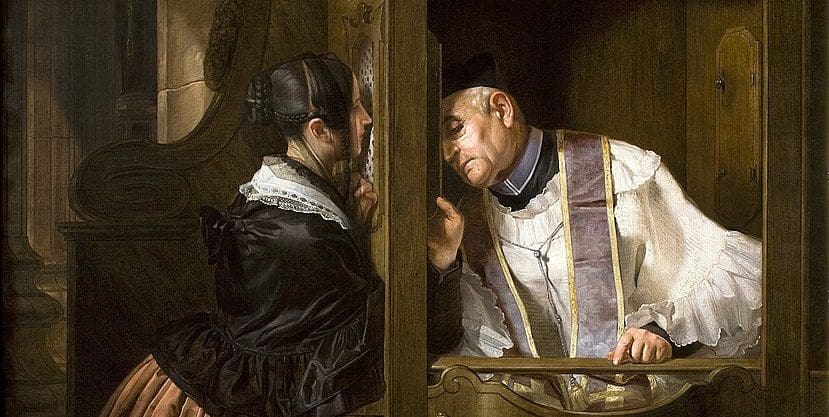
Not as a rule. Not as obligation. But as a person who wants to be free. Go and be honest. Tell the priest about the compromises you've made. Tell him about the fear that's been paralyzing you. Tell him about the shame you're carrying.

Listen to what absolution actually means: Your sins are forgiven. You are free.

Don't rush out. Let that sink in. You are actually, truly, completely forgiven. The weight you've been carrying is gone.

And then ask the priest to pray with you: "Help me to want holiness more than comfort. Help me to love truth more than approval. Help me to be brave in small ways."

Monday Through Friday: Do One Small Thing

Don't try to change everything. Just one thing. In the specific difficult situation you're facing:

  • If it's your job: Speak one truth you've been afraid to speak. Maybe it's just in a conversation with a trusted coworker. Maybe it's a quiet objection in a meeting. Something small. Something that costs you something.
  • If it's your family: Have one real conversation about faith with your spouse or a child. Not preachy. Not argumentative. Just honest. "This is what I actually believe, and why it matters to me."
  • If it's your parish: Get involved in one thing. A Bible study. A rosary group. Eucharistic adoration. Something that connects you to other faithful Catholics.
  • If it's general: Pray for one person who opposes you or whom you disagree with. Pray for their conversion. Pray for them to encounter Christ. Do this every day for a week.

That's it. One small thing. The Spirit will work with that. He doesn't need you to be a hero. He just needs you to take one small step toward faithfulness.

Sunday: Come to Mass Differently

Don't go to Mass as an obligation or a habit. Go as someone coming to be fed. Go knowing that Christ is truly present in the Eucharist. Go knowing that the Holy Spirit is present in that ancient liturgy, in that gathered community, in that sacred action.

Receive the Eucharist consciously. Jesus said, "My flesh is real food and my blood is real drink." He's not speaking metaphorically. The Spirit transforms bread and wine into the Body and Blood of Christ. You're receiving the living Jesus.

Let that change you. Not emotionally necessarily. But really. You're being fed by the Risen Christ. That's not nothing.

The Bottom Line: You're Not Alone

Here's what I need you to hear, cradle Catholic to cradle Catholic: You have been given everything you need. The Holy Spirit was given to you at Baptism. He was sealed in you at Confirmation. He is offered to you every single time you receive the Eucharist.

You are not trying to do this on your own. That's the whole point of Pentecost. You have been given a gift — a real presence, a real power, a real companion — that is stronger than every pressure you face.

The apostles were terrified and hiding. Then the Spirit came. And they became unshakeable.

You're terrified and compromising. The Spirit is available to you in exactly the same way. The question is not whether He's there. The question is whether you'll receive what He's offering.

John Paul II understood this. He said: "The Holy Spirit does not work in a Church that is afraid. He works through prophets and saints who are willing to stand against the tide."

You don't have to be a martyr. You don't have to be a public figure. But you do have to be willing to be faithful, even when it costs you something.

And the promise of Pentecost is this: When you are faithful, the Spirit will sustain you. He will give you words to speak. He will give you courage you don't naturally have. He will free you from the tyranny of other people's approval. He will make you love what's true more than you love comfort. And He will connect you to a community — visible and invisible — of Catholics who believe what you believe.

The culture is not going to become Christian again. The institutions may continue to fail. Evil may seem to be winning. But the Spirit has already won. He is present. He is active. He is transforming souls. He is at work in your marriage, in your parenting, in your workplace, in your parish, in your hidden prayers and sacrifices.

Trust Him. Be faithful. The rest is not your responsibility.

A Final Word: What Pentecost Actually Looks Like in Your Life

Let me paint a picture of what this might look like in the real world.

You're at work. Your boss asks you to use pronouns that don't match someone's biological sex. Your instinct is to comply. Everyone else will. It's easier.

But something has shifted in you. You've been to Confession. You've prayed. You've read Scripture. You've spent time with Jesus in the Eucharist. And the Spirit has given you clarity: This is a lie. I cannot participate in it.

So you speak. Calmly, respectfully, but clearly: "I can't do that. I respect this person, but I can't affirm something that's not true."

Your boss is angry. Your coworkers are uncomfortable. You might face consequences.

But something remarkable happens inside you. The fear is still there, but it's not controlling you anymore. You've done what the Spirit called you to do. And there's a peace underneath the fear — a knowledge that you've been faithful.

Maybe you lose the job. Maybe you don't. Either way, you've been free in a way you weren't before.

Or: You're raising teenagers. The culture is telling them that everything the Church teaches about sexuality is repressive and wrong. They're getting pressure from school, from peers, from the internet.

You're terrified. You don't want them to be isolated. You don't want them to suffer. So you stay quiet. You let them think you basically agree with the culture, you just have some old-fashioned religious rules.

But you realize this isn't working. They're not growing in faith. They're just confused. And you're complicit in their confusion.

So you do something harder. You have a real conversation. "Listen, I know the culture is telling you one thing. But I believe what the Church teaches is true and beautiful and liberating. I'm going to live it and teach it, even if it's unpopular. And I'm asking you to really consider it, not just dismiss it."

It might not work immediately. They might still rebel. But you've planted a seed. You've shown them that faithfulness is possible, that it's worth the cost, that their mother or father actually believes something enough to live it even when it's hard.

And the Spirit works with that. In ways you won't see until years later, if at all. But He works.

Or: You're at your parish, and you see that the faith is being watered down. The homilies are vague. The liturgy is sloppy. Real teaching about sin, repentance, the Eucharist — it's absent.

You could just leave. Find a different parish. Or give up on parish life altogether.

But instead, you stay. And you get involved. You join a Bible study. You serve in some capacity. You're a quiet witness to what real faith looks like. You encourage your kids to take the faith seriously. You build friendships with other Catholics who actually care.

Maybe the parish changes. Maybe it doesn't. But you've created a small pocket of genuine faith. You've given your kids a lived example of what it means to belong to the Church and believe what She teaches. You've given yourself community.

The Spirit works through that. Not dramatically, maybe. But really.

The Final Pentecost Promise

Here's what I want to leave you with. The Sequence we sing on Pentecost Sunday contains these lines:

Bend the stubborn heart and will; melt the frozen, warm the chill; guide the steps that go astray.

That's a prayer. And it's also a promise. The Holy Spirit bends stubborn hearts. He melts frozen places inside us. He guides us when we're lost.

You're stubborn. You're frozen in fear. You're lost in a culture that seems upside down. You're exhausted from trying to figure this out on your own.

The Spirit wants to do His work in you. Not because you deserve it. Not because you're worthy. But because Christ won it for you on the Cross. Because you were baptized into His death and Resurrection. Because the Church is His Body, and you're a member of it.

Pentecost isn't a story about what happened 2,000 years ago. It's the story of what's happening right now, in your life, if you'll let it.

The Spirit is rushing toward you like a wind. The fire is waiting to rest on you. The gifts are waiting to be distributed. The courage is waiting to be given. The clarity is waiting to shine.

All you have to do is receive.

This Sunday, come to Mass. Come to Confession if you need to. Receive the Eucharist. Pray the Sequence with meaning. Let the ancient words wash over you: "Come, Holy Spirit."

And then mean it. Really mean it.

"Come. I am afraid. I am compromised. I am exhausted from doing this alone. Come, Holy Spirit. Change my heart. Free me from fear. Make me love what's true. Give me courage. Connect me to my people. Help me to be faithful."

He will. He does. That's the promise of Pentecost.

And it's not just a promise for the apostles in a locked room 2,000 years ago. It's a promise for you. Right now. In your messy, complicated, beautiful, difficult life.

Be not afraid. The Spirit has already come. The question is just what you'll do with Him.

Grace and peace to you this Pentecost Sunday. May the Holy Spirit fill your heart, and kindle in it the fire of His love.

The Ascension and Your Monday Morning: Why the Cradle Catholic's Boring Life Actually Matters

The Ascension and Your Monday Morning: Why the Cradle Catholic's Boring Life Actually Matters

By: Keith Abell, RPh MI

Posted on May 16, 2026


You're reading this between meetings, or maybe while your kids are doing homework, or perhaps you've carved out fifteen minutes before bed. You're a cradle Catholic — you've been Catholic your whole life — and somewhere between your baptism and right now, the story of the Ascension became just another thing you hear about once a year in May.

Jesus went up into heaven. Angels said He'd be back. Now what?

I get it. I really do. Because I used to think the same thing.

But here's what changed for me: I realized that the Ascension isn't a story about Jesus leaving. It's the story about how He became more present to you than He ever could have been if He'd stayed on earth. And it changes everything about your boring, busy, mundane life — if you're willing to see it.

Let's talk about that.


The Gap Between Sunday and Monday

You know the experience. Sunday morning, you're at Mass. Maybe the music moves you, or maybe you're just trying to keep the kids quiet. You receive the Eucharist. For a moment — a real moment — something shifts. You're aware of grace. You're aware of God.

Then Monday hits.

You're in traffic. Your boss is demanding. Your spouse forgot to take out the trash. Your teenager rolled their eyes at you. The dog ate your lunch. None of it feels sacred. None of it feels like it matters to God.

And that's where most cradle Catholics live — in that gap between the transcendent Sunday and the tedious Monday.

But the Ascension is telling you something crucial: that gap doesn't exist. Or rather, it shouldn't. Christ didn't ascend into heaven and leave you stranded on earth. He ascended so that He could be everywhere — including in your traffic jam, your difficult conversation, your exhausted afternoon.

The early Church Fathers knew this. They lived it. And they left us wisdom for exactly this moment in your life.


What Happened at the Ascension, Actually

Let me back up for a second, because most of us — even cradle Catholics — don't really understand what happened on that mountain in Galilee.

The disciples watched Jesus disappear into a cloud. It was a physical departure. For forty days, they'd been touching Him, eating fish with Him, walking with Him. He was there. Real. Solid. And then — He wasn't.

A lot of us think the Ascension is sad. The disciples got abandoned. Jesus went to heaven and left them alone.

But that's not what happened. And it's definitely not what happened to you.

Here's the theological reality that changes everything: Christ had to leave the earth physically so that He could be present to all people spiritually — everywhere, all the time, forever.

When Jesus was on earth, He could only be in one place. He was in Jerusalem, not in Rome. He was teaching in Galilee, not in Egypt. But once He ascended, something radically different became possible. He could be:

  • In the tabernacle of every church in the world
  • In the Eucharist you receive
  • In the person sitting next to you on the bus
  • In your own heart, right now
  • In the poor, the sick, the prisoner

The Ascension is the hinge on which the entire sacramental life of the Church turns. Without it, there is no Eucharist. There is no universal, eternal presence of Christ. The Ascension makes it all possible.

Saint Augustine of Hippo, writing in the fifth century, understood this deeply. He lived in a time not so different from ours — chaotic, uncertain, filled with mundane struggles. And here's what he said:

"Christ is now in heaven, yet he has not left us. He is sitting above, yet he is here below. In a marvelous way, what we say is true: he did leave us, and he did not leave us. He went away in body, but he remained in his divinity, his power, and his love."

Augustine got it. Christ didn't abandon you. He just changed how He's present to you.


Your Work Is Not Meaningless

Let me ask you something: What did you do today that felt important?

Maybe you closed a deal at work. Maybe you finished a project that you'd been struggling with. Maybe you got through a difficult conversation with grace. Maybe you simply showed up and did your job well.

Or maybe — honestly — it felt like you were just going through the motions. Doing what you had to do. Making money. Getting through the day.

Here's what the early Church Fathers would tell you: Your work is not beneath God's notice. And the Ascension proves it.

When Christ ascended, He didn't leave His carpenter's hands behind. He didn't say, "Well, that's done. Now I'm moving on to more important things." He took the entire human experience — including work, labor, sweat, struggle — into glory with Him.

Augustine wrote about this extensively. He insisted that a cobbler making shoes, a farmer tending fields, a mother nursing a child — all of it was participation in Christ's redemptive work. Why? Because the ascended Christ had validated human work by taking it into heaven.

Think about that. Your work matters. Not because it makes you money. Not because it impresses people. But because the ascended Christ is present in it, sanctifying it, drawing it into His cosmic work of redemption.

Saint John Chrysostom, who preached in fourth-century Antioch, had a way of making this concrete. He was a preacher who understood ordinary people — people like us, with boring jobs and endless responsibilities. And he said this:

"A Christian should do his daily work with the same attitude as a monk in his monastery. Whether you are sweeping floors or managing a kingdom, you are serving Christ."

When Chrysostom says this to his congregation — people who were merchants and farmers and servants and slaves — he's not being pious or disconnected. He's telling them: Your Monday matters. Christ is present in it.

Think about your week. What's the most boring, repetitive thing you do? Driving to work? Doing laundry? Sitting through meetings? Processing paperwork?

The Ascension is telling you: that's where Christ is too.

Not in some abstract, spiritual way. But really. Actually. Present.


See Christ in the Boring and the Difficult

Here's where Chrysostom gets really specific — and really challenging.

He's preaching about honoring the Eucharist, about treating the Body of Christ with reverence when you receive it at Mass. And then he says something that probably made his congregation squirm:

"Do you wish to honor the body of Christ? Do not ignore him when he is naked. Do not pay him homage in the temple clad in silk robes while neglecting him outside where he is cold and ill-clad. He who said 'This is my body' is the same one who said 'Whatever you did for the least of these, you did for me.'"

In other words: You just received the glorified, ascended Christ in Holy Communion. You felt moved. You felt holy. You felt God's presence.

Now on Monday, when you encounter a homeless person, or a difficult coworker, or a family member who irritates you, or someone who disagrees with you — that's the ascended Christ again, in a different form.

I know. This is uncomfortable. This is why Chrysostom said it.

Because what he's doing is collapsing the distance between the sacred moment at Mass and the mundane moment at work. He's saying: There is no gap. Christ is in both places. You can't honor Him in one and ignore Him in the other.

Let me be real with you for a moment. This is where the Ascension stops being a nice theological concept and starts asking something of you.

Your spouse, when they're being difficult — that's Christ.
Your teenager, when they're ungrateful — that's Christ.
Your coworker, when they're taking credit for your work — that's Christ.
The person in line ahead of you at the grocery store, when they're slow and you're frustrated — that's Christ.

Not metaphorically. Not in some vague spiritual sense. But really, truly, the ascended Christ present to you, asking you to see Him and love Him in that person.

Chrysostom would say: If you can't see Christ in the difficult person in front of you, then you haven't really understood the Ascension.


When Your Life Is Hard

But what about the suffering? What about the parts of your Monday that aren't just tedious — they're painful?

The Ascension has something to say about that too, and it's probably more comforting than you'd expect.

Saint Gregory of Nyssa, a fourth-century theologian, wrote extensively about the Ascension. He lived in a time of real persecution — Christians were being hunted, martyred, displaced. And he had a congregation that was struggling, scared, wondering where God was in all of it.

And here's what he told them — and what he's telling you:

The disciples faced real hardship after the Ascension. Persecution, misunderstanding, loneliness. The physical presence of Jesus was gone. But — and this is crucial — they were more aware of Christ's presence than ever before.

Why? Because suffering, when united to the ascended Christ, becomes redemptive. When you suffer faithfully, you're not isolated in that suffering. You're suffering with Christ.

Gregory taught that your pain is not meaningless suffering in a world abandoned by God. It's suffering with Christ, who sits in glory and is actively interceding for you.

Think about this: When you're exhausted from parenting, or frustrated in your marriage, or disappointed at work, or grieving a loss, the Ascension is saying that the ascended Christ is present in that suffering. Not explaining it away. Not making it feel good. But making it matter.

Saint Paul wrote: "Now I rejoice in my sufferings for your sake, and in my flesh I am filling up what is lacking in the afflictions of Christ on behalf of his body, which is the church" (Colossians 1:24).

The Church Fathers understood this to mean: When you suffer faithfully, you're not just enduring. You're participating in Christ's ongoing intercession for the world.

Your patience with a difficult person, your acceptance of injustice, your endurance through illness — these are being offered with the ascended Christ to the Father. They're not wasted. They're redemptive.

Gregory of Nyssa would tell you: Your Tuesday afternoon struggle is not separate from the cosmic work of redemption. It's part of it.


You're Not Alone in the Battle

Here's something that might surprise you: the Church Fathers saw the Ascension as the beginning of a battle, not the end of one.

Saint Athanasius, defending the faith against tremendous opposition in the fourth century, emphasized that the Ascension was Christ's enthronement as King. And a king rules. He fights. He conquers.

Athanasius would remind his congregation — people living under oppression, facing real spiritual and physical danger — that the ascended Christ is actively at war against sin, death, and the devil on their behalf. The Ascension isn't passive. It's the moment when Christ took the throne and began actively subduing all things under His feet.

What does this mean for you?

When you struggle against anger, lust, pride, or despair, you're not fighting alone. The ascended King is fighting with you. When you resist injustice, you're participating in His cosmic victory. When you choose to forgive instead of retaliate, to love instead of hate, to hope instead of despair — you're standing with the One who has already won.

Augustine would say: Your small acts of virtue are not insignificant. They're votes cast for the kingdom of the ascended Christ in a world that still resists Him.


The Paradox That Changes Everything

Here's the paradox that confused the early Church — and should confuse us too, until we really get it:

How can Christ be absent and present at the same time?

He ascended into heaven. He left. And yet, He promised: "I am with you always, until the end of the age."

Saint John of Damascus, writing several centuries after the Fathers we've mentioned but heir to their tradition, resolved this beautifully. He said that Christ's physical departure was necessary so that His spiritual presence could be universal.

"The Word became flesh and dwelt among us. And now, having ascended, He dwells in us spiritually, present everywhere through His divinity, His grace, and His love."

Apply this to your Monday morning: You can't see the ascended Christ walking beside you at work. But He's there. You can't hear Him speaking to you directly in an audible voice. But He speaks through conscience, through Scripture, through the counsel of wise people, through the movements of grace in your heart.

The Fathers would say: Your Monday is not godless. It's saturated with the presence of the ascended Christ, even when you can't feel it.


The Rhythm That Keeps You Sane

So how do you actually live this? How do you go from understanding intellectually that Christ is present in your mundane life to actually experiencing it?

Saint Benedict, writing his Rule in the sixth century, understood that monks — and ordinary Christians — need a rhythm that keeps them aware of the ascended Christ.

Here's what a rhythm might look like for you — a busy, modern cradle Catholic:

  • Sunday Mass is your mountaintop moment.
  • Daily prayer — even five or ten minutes — keeps the connection alive.
  • Your work and relationships is where you actually live the Ascension.
  • Confession — maybe monthly, maybe more often — is where you receive mercy.
  • Moments of solidarity with suffering — when you serve the poor, visit the sick, comfort the grieving.

What the Fathers Really Believed

They believed that Christ didn't leave you. He became more present.

They believed that your work matters.

They believed that you can encounter Christ in the difficult person in front of you.

They believed that your suffering, when joined to Christ's, becomes redemptive.

They believed that you're in a battle — but that the King who fights with you has already won.

They believed that Christ's absence is a gift, not a curse.

And they believed that your boring, mundane, ordinary life is sacred.

"The whole life of a Christian is holy warfare. Wherever you are — at home, at work, in the marketplace, in the fields — you are a soldier of Christ. Every action, every moment, is a battle fought with the ascended Lord at your side." — Saint Augustine


The Question You Need to Ask Yourself

What is the most ordinary, tedious, or difficult part of your daily routine — the thing that feels most distant from God? And how might the Ascension be inviting you to see Christ's presence and purpose hidden within it?

Because He's there. The Fathers staked their lives on it. And if they're right, your Monday morning is less boring than you think.


BornCatholic.com exists to help cradle Catholics rediscover the faith they've inherited and live it with conviction. If this post resonated with you, share it with someone who needs to hear it.

A Prayer for Your Monday

"Ascended Lord, I believe that You are present to me now, even though I cannot see You. Give me eyes to see You in the person in front of me. Give me strength to choose love over anger, honesty over convenience, hope over despair. Help me to remember that my work matters, my suffering matters, my choices matter — because You are present in all of it. And help me to trust that You are fighting with me in this battle, because You have already won. Amen."

A True Catholic Is an Abomination to God

“A True Catholic Is an Abomination to God?”

A conversation for Catholics who’ve ever been shaken by that claim

Let’s imagine you and I are sitting across from each other at a table. The coffee has gone a little cold. And someone has just said something that lodged itself in your mind more deeply than you expected.

“A true Catholic is an abomination unto God. God has given us His only holy guidebook, and it tells us what is acceptable and unacceptable.”

If you’ve ever heard something like that—from a televangelist, a street preacher, a well-meaning coworker, or even a family member—you’re not alone. And if part of you quietly wondered, What if they’re right? What if I missed something important? that doesn’t make you weak. It makes you human.

So let’s slow this down and talk it through calmly, biblically, and honestly.

First things first: what does the Bible mean by “Scripture”?

Here’s something many cradle Catholics were never clearly told.

When the New Testament uses the word Scripture, it’s referring to the Old Testament—the Jewish Scriptures. The New Testament, as a collected book, didn’t yet exist.

So when St. Paul writes, “All Scripture is inspired by God and profitable for teaching…” he’s talking about the Scriptures Timothy knew “from childhood.” That means the Law, the Prophets, and the Writings—what we would call Genesis through Malachi.

That matters, because it means the idea of “God’s only holy guidebook” being the Bible as we know it today simply doesn’t fit history. The earliest Christians didn’t have a New Testament. What they had was the Old Testament, the preaching of the apostles, and the living Church.

And that distinction changes everything.

The Church came before the New Testament

This isn’t a Catholic talking point. It’s just history.

Jesus didn’t write a book. He didn’t tell the apostles to sit down and produce a text. He told them, “Go therefore and teach all nations.” And He added something crucial: “He who hears you hears Me.”

Before a single Gospel was written, the Church was already baptizing, celebrating the Eucharist, forgiving sins, and handing on the faith. The New Testament didn’t create the Church; the Church gave us the New Testament.

So when someone says, “The Church must submit to the Bible,” it’s fair to pause and ask: Which Church gave us the Bible in the first place?

“Abomination”? Let’s be careful with Scripture

The Bible does use the word abomination—but it uses it very specifically. In the Old Testament, abominations include things like idolatry, injustice, child sacrifice, sexual immorality, and dishonest dealings.

What Scripture never says—anywhere—is that belonging to the Church Christ founded is an abomination.

In fact, Jesus gives us a clear identifying mark of His disciples: “By this all will know that you are My disciples, if you have love for one another.”

Calling fellow Christians “abominations” may sound bold or confident, but it isn’t biblical.

If God gave only a book, why did Jesus give the keys?

This is where it helps to look closely at what Jesus actually did to safeguard His Church.

If Christianity were meant to function by private interpretation alone, there are several things Jesus wouldn’t have done—but did.

He gave Peter the keys of the kingdom. To first-century Jews, this wasn’t poetic language. It was a clear sign of authority, echoing Isaiah’s description of a steward entrusted with the key of the house of David. Books don’t hold keys. People do.

Jesus also gave the apostles the authority to bind and loose—language that came straight from Jewish teaching authority. To bind and loose meant to teach authoritatively, to permit and forbid, to govern the community. And notice what Jesus didn’t say. He didn’t say that whatever each individual believer decides will be backed by heaven. He tied heaven’s authority to the authority He gave His apostles.

Then He made a promise that’s easy to overlook but impossible to soften: “Upon this rock I will build My Church, and the gates of hell shall not prevail against it.”

That’s not poetic encouragement. It’s a guarantee.

In Scripture, gates are defensive structures. Jesus isn’t saying hell will attack and sometimes lose. He’s saying that even the full weight of evil, deception, death, and division will never overcome the Church He founded.

Now pause with me for a moment and think this through carefully.

If the Church Christ established were destined to fall into total corruption—
if it were going to become an “abomination”—
if it were going to lose the Gospel and mislead generations of Christians—
then this promise would have failed.

But Jesus does not make promises He cannot keep.

Notice what He does not say. He doesn’t say the gates of hell will not prevail against Scripture alone, or against sincere believers reading privately, or against correct interpretation. He says they will not prevail against His Church.

That distinction matters deeply for Catholics who have ever been told, “The Church fell away, but the Bible survived.”

Jesus never promised the survival of a book apart from a Church.
He promised the preservation of the Church through which the book would live.

So where is the promise of private interpretation?

This is a question few people ask out loud.

If Christianity were meant to operate by private interpretation alone, we would expect Scripture to say that clearly. But there is no verse that guarantees the correctness of individual interpretation. Not one.

What Scripture does give us is a warning.

St. Peter—writing Scripture—says that no prophecy of Scripture is a matter of one’s own private interpretation. And then, speaking specifically about St. Paul’s letters, he adds something striking: there are things in them that are hard to understand, which the ignorant and unstable twist to their own destruction.

Notice what Peter doesn’t say. He doesn’t say everyone just needs to pray harder. He doesn’t say sincere Christians will all arrive at the same conclusion. And he certainly doesn’t say the Holy Spirit guarantees every reader the correct meaning.

Instead, he acknowledges something painfully obvious—even in the first century. Scripture can be misunderstood. Scripture can be twisted. Scripture can be weaponized.

That isn’t a failure of Scripture. It’s a limitation of the reader.

And Jesus knew this. Which is why He didn’t leave us to ourselves.

Why Jesus established authority instead of leaving us alone with a text

When you step back and look at the whole picture, a pattern emerges.

Jesus gave the keys to the kingdom. He gave the power of binding and loosing. He promised the Church would endure. He warned against private interpretation. And He promised the Holy Spirit would guide the apostles into all truth.

What He did not say was, “After I ascend, everyone will figure this out individually.”

That idea would have been unthinkable to first-century Jews, who understood that God works through covenant, community, and authority—not isolated individuals.

Even in the Old Testament, God gave Israel priests, judges, elders, and teachers. He didn’t hand Moses a scroll and say, “Good luck.”

So it’s worth asking quietly and honestly: why would the New Covenant be less guided than the Old?

What the early Church actually did with Scripture

This isn’t theoretical. We can see it clearly in history.

Around the year 180, St. Irenaeus—who learned the faith from Polycarp, who learned it from the Apostle John—encountered groups quoting Scripture while teaching contradictory doctrines. His response wasn’t to tell everyone to decide for themselves. Instead, he pointed to the apostolic tradition preserved throughout the whole world in the Church.

Then he makes a statement that can stop a modern reader cold: even if the apostles had left no writings at all, the Church would still possess the truth through what was handed down.

That alone tells us how the earliest Christians understood authority.

A few decades later, Tertullian presses the point even further. He argues that Scripture itself belongs to the Church that received it from the apostles. He challenges heretics not just to quote verses, but to go visit the apostolic churches and examine their teaching—because truth is preserved through succession, not isolation.

In other words, don’t just ask, What verse do you quote? Ask, Where did you get it, and who taught you how to read it?

By the time we reach St. Augustine in the fourth and fifth centuries, the canon of Scripture is becoming clearer. And Augustine famously says that he would not believe the Gospel unless moved by the authority of the Catholic Church.

That isn’t a rejection of Scripture. It’s an acknowledgment of reality.

Someone had to say which books were Scripture and which were not. Someone had to guard the authentic faith and reject distortions. And that “someone” was the Church Christ promised would endure.

So what was the fundamentalist really asking you to doubt?

When someone says, “A true Catholic is an abomination to God because Catholics don’t follow God’s only holy guidebook,” they’re asking you—often without saying it outright—to doubt several things at once.

They’re asking you to doubt that Jesus knew what He was doing when He founded a Church. They’re asking you to doubt that His promises were trustworthy. They’re asking you to doubt that the Holy Spirit has been faithful for two thousand years. And they’re asking you to doubt that the Church which preserved Scripture could also preserve truth.

That is a lot to doubt.

And here’s the quiet irony: to accept that accusation, you would have to trust your own private judgment more than Christ’s explicit promises.

Catholic faith does not ask you to do that.

A gentle word to cradle Catholics

If you’ve read this far, let me say this plainly and kindly.

You are not Catholic because you never questioned.
You are Catholic because Christ called—and His Church endured.

If you’ve ever felt unsettled by a televangelist’s certainty or shaken by a fundamentalist’s accusation, remember this: the Catholic Church does not fear Scripture. It loves it—Old Testament and New alike. The Church does not fear history; history testifies to it. And the Church does not fear honest questions. It has been answering them for centuries.

Jesus did not leave us orphaned. He did not leave us a book without a shepherd. He left us His Church, and He promised to remain with her until the end of the age.

And He keeps His promises.

A closing prayer

Heavenly Father,
we thank You for calling us by name,
for planting us in Your Church,
and for never abandoning what Your Son established.

Lord Jesus Christ,
You are the Word made flesh,
the fulfillment of the Law and the Prophets,
the same yesterday, today, and forever.
When voices around us are loud and confusing,
bring us back to Your voice—
the voice that says, “Do not be afraid.”

Holy Spirit, Spirit of Truth,
You who guided the apostles,
who sustained the early Church,
and who still breathes life into Your people today—
strengthen our faith when doubts arise,
steady our hearts when accusations shake us,
and remind us that we belong to You.

Father, help us to love Your Scriptures,
to hear them as Your people Israel first heard them,
and to read them as the Church has always read them—
in the light of Christ,
with humility,
and within the communion of believers.

Forgive us for the times we have doubted Your promises
or believed You could abandon Your Church.
Heal any wounds caused by harsh words,
false accusations,
or fear planted by misunderstanding.

Teach us to trust—not in ourselves alone,
but in You,
who promised that the gates of hell would not prevail,
who promised to remain with us always,
and who is faithful even when we struggle.

May we never be ashamed of the faith handed down to us.
May we grow deeper, not defensive;
steadier, not afraid;
and more charitable, not hardened.

We place ourselves, our questions, and our faith
into Your Sacred Heart,
confident that You who began this good work
will bring it to completion.

We ask all of this
in the name of the Father,
and of the Son,
and of the Holy Spirit.
Amen.

A small invitation before you go

If this conversation helped steady your heart even a little—
if it clarified something you’d never heard explained this way—
or if it simply reminded you that you’re not alone in your questions—
I invite you to stay connected.

If this resonated, feel free to like it. If you’d like more thoughtful, Scripture-rooted conversations about the Catholic faith—especially the kinds of questions many of us were never taught to ask—consider subscribing. And if someone you love has been quietly shaken by what they’ve heard from televangelists, friends, or online voices, consider sharing this with them.

You never know who’s sitting across their table right now, wondering if their faith can really hold.

Let’s keep the conversation going—charitably, honestly, and anchored in Christ.

A Cradle Catholic Rediscovery of the Eucharist

“In Whom Do You Put Your Trust?”

A Cradle Catholic Rediscovery of the Eucharist

This reflection didn’t begin because I was looking for an argument.

It began because someone asked me a question that was very clearly meant to shake my faith.

It wasn’t angry. It wasn’t confrontational. It sounded calm—almost caring.

“When the Church tells you that Jesus comes to exist in a wafer after being invoked by a priest, and your personal relationship with the Lord Jesus Christ tells you that this is pure folly, in whom do you put your trust?”

If you’re a cradle Catholic, you’ve probably heard some version of this before. Maybe from a friend who left the Church. Maybe online. Maybe quietly, late at night, in your own thoughts.

At first, the question feels reasonable. It sounds like it’s defending Jesus against an institution. Like it’s inviting you to choose a “real relationship” over something that feels ritualistic, abstract, or even strange.

But the longer I sat with it, the more I realized something important:

That question only works if you don’t know the story.

Because once you actually follow the story Scripture tells—from the Old Testament, through Jesus’ own teaching, through the Resurrection—the Eucharist stops looking like a strange Catholic belief and starts looking like the inevitable conclusion of everything God has been doing all along.

So let’s walk through that story together. Slowly. Patiently. The way most of us were never invited to.

God Has Always Saved Through Meals, Not Just Ideas

Modern Christianity often treats salvation as something mostly internal—an idea we accept, a belief we hold, a moment of decision.

But that’s not how the Bible works.

In Scripture, God saves His people through covenants, and covenants are never sealed with ideas alone. They are sealed with sacrifice and meals.

Think about the Passover.

We usually summarize it as, “the lamb was sacrificed and the blood saved Israel.” That’s true—but it’s not the whole truth.

God is very specific: the lamb must be eaten.

A lamb that is slain but not consumed does not save. The blood on the doorposts protects Israel from death, yes—but the meal inside the house completes the covenant. Deliverance requires participation.

That detail is easy to miss, but it changes everything. It establishes a pattern that runs through all of Scripture:

God does not rescue His people from a distance—He feeds them into life.

Bread Is God’s Chosen Language

Once you notice it, bread is everywhere.

After the Passover, God feeds Israel with manna—bread from heaven. Scripture goes out of its way to say this bread comes from God Himself. It sustains life daily.

And yet, everyone who eats manna eventually dies.

So already, the Bible is training God’s people to expect a greater bread—one that doesn’t just sustain life, but gives eternal life.

Then there’s Melchizedek, a mysterious priest-king who appears suddenly in Genesis, long before the Law of Moses. He offers bread and wine and blesses Abraham. No animal sacrifice. No blood spilled. Yet Scripture treats it as real priestly worship.

This matters later. A lot.

David is born in Bethlehem—the House of Bread. Jesus is born there too. Luke tells us He is laid in a manger, a feeding trough. That detail isn’t sentimental. It’s theological.

God feeds His people with bread. Always.

Jesus Doesn’t Invent Something New—He Fulfills Everything

When Jesus multiplies the loaves, the crowd understands Him within Israel’s long memory. Bread means life. Bread means God’s provision. Bread means rescue.

So they follow Him.

But in John chapter 6, Jesus refuses to let them stop at the miracle. He doesn’t say, “Isn’t this amazing bread?” He says something far more unsettling:

“I am the bread that came down from heaven.”

At first, that already sounds bold. Then He goes further — much further:

“Amen, amen, I say to you, unless you eat the flesh of the Son of Man and drink his blood, you have no life in you.”

This is where modern readers often soften the moment. But Scripture doesn’t.

John tells us exactly what happens next. The people don’t misunderstand Jesus. They understand Him clearly — and they are horrified.

They say, “This is a hard saying. Who can accept it?”

And then John records one of the most sobering lines in the entire Gospel:

“From that time on, many of His disciples turned back and no longer walked with Him.”

Not enemies. Not Pharisees. Disciples.

People who had followed Him, trusted Him, left their homes for Him — walked away.

And here is the detail most cradle Catholics have never been asked to sit with:

Jesus lets them go.

He does not call them back. He does not say, “Wait, you thought I meant that literally?” He does not explain that He was “only being symbolic.”

Instead, He turns to the Twelve — the ones who remain — and asks a question that echoes through every century of the Church:

“Do you also want to leave?”

Peter’s response is not intellectual. It’s relational:

“Lord, to whom shall we go? You have the words of eternal life.”

Peter does not say, “We understand this perfectly.” He says, “We trust You.”

That matters. Because faith in the Eucharist has never been about comfort. It has always been about trust in the Person speaking.

If the Eucharist were merely symbolic, this moment makes no sense. People don’t abandon a rabbi over a metaphor that could be clarified in a sentence. They leave because they understand what is being asked — and cannot accept it.

The Last Supper: Jesus Shows How

When we arrive at the Last Supper, Jesus does not introduce a new idea. He fulfills the one that broke the crowd in John 6.

He takes Passover bread — unleavened bread, the bread of affliction, the bread Israel ate in haste on the night of deliverance.

And He says:

“This is my body.”

Then He takes the cup:

“This is my blood of the covenant.”

This is not poetic language. This is covenant language.

Jesus is saying: I am the Passover Lamb now. And like every covenant sacrifice before me, I must be eaten.

The disciples may not have fully grasped it in that moment — but the structure was unmistakable. Sacrifice and meal. Blood and bread. Covenant and participation.

John 6 gave the command. The Last Supper gave the means.

Why the “Wafer” Is Not Small or Silly

This is where the word wafer gets weaponized.

People use it dismissively because it looks insignificant. Thin. Fragile. Plain.

But Scripture tells us something profound: God always hides His greatest power in humility.

He forms Adam from dust. He saves through water. He seals covenants with blood. He feeds His people with bread.

The Eucharist is unleavened bread because Jesus instituted it at Passover. That bread carries the memory of slavery, haste, affliction, and liberation. It is not accidental. It is not replaceable.

Calling it a “wafer” misses the point. God does not overwhelm us with His presence. He veils Himself so that love — not force — draws us near.

“Whoever Eats and Drinks Unworthily…”

Paul tells the Corinthians:

“Whoever eats the bread or drinks the cup of the Lord unworthily will be guilty of the Body and Blood of the Lord.”

That sentence should stop us in our tracks.

Because Paul does not say, “You’ve disrespected a symbol.” He does not say, “You’ve misunderstood a metaphor.” He says, you are guilty of the Body and Blood of the Lord.

That language only makes sense if the Eucharist is not pointing away from Jesus, but is Jesus Himself made present.

You cannot be “guilty” of someone’s body and blood by mishandling a reminder. You cannot profane a symbol. You cannot commit sacrilege against an illustration.

But you can profane a Person.

Paul goes on to say that some in the Corinthian community have become sick, and some have even died, because they failed to “discern the Body.” That warning sounds extreme to modern ears — until you realize what Paul and the early Church actually believed they were receiving.

If the Eucharist were merely symbolic, Paul’s warning would be wildly disproportionate. But if the Eucharist is truly the Body, Blood, Soul, and Divinity of Jesus Christ, then his words are not extreme at all — they are sober, pastoral, and protective.

This is why the Church has always cared so deeply about how we receive.

This is why we examine our consciences. This is why confession exists. This is why the Church asks us to approach reverently, to fast beforehand, to say “Amen” with intention.

You don’t need that level of care for a symbol.

You need it for someone.

Why the Priest Matters — and Why He Is Not “Replacing” Jesus

This brings us to the role of the priest, which is often misunderstood — sometimes even by Catholics.

When someone says, “A priest invokes Jesus into a wafer,” it sounds like the priest is doing something to Jesus, or calling Him down, or acting in His place.

That’s not what the Church believes.

To understand the priesthood, you have to go back — once again — to Melchizedek.

[... Melchizedek explanation ...]

When a Catholic priest stands at the altar, he is not replacing Jesus. He is not adding to the sacrifice. He is not summoning Christ by his own power.

He stands in persona Christi — in the person of Christ — because Christ Himself chose to act through His Church.

It is still Jesus who says, “This is my body.” It is still Jesus who gives Himself. The priest lends his voice and his hands — nothing more.

This is why the Eucharist is not dependent on the holiness of the priest. It depends on the faithfulness of Christ.

Emmaus: How the Risen Jesus Chose to Remain

After the Resurrection, two disciples walk with Jesus on the road to Emmaus. He opens the Scriptures to them. Their hearts burn.

And yet — they do not recognize Him.

Recognition comes only at the table.

Jesus takes bread. He blesses it. He breaks it. He gives it to them.

And suddenly their eyes are opened.

Then Jesus vanishes.

Not because He is gone — but because His mode of presence has changed.

Luke is teaching us something quietly profound: after the Resurrection, Jesus will no longer be known primarily by physical sight, but by sacramental presence.

This is why the early Church didn’t invent Eucharistic devotion. They inherited it.

They devoted themselves, Luke tells us, to the apostles’ teaching, to prayer, and to the breaking of the bread. That phrase wasn’t poetic. It was the earliest name for the Eucharist.

So… In Whom Do You Put Your Trust?

Now we can finally return to the question that started all of this — the one meant to shake my faith:

“When the Church tells you that Jesus comes to exist in a wafer, and your personal relationship with Jesus tells you this is folly, in whom do you put your trust?”

Once you know the story, the question collapses.

Because the Eucharist is not the Church choosing herself over Jesus. It is the Church refusing to soften or walk back what Jesus Himself taught.

Jesus promised this. People left Him over it. He let them go. He never took it back.

For cradle Catholics, this isn’t meant to induce fear or guilt.

It’s meant to awaken awe.

What we may have grown accustomed to is, in fact, one of the most radical gifts Christ ever gave. He did not leave us with a memory. He left us Himself.

Body. Blood. Soul. Divinity.

Hidden in humility. Offered in love.

And when the Church asks us to trust this mystery, she is not asking us to trust her instead of Jesus.

She is asking us to trust Jesus enough to believe Him, even when His words stretch our understanding.

That is not blind faith. That is discipleship.

A Concluding Prayer for My Cradle Catholic Family

Lord Jesus Christ,

Bread of Life and Love Incarnate,
we come before You as a family You have held since baptism,
carried through every season of faith — strong or struggling, certain or searching.

You have walked with us in ways we did not always see,
fed us even when we did not understand the gift,
and stayed with us in humility, hidden in the Eucharist,
waiting patiently for our hearts to awaken again.

Jesus, deepen our trust.
Calm every fear, quiet every doubt, and heal every place in us
that has grown numb, distracted, or distant.

Renew in our family a living faith — not only remembered,
but rekindled by Your presence among us.

Teach us to recognize You in the breaking of the bread,
to approach You with reverence,
to receive You with love,
and to carry Your life within us into our homes, our work, and our world.

Make our family a place where Your peace dwells,
where forgiveness flows,
where Your light is gently passed from one generation to the next.

May the Eucharist we receive transform us —
unite us, protect us, and send us forth
as witnesses of Your faithfulness.

Jesus, we place our trust in You.
Keep us close, keep us faithful,
and keep us always in Your love.

Amen.

Closing & Call to Action

If this reflection stirred something in you — a memory from childhood faith, a question you’ve carried quietly, or a desire to understand the Eucharist more deeply — I invite you to stay connected.

Our journey of rediscovering the beauty of the Catholic faith is one we’re not meant to walk alone.

If this blessed you, please share it with someone who might need the reminder that Jesus truly remains with us.

And if you’d like to follow along as I continue exploring the richness of Scripture, tradition, and the Eucharistic life:
Subscribe, share, and journey with me.

Together, may we keep growing in trust, in wonder, and in love for the One who gives us His very self.

When the Church tells you that a priest can forgive you of your sins, and Jesus tells you that God is the only one, in whom do you put your trust?

The Fundamentalist Challenge: “In Whom Do You Put Your Trust?”

A reflection on confession, trust, and the mercy of Christ through His Church

Classic painting of a woman confessing to a priest
The Sacrament of Reconciliation – a moment of divine mercy through the priest

I want to start this post where this whole series really began for me.
It wasn’t in a book. It wasn’t in RCIA. It wasn’t even in prayer.
It was in a conversation.

A well-meaning fundamentalist Christian once asked me a question that sounded simple, biblical, and honestly… a little unsettling:

“When the Church tells you that a priest can forgive you of your sins, and Jesus tells you that God is the only one who can forgive sins, in whom do you put your trust?”

He wasn’t angry. He wasn’t mocking. He was confident.
And that’s what made the question land so heavily.

How Cradle Catholics Drift—Quietly

Most of us didn’t walk away from the Church. We didn’t reject confession outright. We didn’t stop believing that God forgives sins.

But statements like that—repeated often enough—can plant a seed.
We start to think: “Well, I’ll still go to confession… but I don’t really need it.”
“God knows my heart.” “I can confess directly to Jesus.”

And suddenly confession becomes optional. Inconvenient. Something we avoid unless things get really bad.

This isn’t rebellion. It’s confusion mixed with sincerity.
And it’s exactly where Dr. Scott Hahn once found himself.

Dr. Scott Hahn speaking
Dr. Scott Hahn – from Protestant pastor to Catholic apologist

What a Convert Like Scott Hahn Discovered

Scott Hahn didn’t grow up Catholic. As a Protestant pastor and Scripture scholar, he genuinely believed confession to a priest took something away from God.

So when Hahn began wrestling with this issue, he asked a better question:
“What has God always done?”

And that question took him all the way back—to the Old Testament.

What the Old Testament Jews Were Actually Taught

For God’s people, forgiveness was never vague or invisible.
When someone sinned, God commanded something very specific:
Sin had to be acknowledged, confessed out loud, brought to the priest, atoned for through God’s appointed means.

Not because priests replaced God—but because God chose to work through them.

How Jesus Perfected Atonement, Not Abolished It

Art of Jesus breathing the Holy Spirit on the apostles
Jesus breathes the Holy Spirit and grants authority to forgive sins (John 20:22–23)

Jesus fulfills the Old Testament—not by discarding it, but by completing it.

After the Resurrection, He breathes on the apostles and says:
“Whose sins you forgive are forgiven. Whose sins you retain are retained.”

That’s responsibility. You can’t retain sins unless you know them. You can’t forgive sacramentally without authority.

What the Early Church Fathers Believed

The early Christians confessed sins openly. They reconciled through bishops and priests. There is no early Christian evidence of forgiveness floating free from the Church.

What the Catholic Saints and the Council of Trent Affirmed

Historical painting of the Council of Trent
The Council of Trent – affirming the divine institution of confession

At the Council of Trent, the Church clarified what she had always believed: confession is divinely instituted, priests act in judgment and healing, Christ Himself established this authority.

So… In Whom Do You Put Your Trust?

The Catholic answer isn’t: “The priest.”
It’s: God—who chooses to forgive through the means He established.

Confession isn’t trusting men over God. It’s trusting God enough to accept His way.

Closing Prayer

Heavenly Father,
You are rich in mercy and slow to anger,
abounding in steadfast love and faithfulness.
Before You, no sin is hidden,
no wound unknown,
no heart beyond Your reach.

We thank You for not leaving us alone in our guilt,
for not asking us to save ourselves,
but for sending Your Son,
the Lamb who takes away the sins of the world.

Lord Jesus Christ,
You bore our sins in Your body upon the Cross.
You breathed Your Spirit upon the apostles
and entrusted to Your Church
the ministry of reconciliation.
Give us the humility to trust not in ourselves,
but in the mercy You offer through the means You established.

Holy Spirit,
light of truth and fire of love,
search our hearts,
uncover what we fear to name,
and give us the courage to step into the light.
Where sin has wounded us, bring healing.
Where shame has bound us, bring freedom.
Where pride resists grace, bring repentance.

Teach us, Lord,
to confess with honest hearts,
to receive forgiveness with childlike trust,
and to walk in newness of life.
May we never doubt that when Your Church speaks forgiveness,
it is Your own voice of mercy we hear.

We place our trust in You, O God—
not in our feelings,
not in our excuses,
not in our own righteousness—
but in Your promise,
Your authority,
and Your unfailing love.

We ask this through Christ our Lord,
who lives and reigns with You
in the unity of the Holy Spirit,
God forever and ever.

Amen.

Before You Go

If this reflection felt familiar—or healing—
❤️ Like this post so others can find it
🔔 Subscribe to stay connected
🔁 Share it with someone who’s heard this question before

And I invite you to read the earlier posts in the “In Whom Do You Put Your Trust?” series.
You’re not alone in these questions. And mercy is closer than you think.

Published February 14, 2026

Most Popular Posts