A Cradle Catholic Rediscovery of the Eucharist

“In Whom Do You Put Your Trust?”

A Cradle Catholic Rediscovery of the Eucharist

This reflection didn’t begin because I was looking for an argument.

It began because someone asked me a question that was very clearly meant to shake my faith.

It wasn’t angry. It wasn’t confrontational. It sounded calm—almost caring.

“When the Church tells you that Jesus comes to exist in a wafer after being invoked by a priest, and your personal relationship with the Lord Jesus Christ tells you that this is pure folly, in whom do you put your trust?”

If you’re a cradle Catholic, you’ve probably heard some version of this before. Maybe from a friend who left the Church. Maybe online. Maybe quietly, late at night, in your own thoughts.

At first, the question feels reasonable. It sounds like it’s defending Jesus against an institution. Like it’s inviting you to choose a “real relationship” over something that feels ritualistic, abstract, or even strange.

But the longer I sat with it, the more I realized something important:

That question only works if you don’t know the story.

Because once you actually follow the story Scripture tells—from the Old Testament, through Jesus’ own teaching, through the Resurrection—the Eucharist stops looking like a strange Catholic belief and starts looking like the inevitable conclusion of everything God has been doing all along.

So let’s walk through that story together. Slowly. Patiently. The way most of us were never invited to.

God Has Always Saved Through Meals, Not Just Ideas

Modern Christianity often treats salvation as something mostly internal—an idea we accept, a belief we hold, a moment of decision.

But that’s not how the Bible works.

In Scripture, God saves His people through covenants, and covenants are never sealed with ideas alone. They are sealed with sacrifice and meals.

Think about the Passover.

We usually summarize it as, “the lamb was sacrificed and the blood saved Israel.” That’s true—but it’s not the whole truth.

God is very specific: the lamb must be eaten.

A lamb that is slain but not consumed does not save. The blood on the doorposts protects Israel from death, yes—but the meal inside the house completes the covenant. Deliverance requires participation.

That detail is easy to miss, but it changes everything. It establishes a pattern that runs through all of Scripture:

God does not rescue His people from a distance—He feeds them into life.

Bread Is God’s Chosen Language

Once you notice it, bread is everywhere.

After the Passover, God feeds Israel with manna—bread from heaven. Scripture goes out of its way to say this bread comes from God Himself. It sustains life daily.

And yet, everyone who eats manna eventually dies.

So already, the Bible is training God’s people to expect a greater bread—one that doesn’t just sustain life, but gives eternal life.

Then there’s Melchizedek, a mysterious priest-king who appears suddenly in Genesis, long before the Law of Moses. He offers bread and wine and blesses Abraham. No animal sacrifice. No blood spilled. Yet Scripture treats it as real priestly worship.

This matters later. A lot.

David is born in Bethlehem—the House of Bread. Jesus is born there too. Luke tells us He is laid in a manger, a feeding trough. That detail isn’t sentimental. It’s theological.

God feeds His people with bread. Always.

Jesus Doesn’t Invent Something New—He Fulfills Everything

When Jesus multiplies the loaves, the crowd understands Him within Israel’s long memory. Bread means life. Bread means God’s provision. Bread means rescue.

So they follow Him.

But in John chapter 6, Jesus refuses to let them stop at the miracle. He doesn’t say, “Isn’t this amazing bread?” He says something far more unsettling:

“I am the bread that came down from heaven.”

At first, that already sounds bold. Then He goes further — much further:

“Amen, amen, I say to you, unless you eat the flesh of the Son of Man and drink his blood, you have no life in you.”

This is where modern readers often soften the moment. But Scripture doesn’t.

John tells us exactly what happens next. The people don’t misunderstand Jesus. They understand Him clearly — and they are horrified.

They say, “This is a hard saying. Who can accept it?”

And then John records one of the most sobering lines in the entire Gospel:

“From that time on, many of His disciples turned back and no longer walked with Him.”

Not enemies. Not Pharisees. Disciples.

People who had followed Him, trusted Him, left their homes for Him — walked away.

And here is the detail most cradle Catholics have never been asked to sit with:

Jesus lets them go.

He does not call them back. He does not say, “Wait, you thought I meant that literally?” He does not explain that He was “only being symbolic.”

Instead, He turns to the Twelve — the ones who remain — and asks a question that echoes through every century of the Church:

“Do you also want to leave?”

Peter’s response is not intellectual. It’s relational:

“Lord, to whom shall we go? You have the words of eternal life.”

Peter does not say, “We understand this perfectly.” He says, “We trust You.”

That matters. Because faith in the Eucharist has never been about comfort. It has always been about trust in the Person speaking.

If the Eucharist were merely symbolic, this moment makes no sense. People don’t abandon a rabbi over a metaphor that could be clarified in a sentence. They leave because they understand what is being asked — and cannot accept it.

The Last Supper: Jesus Shows How

When we arrive at the Last Supper, Jesus does not introduce a new idea. He fulfills the one that broke the crowd in John 6.

He takes Passover bread — unleavened bread, the bread of affliction, the bread Israel ate in haste on the night of deliverance.

And He says:

“This is my body.”

Then He takes the cup:

“This is my blood of the covenant.”

This is not poetic language. This is covenant language.

Jesus is saying: I am the Passover Lamb now. And like every covenant sacrifice before me, I must be eaten.

The disciples may not have fully grasped it in that moment — but the structure was unmistakable. Sacrifice and meal. Blood and bread. Covenant and participation.

John 6 gave the command. The Last Supper gave the means.

Why the “Wafer” Is Not Small or Silly

This is where the word wafer gets weaponized.

People use it dismissively because it looks insignificant. Thin. Fragile. Plain.

But Scripture tells us something profound: God always hides His greatest power in humility.

He forms Adam from dust. He saves through water. He seals covenants with blood. He feeds His people with bread.

The Eucharist is unleavened bread because Jesus instituted it at Passover. That bread carries the memory of slavery, haste, affliction, and liberation. It is not accidental. It is not replaceable.

Calling it a “wafer” misses the point. God does not overwhelm us with His presence. He veils Himself so that love — not force — draws us near.

“Whoever Eats and Drinks Unworthily…”

Paul tells the Corinthians:

“Whoever eats the bread or drinks the cup of the Lord unworthily will be guilty of the Body and Blood of the Lord.”

That sentence should stop us in our tracks.

Because Paul does not say, “You’ve disrespected a symbol.” He does not say, “You’ve misunderstood a metaphor.” He says, you are guilty of the Body and Blood of the Lord.

That language only makes sense if the Eucharist is not pointing away from Jesus, but is Jesus Himself made present.

You cannot be “guilty” of someone’s body and blood by mishandling a reminder. You cannot profane a symbol. You cannot commit sacrilege against an illustration.

But you can profane a Person.

Paul goes on to say that some in the Corinthian community have become sick, and some have even died, because they failed to “discern the Body.” That warning sounds extreme to modern ears — until you realize what Paul and the early Church actually believed they were receiving.

If the Eucharist were merely symbolic, Paul’s warning would be wildly disproportionate. But if the Eucharist is truly the Body, Blood, Soul, and Divinity of Jesus Christ, then his words are not extreme at all — they are sober, pastoral, and protective.

This is why the Church has always cared so deeply about how we receive.

This is why we examine our consciences. This is why confession exists. This is why the Church asks us to approach reverently, to fast beforehand, to say “Amen” with intention.

You don’t need that level of care for a symbol.

You need it for someone.

Why the Priest Matters — and Why He Is Not “Replacing” Jesus

This brings us to the role of the priest, which is often misunderstood — sometimes even by Catholics.

When someone says, “A priest invokes Jesus into a wafer,” it sounds like the priest is doing something to Jesus, or calling Him down, or acting in His place.

That’s not what the Church believes.

To understand the priesthood, you have to go back — once again — to Melchizedek.

[... Melchizedek explanation ...]

When a Catholic priest stands at the altar, he is not replacing Jesus. He is not adding to the sacrifice. He is not summoning Christ by his own power.

He stands in persona Christi — in the person of Christ — because Christ Himself chose to act through His Church.

It is still Jesus who says, “This is my body.” It is still Jesus who gives Himself. The priest lends his voice and his hands — nothing more.

This is why the Eucharist is not dependent on the holiness of the priest. It depends on the faithfulness of Christ.

Emmaus: How the Risen Jesus Chose to Remain

After the Resurrection, two disciples walk with Jesus on the road to Emmaus. He opens the Scriptures to them. Their hearts burn.

And yet — they do not recognize Him.

Recognition comes only at the table.

Jesus takes bread. He blesses it. He breaks it. He gives it to them.

And suddenly their eyes are opened.

Then Jesus vanishes.

Not because He is gone — but because His mode of presence has changed.

Luke is teaching us something quietly profound: after the Resurrection, Jesus will no longer be known primarily by physical sight, but by sacramental presence.

This is why the early Church didn’t invent Eucharistic devotion. They inherited it.

They devoted themselves, Luke tells us, to the apostles’ teaching, to prayer, and to the breaking of the bread. That phrase wasn’t poetic. It was the earliest name for the Eucharist.

So… In Whom Do You Put Your Trust?

Now we can finally return to the question that started all of this — the one meant to shake my faith:

“When the Church tells you that Jesus comes to exist in a wafer, and your personal relationship with Jesus tells you this is folly, in whom do you put your trust?”

Once you know the story, the question collapses.

Because the Eucharist is not the Church choosing herself over Jesus. It is the Church refusing to soften or walk back what Jesus Himself taught.

Jesus promised this. People left Him over it. He let them go. He never took it back.

For cradle Catholics, this isn’t meant to induce fear or guilt.

It’s meant to awaken awe.

What we may have grown accustomed to is, in fact, one of the most radical gifts Christ ever gave. He did not leave us with a memory. He left us Himself.

Body. Blood. Soul. Divinity.

Hidden in humility. Offered in love.

And when the Church asks us to trust this mystery, she is not asking us to trust her instead of Jesus.

She is asking us to trust Jesus enough to believe Him, even when His words stretch our understanding.

That is not blind faith. That is discipleship.

A Concluding Prayer for My Cradle Catholic Family

Lord Jesus Christ,

Bread of Life and Love Incarnate,
we come before You as a family You have held since baptism,
carried through every season of faith — strong or struggling, certain or searching.

You have walked with us in ways we did not always see,
fed us even when we did not understand the gift,
and stayed with us in humility, hidden in the Eucharist,
waiting patiently for our hearts to awaken again.

Jesus, deepen our trust.
Calm every fear, quiet every doubt, and heal every place in us
that has grown numb, distracted, or distant.

Renew in our family a living faith — not only remembered,
but rekindled by Your presence among us.

Teach us to recognize You in the breaking of the bread,
to approach You with reverence,
to receive You with love,
and to carry Your life within us into our homes, our work, and our world.

Make our family a place where Your peace dwells,
where forgiveness flows,
where Your light is gently passed from one generation to the next.

May the Eucharist we receive transform us —
unite us, protect us, and send us forth
as witnesses of Your faithfulness.

Jesus, we place our trust in You.
Keep us close, keep us faithful,
and keep us always in Your love.

Amen.

Closing & Call to Action

If this reflection stirred something in you — a memory from childhood faith, a question you’ve carried quietly, or a desire to understand the Eucharist more deeply — I invite you to stay connected.

Our journey of rediscovering the beauty of the Catholic faith is one we’re not meant to walk alone.

If this blessed you, please share it with someone who might need the reminder that Jesus truly remains with us.

And if you’d like to follow along as I continue exploring the richness of Scripture, tradition, and the Eucharistic life:
Subscribe, share, and journey with me.

Together, may we keep growing in trust, in wonder, and in love for the One who gives us His very self.

Waking Up in the Desert

Waking Up in the Desert: A Lenten Conversation for Cradle Catholics

Reflection on This Week’s Mass Readings – First Sunday of Lent, Cycle A


If you’re like a lot of cradle Catholics, you’ve lived through enough Lents to know the routine by heart. Ash Wednesday sneaks up on you, you promise to give something up, you try to fast with good intentions, and before you know it Easter arrives and you’re left wondering whether anything inside you actually changed.

It’s not that we don’t care.
It’s not that we don’t believe.

It’s that most of us are exhausted and spiritually distracted. We move through our faith almost the way we move through our days—hoping something meaningful will happen, but rarely slowing down long enough to notice when it does.

That’s why the Church hands us these readings this week. Not as a set of disconnected scripture passages, but as a mirror—and as an invitation. Genesis shows the wound. Psalm 51 shows the cry. Romans shows the cure. And the Gospel shows Jesus stepping right into our desert to walk it with us.

Let’s take this slowly, like two friends talking through faith over coffee, trying to remember who we really are and why we need God more than ever in a world that feels like it’s constantly speeding up.

The Fall: Why Everything Sometimes Feels So Hard (Genesis 2–3)

The story of Adam and Eve isn’t a cute children’s tale about fruit and serpents. It’s the story behind every moment you’ve ever felt ashamed, confused, defensive, tempted, or overwhelmed. It’s the pattern of every human heart.

We watch the serpent do what he still does today: twist God’s word, plant doubt, make us suspicious of God’s goodness. “Did God really say…?” becomes “Does the Church actually expect you to live that way?” or “Surely God wouldn’t mind if you do what makes you happy.”

Adam and Eve see the fruit and it looks harmless—good even. And isn’t that how temptation hits us? It never arrives wearing a red suit and horns. It arrives as comfort, escape, validation, novelty, pleasure, belonging, success—anything that promises to ease the ache for just a moment.

When they fall, the consequences unfold instantly: shame, hiding, blame, disconnection. And honestly, haven’t we felt those exact things? Genesis is the story of how we lost ourselves. But it’s also the beginning of how God comes looking for us again.

The Cry of the Heart That Finally Stops Pretending (Psalm 51)

Then we move to Psalm 51—the most honest prayer in the Bible. David isn’t polished or composed. He doesn’t put on spiritual makeup before coming to God. He collapses into mercy.

This is the moment most cradle Catholics eventually reach: that quiet, private realization that we can’t keep pretending we’re fine. We’ve tried to be strong. We’ve tried to be consistent. We’ve tried to hold everything together. But something deeper is hurting.

When David prays “Create in me a clean heart,” he uses the same Hebrew word from Genesis when God creates the universe from nothing. In other words, David isn’t asking for a tune-up. He’s asking for a new engine.

And God does not hesitate.
God isn’t looking for perfect Catholics.
He’s looking for honest ones.

Why We Keep Falling—And Why There’s Hope (Romans 5:12–19)

Paul steps in next, almost like a spiritual doctor reading an MRI of the human soul. He explains why trying harder never seems to work as well as we wish it did.

There’s a wound in us—not because we’re uniquely broken but because humanity itself was wounded long ago. We’ve inherited a nature that leans toward self-reliance, self-destruction, and self-deception. So when we ask, “Why do I keep doing the very things I hate?”—Paul gently says: Because we can’t heal ourselves.

But the beauty of this reading is that Christ doesn’t merely cover our wounds; He enters them. He doesn’t just forgive sin; He rebuilds the heart from the inside out. Where Adam spread woundedness, Jesus spreads healing. Where Adam’s choice brought death, Jesus’ obedience brings life—real life.

Lent is not self-improvement season. Lent is surrender season.

Jesus in the Desert: The One Who Fights the Battle With Us (Matthew 4:1–11)

And then Jesus goes into the desert. He doesn’t go there by accident. He is led there. Because the desert is where distraction disappears and the truth comes out.

Hunger hits Him. Loneliness hits Him. Temptation strikes hard. And the devil’s strategy hasn’t changed much since Eden.

First, comfort: “Turn these stones into bread.” In our lives it becomes “Just do what feels good. Avoid discomfort. Escape.”

Second, control: “Throw Yourself down—it’ll prove who You are.” Today it sounds like, “Your worth depends on what you achieve. Prove yourself.”

Third, power: “All these kingdoms I’ll give You.” Today it’s the cultural lie that status, influence, and applause will finally satisfy.

But Jesus does what Adam couldn’t. What Israel couldn’t. What we often can’t. He stands firm, clinging to Scripture, trusting the Father, letting obedience—not impulse—define Him.

And the stunning truth is this: He doesn’t do it to impress us. He does it to redeem us.

Where He goes, we can follow. Where He stands, we can stand. His victory becomes our roadmap.

What All This Means for Us Right Now

If you’re a cradle Catholic drifting through your faith half-awake, these readings are God gently shaking your shoulder. Not to scold you. Not to shame you. But to wake you.

Genesis shows the wound we all share.
Psalm 51 gives us the words to finally bring it to God.
Romans assures us that grace is stronger than our weakness.
And the Gospel shows Jesus stepping into the desert ahead of us, clearing a path.

You are not meant to fix yourself.
You are not meant to walk alone.
You are not meant to stay numb or ashamed or uncertain.

This is the moment to return—not to rules, not to rituals, but to God Himself.

Lent isn’t about giving up chocolate.
It’s about letting God give you back your heart.

A Lenten Prayer for Cradle Catholics in a Confusing World

O Lord, my God,
You search my heart and You know that I am weary.
I come before You not as the saint I wish to be,
but as the struggling child I truly am.
I carry within me the cracks of my own choices
and the fractures of a broken world.
Heal the places I hide, the wounds I ignore,
the fears I bury beneath a practiced smile.

In this modern age, Lord, temptation presses in from every side.
Voices promise freedom but deliver chains;
screens promise connection but leave me hollow;
the world invites me to create my own truth
and asks me to bow before comfort, ego, and applause.

I confess that I am often swept away— not out of rebellion, but out of exhaustion.
Have mercy on me, O God, for I am not as strong as I pretend.

Teach me humility, Lord.
Remind me that I cannot heal myself,
that no amount of effort or perfection
can mend what only Your grace can restore.
Breathe Your Spirit into the dust of my heart
and create in me something new,
something that looks less like the world
and more like Your Son.

Pull me out of the lie that I must save myself,
and draw me into the truth that You already have.

You are my refuge in the storm of confusion,
my light when the path grows dim,
my anchor when the culture shifts beneath my feet.

Lift my eyes, O Lord, from the noise that surrounds me
to the quiet certainty of Your love.
Let Your mercy be the ground on which I stand
and Your Word the compass I trust.

Lead me where I fear to go:
into surrender,
into truth,
into obedience.

Not my will, Lord—
but Your will be done in me.

And as You guide me,
give me hope for the future You promise:
a future where my heart is whole,
my mind is clear,
my soul is steady,
and my life belongs entirely to You.

Hold me close in this desert,
and let this Lent be the beginning of my return.
For You are my God,
and in You alone is my healing,
my freedom,
and my peace.

Amen.

If this reflection spoke to you…

Please like, share, and subscribe so more cradle Catholics—just like you—can wake up, reconnect, and rediscover the beauty of their faith.

Let’s walk this Lent together.

Walking Into the Desert

Walking Into the Desert:
A Lenten Reflection for Our Catholic Family

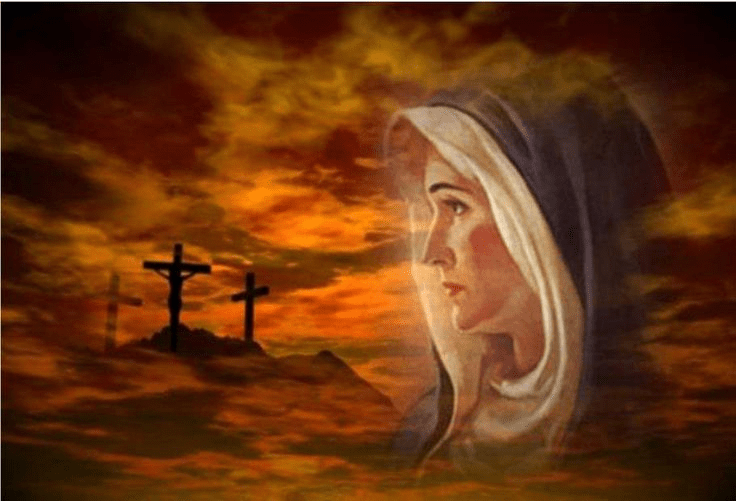
Mary watching her Son Jesus, with the shadow of the Cross

Mary beholds her Son with a heart full of faith and love, as the path to the desert—and the Cross—begins.

There is a moment we rarely speak about, yet it holds a quiet, trembling beauty: the moment Jesus said goodbye to His Mother before stepping into the wilderness.

No miracles. No crowds. No sermons.

Just a Mother. Just a Son. Just a holy silence between them.

Mary knew. She always knew. From the manger to the temple to the hidden years in Nazareth, she walked with Jesus through every season of His life. And now she watches Him prepare for the desert—the place where hunger, loneliness, and the enemy himself will confront Him.

The shadow of the Cross is already stretching forward, faint but undeniable.

And still… she lets Him go.

Lent Begins With Surrender

Before the desert. Before the temptations. Before the public ministry. There is a quiet fiat, spoken by both Mary and Jesus.

Jesus goes in obedience.
Mary remains in trust.
And the mission of salvation moves forward through love.

“That long time of silence and fasting for him was a complete abandonment to the Father and to His plan of love… entering into battle without any weapon other than his infinite trust in the Father’s omnipotent love.”
— Pope Benedict XVI

Jesus does not rush into the wilderness impulsively. He walks into it with purpose.

He walks into hunger to become our Bread. He walks into isolation to redeem our loneliness. He walks into temptation to teach us how to fight. He walks into the desert so none of us would ever face our deserts alone.

And Mary—with a heart full of faith and trembling love—releases Him into that mission.

The Invitation for Us This Lent

Perhaps this is our invitation too:

To release our need for control. To let Christ lead us into the places where we need healing. To follow Him into silence long enough to hear the Father speak.

Lent is not a season of self-improvement. It is not a spiritual fitness challenge. It is not “Catholic diet month.”

Lent is a battlefield—the battleground of the heart—where victory comes not through our strength but through our surrender.

There is room in this season for every kind of sinner: the weary, the distracted, the doubting, the lukewarm, the lost. Heaven is filled with people who tried, failed, got back up, and trusted again.

There is room for you.
There is room for me.
There is room for every one of us who longs to become saints—slowly, imperfectly, wholeheartedly.

A Prayer for Strength, Faith, and Obedience

Holy Mary, Mother of God, you who watched your Son walk into the desert with a faithful and surrendered heart,
teach us that same courage.
Help us release our fears, our comforts, and our need for control,
so we may follow Jesus wherever He leads.

Lord Jesus Christ, You entered the wilderness in trust and obedience.
Strengthen our faith when the path feels dry,
fortify our hearts when temptation presses in,
and draw us close when silence feels heavy.

Blessed Mother, stand beside us.
Christ our Lord, walk before us.
Father of mercy, guide us.

May our Lent be a yes of love—
a yes that makes us strong,
a yes that makes us faithful,
a yes that makes us Yours.

Amen.

Blessed Lent, Friends and Family

Do not waste this time of grace. Walk with Him.
Stand with Mary.
Trust the Father.

✦ If this reflection blessed you ✦

Please like, subscribe, and share this post with someone who might need encouragement this Lent.

Your support helps spread the message of faith, hope, and trust in Christ.

When the Church tells you that a priest can forgive you of your sins, and Jesus tells you that God is the only one, in whom do you put your trust?

The Fundamentalist Challenge: “In Whom Do You Put Your Trust?”

A reflection on confession, trust, and the mercy of Christ through His Church

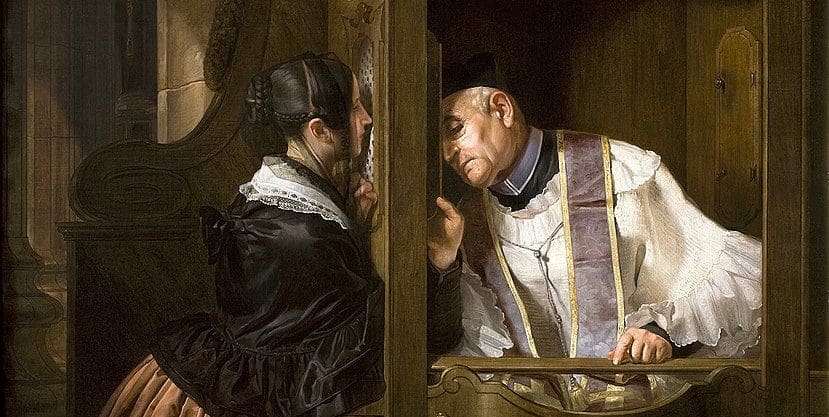
Classic painting of a woman confessing to a priest
The Sacrament of Reconciliation – a moment of divine mercy through the priest

I want to start this post where this whole series really began for me.
It wasn’t in a book. It wasn’t in RCIA. It wasn’t even in prayer.
It was in a conversation.

A well-meaning fundamentalist Christian once asked me a question that sounded simple, biblical, and honestly… a little unsettling:

“When the Church tells you that a priest can forgive you of your sins, and Jesus tells you that God is the only one who can forgive sins, in whom do you put your trust?”

He wasn’t angry. He wasn’t mocking. He was confident.
And that’s what made the question land so heavily.

How Cradle Catholics Drift—Quietly

Most of us didn’t walk away from the Church. We didn’t reject confession outright. We didn’t stop believing that God forgives sins.

But statements like that—repeated often enough—can plant a seed.
We start to think: “Well, I’ll still go to confession… but I don’t really need it.”
“God knows my heart.” “I can confess directly to Jesus.”

And suddenly confession becomes optional. Inconvenient. Something we avoid unless things get really bad.

This isn’t rebellion. It’s confusion mixed with sincerity.
And it’s exactly where Dr. Scott Hahn once found himself.

Dr. Scott Hahn speaking
Dr. Scott Hahn – from Protestant pastor to Catholic apologist

What a Convert Like Scott Hahn Discovered

Scott Hahn didn’t grow up Catholic. As a Protestant pastor and Scripture scholar, he genuinely believed confession to a priest took something away from God.

So when Hahn began wrestling with this issue, he asked a better question:
“What has God always done?”

And that question took him all the way back—to the Old Testament.

What the Old Testament Jews Were Actually Taught

For God’s people, forgiveness was never vague or invisible.
When someone sinned, God commanded something very specific:
Sin had to be acknowledged, confessed out loud, brought to the priest, atoned for through God’s appointed means.

Not because priests replaced God—but because God chose to work through them.

How Jesus Perfected Atonement, Not Abolished It

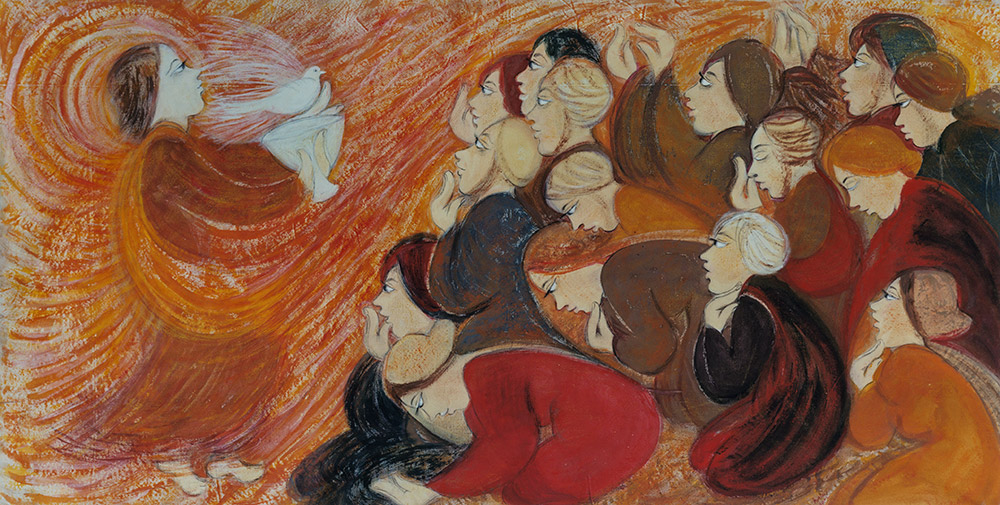
Art of Jesus breathing the Holy Spirit on the apostles
Jesus breathes the Holy Spirit and grants authority to forgive sins (John 20:22–23)

Jesus fulfills the Old Testament—not by discarding it, but by completing it.

After the Resurrection, He breathes on the apostles and says:
“Whose sins you forgive are forgiven. Whose sins you retain are retained.”

That’s responsibility. You can’t retain sins unless you know them. You can’t forgive sacramentally without authority.

What the Early Church Fathers Believed

The early Christians confessed sins openly. They reconciled through bishops and priests. There is no early Christian evidence of forgiveness floating free from the Church.

What the Catholic Saints and the Council of Trent Affirmed

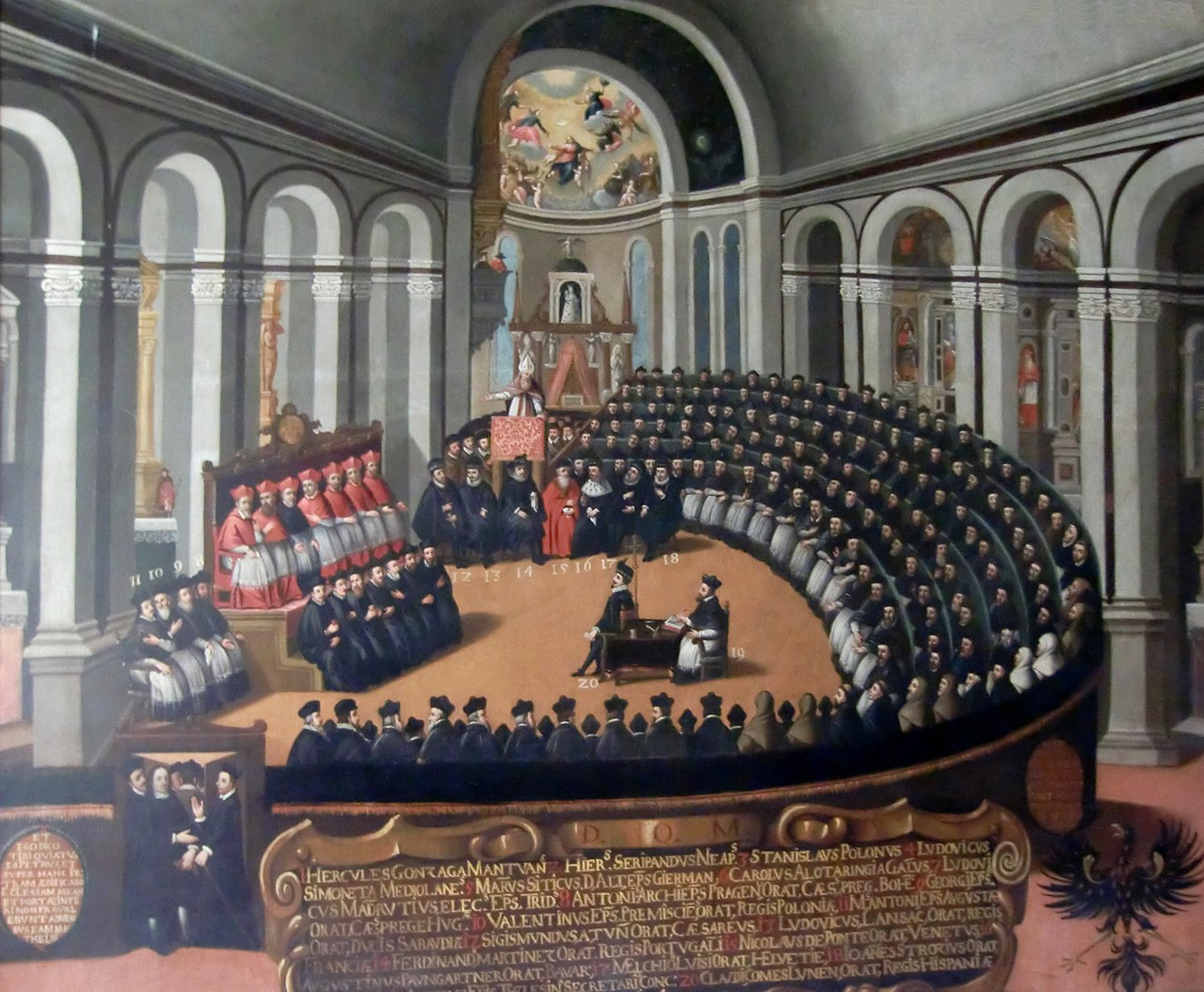
Historical painting of the Council of Trent
The Council of Trent – affirming the divine institution of confession

At the Council of Trent, the Church clarified what she had always believed: confession is divinely instituted, priests act in judgment and healing, Christ Himself established this authority.

So… In Whom Do You Put Your Trust?

The Catholic answer isn’t: “The priest.”
It’s: God—who chooses to forgive through the means He established.

Confession isn’t trusting men over God. It’s trusting God enough to accept His way.

Closing Prayer

Heavenly Father,
You are rich in mercy and slow to anger,
abounding in steadfast love and faithfulness.
Before You, no sin is hidden,
no wound unknown,
no heart beyond Your reach.

We thank You for not leaving us alone in our guilt,
for not asking us to save ourselves,
but for sending Your Son,
the Lamb who takes away the sins of the world.

Lord Jesus Christ,
You bore our sins in Your body upon the Cross.
You breathed Your Spirit upon the apostles
and entrusted to Your Church
the ministry of reconciliation.
Give us the humility to trust not in ourselves,
but in the mercy You offer through the means You established.

Holy Spirit,
light of truth and fire of love,
search our hearts,
uncover what we fear to name,
and give us the courage to step into the light.
Where sin has wounded us, bring healing.
Where shame has bound us, bring freedom.
Where pride resists grace, bring repentance.

Teach us, Lord,
to confess with honest hearts,
to receive forgiveness with childlike trust,
and to walk in newness of life.
May we never doubt that when Your Church speaks forgiveness,
it is Your own voice of mercy we hear.

We place our trust in You, O God—
not in our feelings,
not in our excuses,
not in our own righteousness—
but in Your promise,
Your authority,
and Your unfailing love.

We ask this through Christ our Lord,
who lives and reigns with You
in the unity of the Holy Spirit,
God forever and ever.

Amen.

Before You Go

If this reflection felt familiar—or healing—
❤️ Like this post so others can find it
🔔 Subscribe to stay connected
🔁 Share it with someone who’s heard this question before

And I invite you to read the earlier posts in the “In Whom Do You Put Your Trust?” series.
You’re not alone in these questions. And mercy is closer than you think.

Published February 14, 2026

A Conversation with Cradle Catholic Families — With Wisdom From Scripture and the Early Church Fathers

This Week’s Sunday Readings: A Conversation with Cradle Catholic Families — With Wisdom From Scripture and the Early Church Fathers

This Week’s Sunday Readings: A Conversation with Cradle Catholic Families — With Wisdom From Scripture and the Early Church Fathers

If you grew up Catholic, you probably know the rhythm of the faith by heart. You learned the prayers before you understood them. You knew when to sit, when to stand, when to kneel. You grew up hearing the Gospel every Sunday, receiving the sacraments at the usual milestones, saying grace before meals, and trying your best to be “a good Catholic kid.”

But as the years passed, the world got louder. Busier. More divided. More distracting. And somewhere between raising kids, managing schedules, worrying about the future, and keeping up with everything happening in society, your faith may have slipped into the background—not rejected, just quiet.

You believe.
You still show up.
But sometimes it feels like you’re praying, listening, or attending Mass on autopilot.

If that’s you, you’re not alone. In fact, the readings for this Sunday—and the wisdom of the early Church fathers—speak directly to this quiet ache many cradle Catholic families feel today.

Let’s walk through what these readings mean for us, not as scholars, but as ordinary families doing our best to keep the faith alive in a world that often works against it.

Sirach: Choosing God in a Culture That Pulls Us Away

Sirach was written during a time when Jewish families were surrounded by Greek culture—strong, influential, and tempting. Many felt pressured to blend in.

Our modern world isn’t all that different. Faith can quickly become something you “fit in when you can,” rather than the anchor that shapes daily life.

Sirach reminds us of something freeing:
God gives us real choice. Real freedom. Real dignity.

St. Justin Martyr would later echo this truth in the second century. Living in a world suspicious of Christians, he insisted that God invites but never forces. “We are not compelled by God,” he wrote, “but persuaded by the truth.”

In other words, if faith feels heavy sometimes, remember:
God is not imposing a burden.
He’s offering a relationship.

And relationships thrive on willingness, not pressure.

Psalm 119: Rediscovering Wonder in Familiar Faith

Psalm 119 comes from a time when the Jewish people were rebuilding their identity after exile. They weren’t spiritually on fire—they were spiritually rebuilding.

That’s something many cradle Catholics understand deeply.

We learned the rules growing up, but we didn’t always learn the beauty behind them. And when life gets busy, those rules can feel hollow or routine.

The psalmist’s prayer—“Open my eyes… teach me… give me understanding”—is the prayer of someone who wants their faith to feel alive again.

St. Augustine understood this longing. He grew up knowing the faith intellectually but didn’t fall in love with God until adulthood. His famous words, “Late have I loved You,” echo the heart of every Catholic who desires renewal.

Psalm 119 reminds us:
It’s okay if you’re rediscovering God later.
It’s okay if your faith feels unfamiliar or new again.
It’s okay to ask God to open your eyes.
In fact, it’s holy.

Paul and the Early Church: Living Faith in a Loud Culture

Corinth was noisy, opinionated, competitive, and full of philosophical debates. The early Christians there wondered if believing in Christ made them look foolish.

Sound familiar?

St. Ignatius of Antioch lived in a similar world. He faced external pressure, political division, and even persecution, yet he encouraged Christians to remain steady—not by arguing louder, but by living differently.

Paul’s message to the Corinthians, and Ignatius’s message to the early Church, are the same message we need today:

Your faith isn’t outdated.
Your beliefs aren’t naïve.
Your desire to raise a family grounded in Christ isn’t old-fashioned.

God’s wisdom has always looked different from the world’s wisdom.

And that’s okay.

Jesus in Matthew: God Wants Your Heart, Not Your Perfection

When Jesus deepens the commandments in Matthew 5, He doesn’t do it to make life harder. He isn’t adding burdens. He’s getting to the heart.

He’s saying that faith isn’t about performing the right actions; it’s about becoming the right person.

St. John Chrysostom preached this passionately:
Christianity isn’t about external compliance—it’s about interior transformation.

Jesus knows the pressures families face. He knows how complicated life can be. He knows we struggle with anger, temptation, frustration, and relationships. And He speaks straight into those real places—not to shame us, but to free us.

For cradle Catholics juggling everything modern life throws at them, this is incredibly hopeful.

You don’t need to be perfect.
You don’t need to have all the answers.
You don’t need spiritual fireworks.

You just need a heart that keeps turning toward Him.

What Their World and Our World Have in Common

The early Church lived in a society that was divided, suspicious, morally confused, politically charged, and spiritually shallow.

Our world is much the same.

And yet, the Church not only survived—it grew.
Not because Christians were perfect, but because they kept choosing Christ one honest, intentional step at a time.

Their message to us today would be simple:
Don’t give up.
Don’t be discouraged.
Don’t underestimate what God can do with a willing, imperfect heart.

A Final Word of Encouragement

If your faith feels like it’s been on cruise control, if the culture feels overwhelming, or if you’re just trying to raise kids with even a mustard seed of faith in a confusing world, you’re not alone.

You’re walking the same path as millions of Catholics before you.
Your longing for a deeper faith is not a weakness.
Your tired but willing heart is not a disappointment to God.

It’s the very place He begins His work.

You don’t need to overhaul your whole life.
You just need to let Christ open your eyes again—gently, slowly, lovingly.

And He will.

Closing Prayer Inspired by the Early Church Fathers

Lord Jesus Christ,
You who walked with the first believers through a world as divided and restless as our own, walk with us now.
Open our hearts the way You opened the hearts of Augustine and Ignatius,
so that we may rediscover the beauty we’ve grown too familiar with.

Stir in us the quiet courage of Justin Martyr,
that we may choose You freely each day,
not out of habit, but out of love.

Give us the steady hope of Chrysostom,
who trusted that Your grace reaches into the deepest parts of the human heart
and transforms us from the inside out.

Teach us, as You taught the early Church,
to live our faith gently, joyfully, and authentically
in the middle of a noisy and uncertain world.

Bless our families, especially those of us who grew up in the faith
and now desire to see it come alive again.
Renew in us the wonder of being Your disciples.
Strengthen us when we feel tired.
Guide us when we feel lost.
And remind us that You are always near,
inviting us into deeper life, one small step at a time.

May we walk forward with new eyes,
new desire,
and new trust in Your unfailing love.

Amen.

A Gentle Call to Action

If this reflection spoke to your heart—or reminded you that you’re not alone on this journey—I’d love for you to stay connected.

Take a moment to like, subscribe, and share this post with other cradle Catholic families who might need a word of encouragement today.

Your support helps build a community where ordinary Catholics can rediscover faith, hope, and joy together.

Thank you for reading, thank you for walking this journey with me,
and may God bless you and your family today.

Discovering Our Lady of Good Success in a Time That Desperately Needs Her

Discovering Our Lady of Good Success in a Time That Desperately Needs Her

Discovering Our Lady of Good Success in a Time That Desperately Needs Her

A prophetic Marian devotion that speaks directly to our troubled times—with hope, not despair.

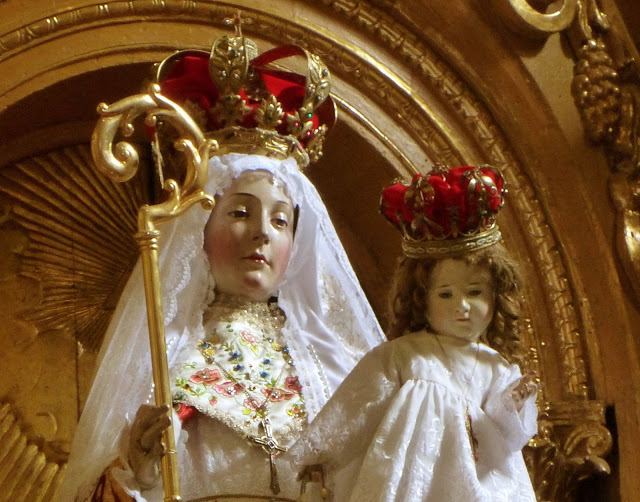
Statue of Our Lady of Good Success in Quito, holding the Christ Child, crosier, and keys

Every once in a while as a cradle Catholic, you come across something in the vast treasury of our faith that makes you stop in your tracks and wonder how on earth you’d never heard about it before. That was my experience with Our Lady of Good Success. What started as a passing curiosity quickly became a deep dive into one of the most striking, prophetic, and hope-filled Marian apparitions I’ve ever encountered.

The more I learned, the more convinced I became that this devotion isn’t just historical trivia. It speaks directly to the world we’re living in right now.

The Name That Throws Everyone Off

Let’s start with the name, because if you’re anything like me, “Good Success” immediately makes you think of achievement and personal victories and all the self-help language we’ve absorbed over the years. But when Mary appeared in Quito in the early 1600s, the Spanish term she used—Buen Suceso—meant something completely different.

Back then, “suceso” meant an event or a happening, specifically a good event brought about by God’s providence. It was connected to one of the most beautiful feasts in the Church: the Presentation of Jesus in the Temple, also known as Candlemas. So the title doesn’t really mean “Our Lady who helps you accomplish things,” but Our Lady of the Good Event, the Lady of God’s perfect fulfillment.

Once you understand that, the entire devotion opens up. This title points us straight into the mystery of Jesus being revealed as the Light to the nations, and Mary presenting Him to the world. It’s right there in Simeon’s prophecy. This is a Marian title rooted in hope, in promise, and in God’s triumphant plan.

The Presentation of Jesus in the Temple (Candlemas), classical Catholic art

A 400-Year-Old Message That Sounds Like It Was Written Yesterday

What truly sets this apparition apart is how plainly Mary said her message wasn’t mainly for the 1600s. It was for a future age—she explicitly mentioned the 20th century. She spoke of a coming time when confusion would enter the Church, when families would suffer, when purity would be attacked, when children would be targeted, when vocations would decline, and when scandals would shake the faithful.

Reading her words today feels less like a prophecy and more like a commentary on the world we’re already living in.

But this is where Mary’s maternal heart shines through. She doesn’t warn us to intimidate or frighten. She warns us to prepare us, to protect us, and to call us back to the only place where we can find peace: her Son.

Mary Never Warns Without Offering a Remedy

What I love about Marian apparitions—whether in Quito, Fatima, Lourdes, La Salette, or Akita—is that Heaven’s message never stops at “Here’s what’s going wrong.” Mary always gives a clear path forward, a spiritual antidote for the illness of the age.

In the messages of Our Lady of Good Success, her solution is the same remedy she has repeated throughout history. She calls us to prayer, especially the Rosary, not simply as a devotion but as a lifeline. She urges us toward penance and acts of reparation, united with Christ for the salvation of souls. She insists that we hold tightly to the sacraments, especially the Eucharist and Confession, because a time would come when they would be ignored, neglected, or even abused. She invites us to conversion—not dramatic episodes necessarily, but humble, daily fidelity. And she encourages us to consecrate ourselves to her maternal protection, trusting that she is guiding the Church through its darkest valleys.

These are not new instructions. They are the timeless practices the Church has always needed, but Mary knew we would need them most in the era she foresaw.

The Statue That Heaven Asked For

One of the most beautiful details in this apparition is Mary’s request for a statue in her honor—one that she said would be a source of consolation, faith, and protection for centuries. Tradition holds that when the sculptor could not complete it perfectly, angels finished it themselves.

This statue, still venerated in the Convent of the Immaculate Conception in Quito, shows Mary holding the Christ Child and carrying a bishop’s crosier, symbolizing her guardianship of the Church. At her side hang keys, representing authority and safekeeping. Everything about her posture and expression communicates that she is not merely watching over the Church—she is actively defending and guiding it.

The miraculous statue of Our Lady of Good Success enthroned in Quito

How Catholics Are Living This Devotion Today

Even though this apparition was little-known outside Ecuador for centuries, it has begun to spread rapidly as people sense its relevance. Many Catholics celebrate the feast on February 2nd, uniting it with the beautiful traditions of Candlemas and the blessing of candles. Others pray the novena leading up to the feast, asking Mary’s intercession for the Church, their families, and the world.

Devotion to the Child Jesus is also part of this spirituality, since Mary appears holding Him. Some Catholics keep an image of the statue in their homes, asking for her maternal protection in a confused and often hostile world. There is also growing interest in the life of Mother Mariana de Jesús Torres, whose holiness and sufferings were deeply united with the future struggles of the Church.

The heart of all these devotions is simple: trust. Trust that Mary is present. Trust that God is still guiding His Church. Trust that darkness never has the final word.

A Message Not of Despair, but of Triumph

I think what moved me most in this whole journey is that Mary doesn't hem and haw about how bad things will get. She’s honest. She’s clear. But she is not bleak. Every warning she gives is wrapped in hope. She promises that after the storm, after the purification, after the trials, there will be renewal. There will be restoration. And ultimately, there will be triumph.

Her title itself—Good Success—reminds us that God’s plan ends well. That the Presentation of Jesus wasn’t just a historical moment, but a symbol of the entire story of salvation: the Light shining in the darkness, and the darkness never overcoming it.

Why This Devotion Matters So Much Right Now

In a world where so much feels unsteady, where even the Church can seem shaken, devotions like this steady the soul. They remind us that heaven knows what’s happening. That heaven has spoken into our moment. That heaven has not left us to figure this out alone.

If you’ve never prayed to Our Lady of Good Success before, this might be the perfect time to start. Light a candle on February 2nd. Pray a novena. Ask for her protection over your home, over your children, and over the Church.

And remember: the “success” she speaks of isn’t ours to manufacture. It’s the good outcome God has already written. We are simply living our chapter of the story.

Closing Prayer

O Mary,

Our Lady of Good Success,
Mother who guides us through confusion and lifts our hearts toward hope,
wrap us in your mantle of protection.

Teach us to trust in God’s plan even when the world seems dark,
and help us stay faithful to prayer,
to the sacraments,
and to your Son’s loving call.

Strengthen our families,
renew the Church,
and lead us always to Jesus.

Amen.

Call to Action
If this reflection spoke to your heart, I’d love for you to like, subscribe, and share. Your support helps this message reach others who may need the hope and clarity Our Lady offers. Let’s keep growing together in faith!

In Whom Do You Put Your Trust? Mary? The Saints?

“A Conversation With Fellow Cradle Catholics About Mary, the Saints, and Prayer"

by Keith Abell, RPh MI
Ad Majorem Dei Gloriam

Every once in a while, a question comes at you with the force of a challenge rather than genuine curiosity. If you've ever interacted with fundamentalist or anti-Catholic friends, you may have heard something like:

“Question 15, When the Church tells you it’s okay to pray to Mary and for the dead, and God says to pray only to Him… in whom do you put your trust?”

If you ever found yourself momentarily rattled by that, you’re certainly not alone. Many of us cradle Catholics grew up practicing the faith long before we were ever challenged to explain it. We lit candles for loved ones, asked Mary’s intercession before a big exam, prayed for grandparents who had died… and it all felt natural.

Then someone asked us a loaded question, and suddenly we weren’t sure how to put our instincts into words.

Let’s walk through this gently, like we’re sitting together at the parish hall after Mass, coffee in hand, talking through what we’ve always known but maybe never had to articulate.

What Do Catholics Actually Mean When We “Pray” to Mary?

The biggest misunderstanding is hidden in that one little word: “pray.”

Most Catholics don’t mean, “Mary, grant my request.” We mean, “Mary, please pray with me and for me.”

It’s the very same thing we do when we ask a friend, “Could you pray for me? I’m going through something difficult.”

Catholics simply believe that the saints — who are alive in Christ, perfected, and standing before God — are also part of that same praying family. They don’t replace God. They don’t compete with Him. They don’t answer anything. They simply add their voices to the great chorus of intercession rising before God’s throne.

This isn’t a Catholic invention. It’s deeply biblical.

Scripture Is Filled With Believers Asking One Another for Prayer

The New Testament practically begs for intercessory prayer:

Paul says, “Brothers, pray for us.” (1 Thess 5:25)
James says, “Pray for one another, that you may be healed.” (James 5:16)
Paul again: “Strive together with me in your prayers to God on my behalf.” (Rom 15:30)

Intercession isn't a side-practice. It’s central to Christian life. And Scripture never restricts this to only those physically alive on earth.

Which brings us to one of the most beautiful passages in the entire Bible…

“Golden Bowls Full of Incense”: Heaven’s Participation in Our Prayers

In Revelation, John is given a vision of heavenly worship. It’s not abstract poetry — it’s a glimpse into what is happening right now before the throne of God.

John sees:

Revelation 5:8 “The twenty-four elders… each holding golden bowls full of incense, which are the prayers of the saints.”

And again:

Revelation 8:3–4 “The smoke of the incense, with the prayers of the saints, rose before God.”

Think about that.

Heaven doesn’t simply hear our prayers. Heaven holds them. Heaven lifts them. Heaven participates in offering them to God.

The saints in glory are part of this offering. Their intercession is woven into the very worship of heaven. They are not answering the prayers — they are presenting them, just as priests once offered incense in the Temple: as a sign of prayer being lifted up to God.

This biblical image is the foundation for why Catholics ask saints to pray with us. It’s not wishful thinking. It’s literally what Scripture tells us is happening in heaven.

Is This Connected to Lighting Prayer Candles? Yes — Very Beautifully

If you grew up Catholic, you remember the glow of votive candles flickering in front of a statue or shrine. Maybe you lit one for someone who was sick, or someone who had just died, or before a stressful moment in life. It’s a profoundly human act — one that touches both earth and heaven.

But is there biblical meaning behind it? There absolutely is.

In Scripture, incense is used repeatedly as a symbol of prayer rising to God:

“Let my prayer rise like incense before you.” (Psalm 141:2)
God commands incense in worship (Exodus 30).
The high priest brings incense into the Holy of Holies (Leviticus 16).
Malachi foretells a time when incense will be offered “in every place.” (Mal 1:11)

The smoke rising is a visual expression of prayer lifting toward God.

Prayer candles work with the same imagery. The rising warmth and faint smoke are reminders that your prayer continues, even after you walk away. The candle doesn’t “send” your prayer. Rather, it symbolizes what Revelation shows happening in heaven: prayers rising before God, woven together with the prayers of all God’s people.

A candle is simply our small, earthly way of echoing the heavenly reality — that prayer burns continuously before the Lord.

What About Praying for the Dead?

Some people stumble here, but if you grew up Catholic, praying for the dead was as ordinary as praying for the living. It was part of the rhythm of love.

The Bible directly supports this in 2 Maccabees 12:44–46, where praying for the fallen soldiers is called:

“a holy and wholesome thought.”

This reflects a Jewish tradition that the early Christians continued naturally. We pray for the departed because we love them. We entrust them to God because God loves them even more.

Nothing about this competes with God. It actually expresses trust in His mercy.

What Did the Early Church Believe?

The earliest Christians didn’t get tangled up in debates over these practices — they simply lived them. The writings of the early Church Fathers show:

  • Christians praying for the dead at the liturgy
  • The faithful asking martyrs to intercede
  • A strong sense of unity between the Church in heaven and on earth
  • The understanding that the saints supported the living by their prayers
  • A belief that Mary, as the Mother of the Lord, intercedes for the faithful

If someone from the year 250 walked into a modern Catholic church today — saw the candles, heard the prayers for the departed, listened to us asking for the saints’ intercession — none of it would feel foreign.

They practiced the same faith. They lived the same communion. They trusted the same God.

So… In Whom Do We Put Our Trust?

Let’s return to the question that started all this.

If the Church says we can ask Mary and the saints for prayers, and God says to pray to Him alone, who do we trust?

Here’s the truth:

We trust God alone. And because we trust Him, we trust the family He gave us.

We don’t believe Mary answers prayer. We don’t believe the saints act on their own. We don’t believe candles carry our prayers into heaven.

God alone hears and answers every prayer.

But He invites the whole Body — on earth and in heaven — to pray together, support one another, and lift one another before His throne.

We are a family. Families pray for each other. And the family of God does so across heaven and earth.

This isn’t a lack of trust in God. It is trust in God’s plan — a plan that unites all His people into one great chorus of intercession rising before Him like incense.

A Closing Prayer

Heavenly Father,
we come before You as Your children — one family on earth and in heaven.
You alone hear every prayer we whisper, every hope we carry, every tear we shed.
We thank You for the saints who surround us, the great cloud of witnesses who lift our prayers before You like incense.

Teach us to pray with humble hearts, to trust in Your mercy,
and to walk always in the light of Your Son.
May the prayers of Mary, our Mother, and all the saints
draw us closer to the Heart of Jesus,
where every longing finds its rest.

Strengthen our faith, deepen our love,
and make us bold in sharing the beauty of Your Church with the world.
We ask this through Christ our Lord.
Amen.

A Call to Action

If this reflection spoke to your heart, I’d love for you to journey with me a little further.

Please like, subscribe, and share this post with other cradle Catholics who might be wrestling with these same questions. You never know whose faith might be strengthened by hearing that they’re not alone — and that the Church’s teachings on Mary, the saints, and prayer are not just biblical and ancient, but deeply beautiful.

Let’s keep the conversation going. Let’s grow together. And let’s help one another rediscover the richness of our Catholic faith.

Mary’s Role in Salvation History—A Cradle Catholic Conversation

Mary as the New Eve - undoing the knot of disobedience

Mary and Eve: Her obedience unties the knot of disobedience

Your Protestant Friend Asked About Mary? Send Them This.

Mary’s Role in Salvation History—A Cradle Catholic Conversation

by Keith Abell, RPh MI
Ad Majorem Dei Gloriam

If you’ve been following along with this series, “In Whom Do You Put Your Trust?”, you know that I’ve been responding to a list of questions a well-meaning fundamentalist once sent me—questions meant to shake my Catholic faith. Each post in this series has taken one of those questions and held it up to the light of Scripture, history, and the teaching authority of the Church.

For many cradle Catholics like us, these questions can feel odd at first. Most of us grew up with Holy Water fonts by the door, Mary statues in the garden, and a rosary tangled somewhere in the car. We didn’t question it. It was just part of the air we breathed.

But as adults, especially in conversations with non-Catholic Christians, we discover quickly that what feels natural to us is confusing—or even threatening—to others. And so these questions matter. They force us to articulate what we’ve always known in our bones: that everything the Church teaches, and everything we practice, always leads us closer to Christ.

Which brings us to today’s question:

“When the Church tells you that Mary was the co-redeemer of mankind, and the Bible tells you that you are lessening the work that Christ did on the cross, in whom do you put your trust?”

Let’s talk about it—not in a defensive way, not academically, but heart-to-heart, as Catholics who love Christ and His Mother and who want to understand our faith more deeply.

What the Early Church Fathers Actually Said About Mary

Before there were denominations, before the New Testament canon was finalized, before anyone debated Marian doctrines in the modern sense, the earliest Christian leaders were already talking about Mary’s role in salvation history.

One of the strongest voices is St. Irenaeus of Lyons, writing in the late 2nd century. He famously called Mary the “cause of salvation” for humanity—not because she redeemed us, but because her obedience undid Eve’s disobedience.

“The knot of Eve’s disobedience was untied by Mary’s obedience.”
“What the virgin Eve bound by her unbelief, the Virgin Mary loosened by her faith.”

This isn’t Catholic imagination. This is Christianity before any schisms.

Another early witness, St. Jerome, summed it up with striking simplicity:

“Death came through Eve, but life came through Mary.”

And St. Ambrose of Milan spoke of Mary as the one “through whom the salvation of all was being readied.”

Notice something here: The early Church Fathers speak boldly about Mary’s role, but always in relation to Christ. Mary is never portrayed as equal to Him. Her role is always derivative, always subordinate, always a cooperation with His work.

They saw her not as a rival redeemer, but as the New Eve standing beside the New Adam.

Virgin Mary with Infant Jesus and Angels - classic Catholic art

What the Saints of the Reformation Era Said

During the Protestant Reformation, Marian doctrines came under intense attack. Some Reformers still held Mary in high esteem—Luther and Zwingli among them—but many of their followers did not. So Catholic saints and scholars stood up to defend Mary’s place in Christian faith.

St. Robert Bellarmine, a Doctor of the Church, insisted that devotion to Mary doesn’t detract from Christ’s glory:

“We do not adore Mary; we adore the God whom Mary bore.”

He showed that Marian doctrine protects the truth about the Incarnation: if Mary is not truly Mother of God, then Christ is not truly God-with-us.

St. Lawrence of Brindisi and Francisco Suárez built powerful theological arguments showing that Mary’s cooperation is entirely dependent on Christ’s grace—much like ours, but in a more perfect and intimate way.

And later, the French School—think Pierre de Bérulle, Jean-Jacques Olier, St. John Eudes—emphasized Mary’s profound union with Christ’s mission. They spoke of her heart beating in harmony with His, her will wholly surrendered to His.

These saints did not invent new doctrines. They simply articulated, more clearly than ever, that Mary’s role magnifies Christ. Her greatness points to His greater greatness.

The Council of Trent: The Church Draws a Line in the Sand

The Council of Trent (1545–1563) didn’t produce a long Marian treatise, but what it did say has shaped Marian teaching ever since.

Trent reaffirmed that honoring the saints—and especially Mary—is deeply biblical and profoundly Christian. It defended the veneration of images, insisting that honor given to Mary passes directly to Christ.

When defining Original Sin, Trent explicitly stated that its decrees were not to be applied to “the Blessed and Immaculate Virgin Mary.” This left theological room for the later definition of the Immaculate Conception.

And Trent’s teaching on grace—especially the cooperation of the human will—explained how Mary could freely say “yes” to God without ever undermining Christ’s unique mediatorship.

For Catholics, Trent was like a lighthouse in the storm: steady, clear, unwavering.

What the Modern Church Teaches—With Beautiful Clarity

Fast forward to the 20th and 21st centuries, and the Church continues to speak with great tenderness and precision about Mary.

The Second Vatican Council devoted an entire chapter of Lumen Gentium to Mary. In it, the bishops wrote words that every Catholic should know by heart:

“No creature could ever be counted along with the Incarnate Word and Redeemer.”
“Mary’s role flows entirely from the superabundance of Christ’s merits.”

That settles the “co-redeemer” misunderstanding once and for all. Mary cooperates, but Christ redeems.

St. John Paul II emphasized Mary as the first and greatest disciple—the model for the whole Church.

Pope Benedict XVI reminded us that Marian devotion is always Christocentric, saying:

“Devotion to Mary... is an intrinsic part of Christian worship.”

And Pope Francis, while deeply Marian, has warned against confusing titles, saying Mary is not a “fourth person of the Trinity” and insisting we speak of her in ways that clarify—not obscure—Christ’s primacy.

The Church could not be more clear: Everything Mary does is by Christ’s grace, for Christ’s mission, and ordered to Christ’s glory.

So, in Whom Do We Put Our Trust?

Christ. Always Christ.

And because we trust Christ, we trust the Church He established. And because we trust the Church, we trust the Mother He gave us from the Cross.

Seeing Mary rightly never distracts from Jesus—it deepens our understanding of Him. Rejecting Mary doesn’t protect Christ’s glory—it diminishes our grasp of the Incarnation.

If Jesus chose to come into the world through Mary, then we can safely choose to come to Him the same way.

Birth of the Blessed Virgin Mary - Catholic Marian devotion

A Closing Prayer

Mary, Mother of God and Mother of the Church,
teach us to say “yes” as you did—freely, humbly, and with total trust.
Lead us ever closer to your Son,
that we may love Him with your heart and serve Him with your faith.
Help us understand your role in His saving work,
and draw us deeper into the mystery of His mercy.
Amen.


**If this post strengthened your faith, please—
Like, Subscribe, and Share.**
It helps more cradle Catholics rediscover the beauty of their own tradition.
To show that our trust in Christ is never threatened by honoring His Mother—it’s strengthened by it.

Most Popular Posts